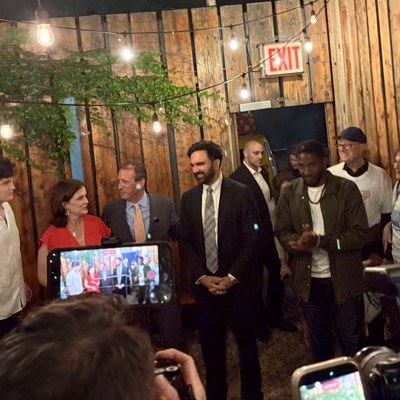
Two candidates Mayor Zohran Mamdani endorsed won competitive Democratic House primaries: Brad Lander ousted Rep. Dan Goldman in NY-10, and Claire Valdez took the open NY-7 seat over Brooklyn Borough President Antonio Reynoso, a real test of whether the coalition that elected him last year still turns out. [24]
02
In the Manhattan seat being vacated by Rep. Jerrold Nadler, Assembly Member Micah Lasher led Assembly Member Alex Bores by about four points late Tuesday, in a race that drew nearly $40 million in super PAC money tied to the AI industry and Michael Bloomberg. [2][24]
03
Comptroller Thomas DiNapoli, in office two decades, won his first primary challenge since 2007, beating Raj Goyle and Drew Warshaw to hold the Democratic line for state comptroller. [32][24]
04
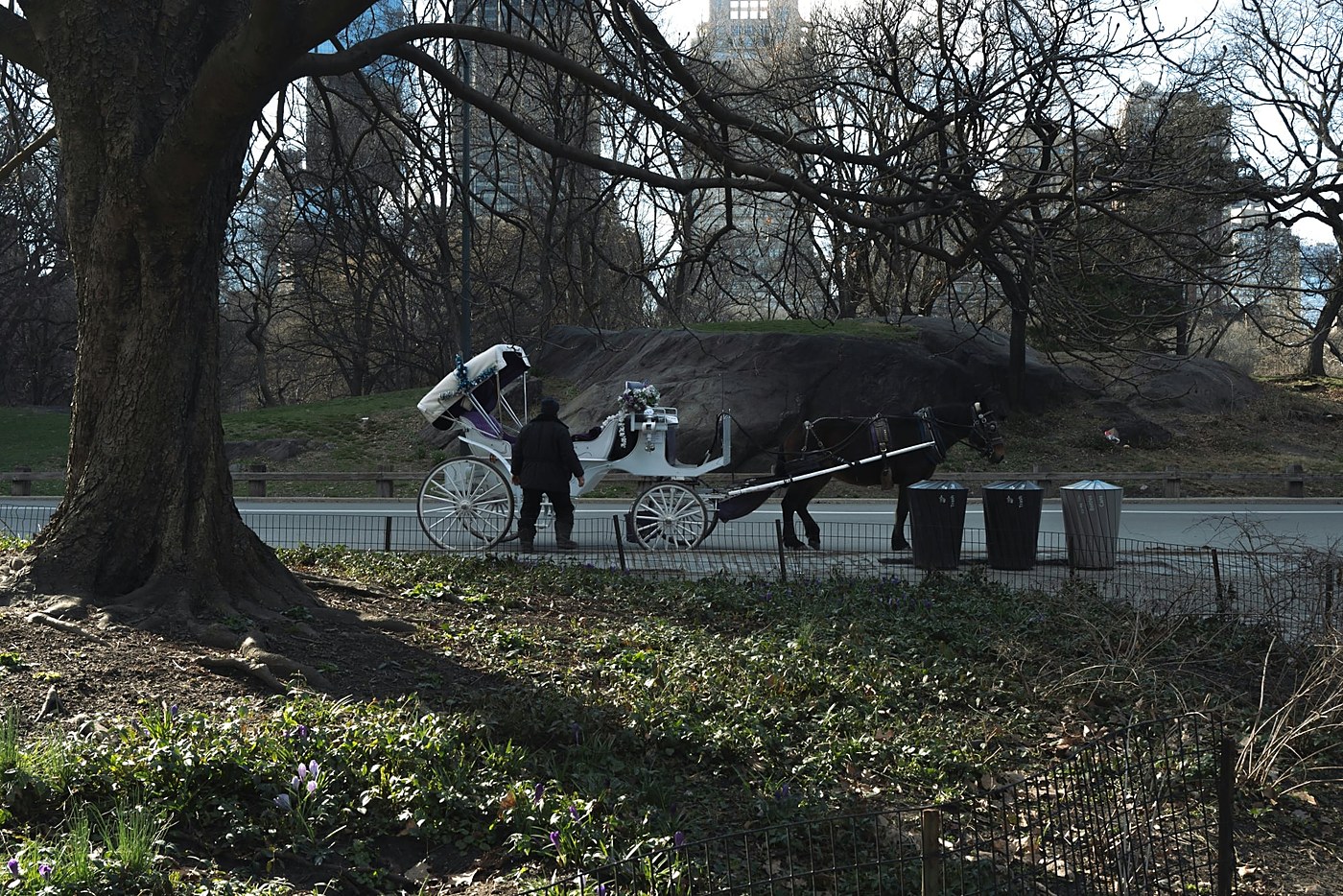
The City Council will hold a July hearing on Ryder's Law, a bill to phase out Central Park's horse carriages, after an 18-year-old visitor was thrown from a runaway carriage and killed last week. [121]
05
Fourteen residents of Sunset Park and Greenwood Heights sued to block a 200-bed men's shelter, arguing the city's "Fair Share" review relied on data more than a decade old, as City Hall says it has now found a shelter site in every community district. [53]
"We cannot keep paying for Netanyahu's wars with our tax dollars." The Times led with the wins as proof of Mamdani's reach into the midterms and quoted Lander at length on Israel and Gaza, the issue he ran on against Goldman [24]. It named the Nadler-seat money plainly: nearly $40 million in super PAC spending from the AI industry and Bloomberg [24].
"Race is called before 9:10 pm." City & State worked the watch parties, catching the silence at Reynoso's Bushwick roller rink as the screens showed Valdez winning [2]. It reported the down-ballot texture the networks skipped, including a two-vote Assembly margin out in Erie County between Karen Hoak and DSA-backed Adam Bojak [2].
"It may be that folks won't be mad at him, they may actually be a lot more fearful of his power." Gothamist framed the stakes through Columbia's Basil Smikle, casting the night as a measure of the machine behind the mayor [96]. It noted Goldman is a Levi Strauss heir and one of the wealthiest members of Congress, the contrast Lander ran against [96].
"Fuck AIPAC money, fuck any corporation, corporate money in politics." Hell Gate stood outside the poll sites and let voters talk, surfacing the raw sentiment, much of it about money and Avila Chevalier's old tweets, that the desk coverage sanded down [98]. The grassroots read here was angrier and more AIPAC-focused than the establishment framing.
"Real estate would like a word." The Real Deal followed the money into the state legislative undercard, naming Two Trees CEO Jed Walentas, SL Green, and the Tisch family as donors propping up incumbents against DSA and WFP challengers [140]. It logged $500,000 from the Next NYC PAC into the pool fighting Mamdani-backed Eli Northrup on the Upper West Side [140].
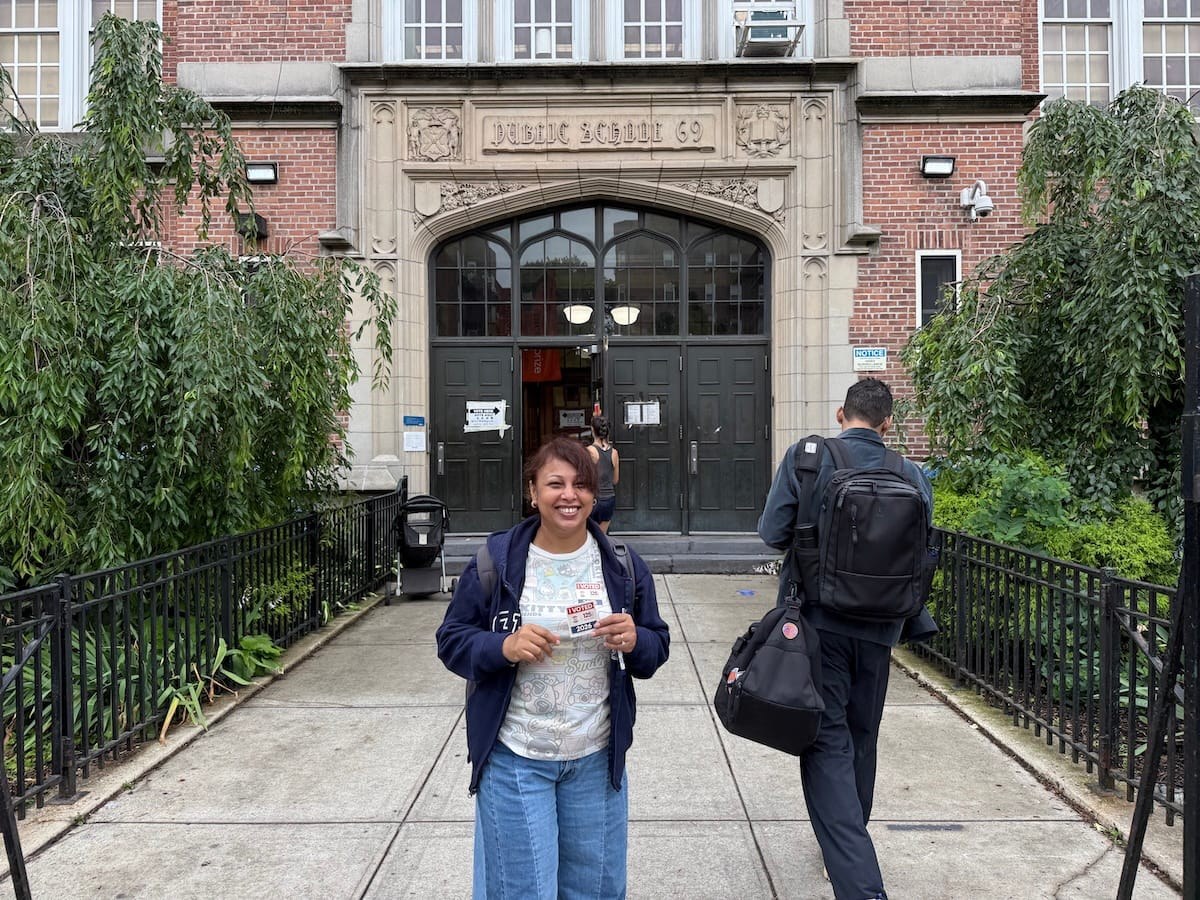
Polls closed at 9 p.m. on a muggy primary day, and two of Mamdani's three congressional picks won. Brad Lander, the former city comptroller, beat Rep. Dan Goldman in NY-10, which runs from lower Manhattan to Sunset Park [24]. Claire Valdez, a democratic socialist assembly member, won the open NY-7 over Brooklyn Borough President Antonio Reynoso, who had been endorsed by retiring Rep. Nydia Velázquez; NY1 called it with Valdez at about 57% to Reynoso's 35% with 91% of scanners in [2][24]. The third race, NY-13 in Harlem, the Bronx and Inwood, stayed close late, with challenger Darializa Avila Chevalier leading Rep. Adriano Espaillat by roughly three points [24]. Thomas DiNapoli held the comptroller line [32][24]. Turnout ran well below 2025: 172,743 New Yorkers voted early, less than half of last year's 384,338 mayoral early vote [140].
The takeaway
A mayor who can flip a House seat from City Hall is a mayor the rest of the delegation has to fear, and that is the asset Mamdani just bought. Lander and Valdez owe him; so will every state legislator his slate carried. The counterweight is cash: real estate money from Walentas, SL Green and the Tisches funded the firewall in Albany races [140], and in the Nadler seat the AI industry and Bloomberg poured in close to $40 million to keep Bores, an AI-safety hawk, out of Congress [24]. Lasher's lead there suggests the money still wins the expensive ones. The open question is durability. One good night in a low-turnout June does not yet prove the 2025 wave was anything more than a wave.
A teenager dies in Central Park, and a banned bill comes back
An 18-year-old came to see New York, the horse bolted, and a fight the Council buried in November is suddenly alive.
"That is not an acceptable cost of an antiquated industry." 6sqft anchored the politics: a 2024 poll found 71% of New Yorkers backed a ban, yet the Council's Health Committee killed the bill 4-1 with two abstentions in November despite Adams' support [121]. It noted Mamdani backs ending carriages but has stopped short of endorsing Ryder's Law itself [121].
"It's something that we never could have prepared for." amNewYork gave the drivers their say through TWU's Alexander Kemp, who called the death eye-opening and noted no one had ever been killed in a carriage incident before [154]. The union's pitch is reform over abolition: hitching posts, tethering, a walking-only rule. Bill sponsor Christopher Marte's office answered that "horses can spook and bolt in an instant," and no training fixes that [154].
On June 17, 18-year-old Romanch Mahajan was riding a Central Park carriage with his family, visiting from India, when the driver stepped off the carriage to take their photo and the horse bolted [121][154]. The carriage flipped; Mahajan suffered severe head trauma and died at NewYork-Presbyterian Weill Cornell [121]. Family members said he was trying to protect his mother. Council Speaker Julie Menin announced a July hearing on Ryder's Law, the bill to phase out the carriage industry, which a Council subcommittee had voted down in November [121]. The death followed a June 9 incident in which a 16-year-old carriage horse collapsed and died on West 72nd Street [121]. The Central Park Conservancy, which backed a ban last August, renewed its call [121]. The drivers' union, TWU Local 100, halted operations and pledged a "Vision Zero" overhaul, including refresher training and a rule that drivers not leave their seat until passengers are off [154].
The takeaway
This is a fight over roughly 170 carriage drivers' jobs and nearly 200 horses, and the people with the most to lose are the TWU Local 100 members who drive the rigs [154]. Marte's bill would ban the trade and fund a transition to other work; the union says no transition plan with real numbers has ever been put on paper, and that the Council is reaching for abolition when it could mandate hitching posts tomorrow [154]. Menin scheduled the hearing within hours of the death [121], which tells you the votes that were not there in November may be there now. A family came to see the park and went home without a son. That is the fact the Council will be looking at in July.
The shelter next door, and the audit that never came
Two Brooklyn neighborhoods are suing to stop a shelter, and the man who was supposed to watch the spending is now running for Congress.
"My audits rooted out Eric Adams' corruption." The City Reporter set Lander's campaign boast against the record: his office approved a $92,844 Bhrags contract increase in February 2025, months after being told of the corruption there [53]. The story is unsparing about timing, noting Lander launched his one and only "real time audit," of DocGo, only after the AG and the Times had already moved [53].
"We are being accused as NIMBYs, it's totally wrong, in my opinion." Brownstoner, republishing THE CITY, gave the plaintiffs a real grievance and the data to back it: a 2023 Lander audit found shelters wildly concentrated, with some districts carrying 100 times the beds of others [128]. It set the human numbers down hard. Eviction filings hit 114,832 in 2025, and 194,531 people cycled through shelters last year, the most ever [128].
Fourteen residents of Sunset Park and Greenwood Heights sued to stop HELP Quarterstone, a 200-bed single men's shelter set to open around October at 225 25th Street, arguing the city's "Fair Share" review used data more than a decade old and skipped a proper environmental review [128]. Five shelters already sit within half a mile of the site; with this one, Sunset Park would host at least 11 [128]. The Department of Social Services says it has now identified a shelter site in every community district and will start phasing out beds in "oversaturated" areas [128]. Separately, The City Reporter reported that Brad Lander, as comptroller, never audited Bhrags Home Care, a nonprofit later named in a 20-page corruption indictment over no-bid migrant shelter contracts, even after his office was notified of kickback allegations in September 2024 [53]. The Department of Homeless Services more than doubled Bhrags' awards to $68 million; Lander audited just one of more than 340 migrant-services vendors, DocGo [53].
The takeaway
The 1989 Fair Share charter promised the burden of shelters would be spread evenly, but it never defined "oversaturated," so a place like Sunset Park can end up with 11 shelters and no legal ceiling [128]. City Hall's answer, a site in every district, is real progress and also a tacit admission the old map was lopsided. The comptroller is the office meant to police where the money lands, which is what makes the Bhrags miss sting: $68 million flowed to a vendor whose directors prosecutors call masterminds of a kickback scheme, and the one audit Lander ran was of a different company entirely [53]. He is headed to Congress now. The shelter is still opening in October.
A casino is coming to Queens, and it just cost two Jessicas an election
The Citi Field casino is a done deal. The Senate race next to it is being fought as if it weren't.
"All of my colleagues in the area became a casino clique, and I don't want to be part of the casino clique." Documented let Ramos frame her own isolation and reported the spending that undercut her: Cohen put over $2 million of his own money into swaying opinion, and his Queens Future LLC hired 13 lobbying firms in 2024 [213]. González-Rojas insisted the casino barely comes up at the doors, where housing and immigration dominate [213].
"A veces parece que uno viviera en un basurero." El Diario worked the polls in the most diverse county in the city and found light turnout but high feeling, with voters like Carolina Uribe in Jackson Heights citing Mamdani's backing as the reason for their vote [229]. It cataloged the sheer breadth of Queens races, more than 20 contests, that the casino fight overshadowed [229].
In the 13th State Senate District, covering Jackson Heights, Corona, East Elmhurst and Elmhurst, incumbent Jessica Ramos faced Assembly Member Jessica González-Rojas and former Sen. Hiram Monserrate [213]. The fight centered on Metropolitan Park, the $8 billion casino Mets owner Steve Cohen wants to build in the Citi Field parking lot, on land legally designated parkland [213]. Ramos refused to introduce the bill to alienate that parkland and voted against the version Sen. John Liu carried, which passed 54-5 [213]. González-Rojas voted for a related land-use bill in the Assembly [213]. González-Rojas, a DSA member backed by Mamdani, Bernie Sanders and AOC, got a late boost when a Super PAC with suspected ties to Cohen spent $850,000 on anti-Ramos ads [213]. Ramos, who endorsed Andrew Cuomo for mayor, said her casino opposition put a target on her back [213].
The takeaway
The casino is already approved. The state Gaming Commission awarded Cohen the license in December 2025, with a $500 million upfront fee and a 2030 opening target (Hudson River Blue), which means the candidates spent the spring litigating a decision that is functionally final. Cohen wins either way: the spend against Ramos buys him a friendlier senator, and the project moves regardless [213]. The residents of East Elmhurst and Corona get the traffic, the jobs and the slot machines whoever wins. Monserrate, of all people, said the only honest thing in the race: "Irrespective of what you feel, the casino is coming" [213].
The "mega master" hearings built to make New Yorkers miss court
Dozens of cases in a day, interpreters dropping off the line, and a deportation order waiting for anyone who doesn't show.
"I know I saw some of you less than two months ago. I recognize that. And, here we are." Documented quoted Judge Xu herself to show even the bench is overwhelmed, and put numbers to the squeeze: in-absentia removal orders were already at a decade high before this practice began [222]. The reporting is granular, down to families using case folders as fans in a windowless room with no clock on the wall [222].
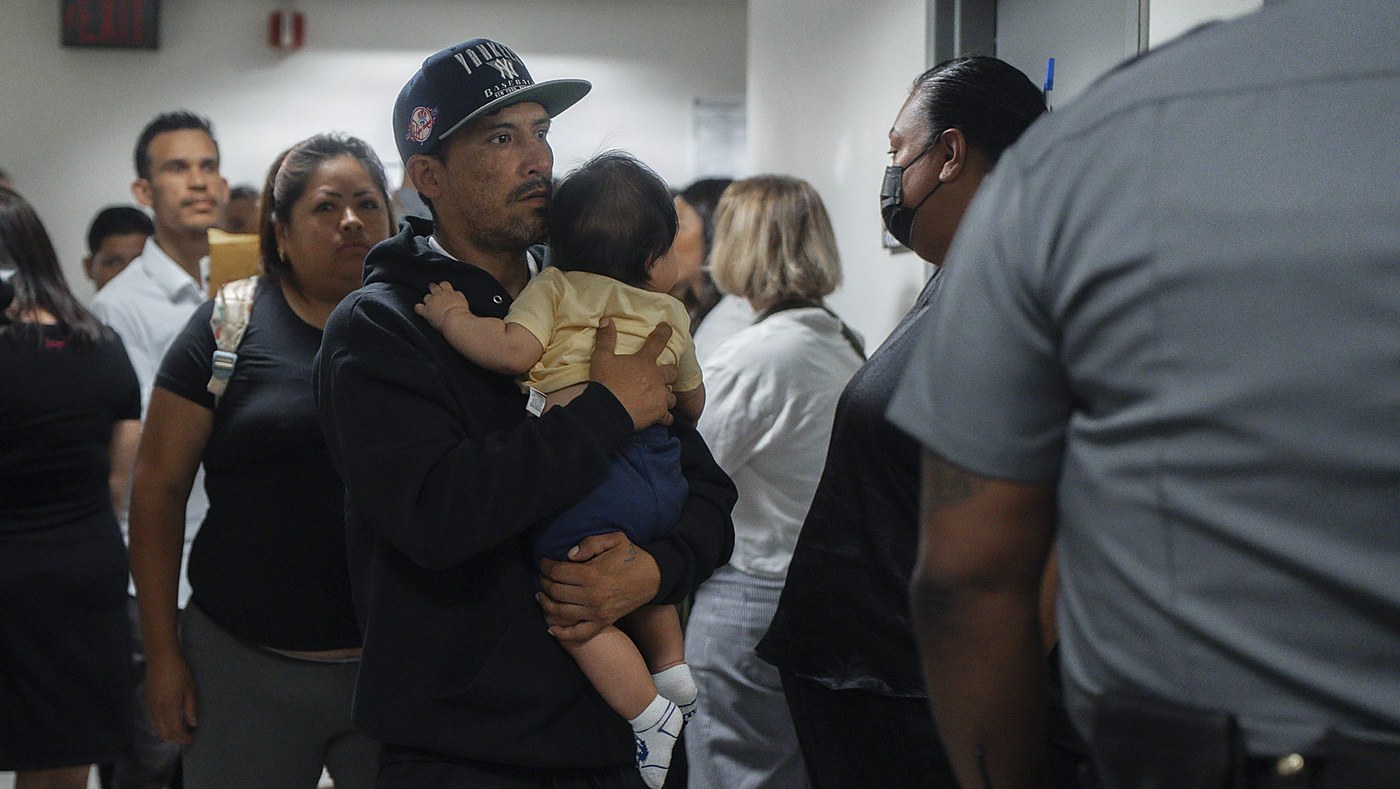
Since early June, New York's immigration courts have run what lawyers call "mega master" hearings, packing dozens of cases into a single day after advancing people's appointments by months, sometimes with a week's notice [222]. At Judge ShaSha Xu's Broadway courtroom on June 9, about 40 of the people called had no lawyer, nearly twice the number who did, and roughly 16 did not show up at all [222]. People came from as far as Spring Valley, Las Vegas, New Jersey and Chicago, often because they had not updated their address [222]. One group of Haitian asylum seekers waited eight hours only to be sent home because every Haitian interpreter had dropped off the call [222]. Experts told Documented the design pushes cases toward removal orders, because anyone who misses a hearing is likely ordered deported in absentia [222].
The takeaway
A hearing you never knew was rescheduled is a hearing you lose, and that is the mechanism here. Move the date up, give little notice, and the no-shows convert into deportation orders without a judge ever weighing the case [222]. The people paying are immigrant New Yorkers, many representing themselves in a language the court could not interpret that day [222]. Nonprofits like Immigrant ARC are now doing the government's notification work, canvassing waiting rooms to keep people from being ordered out by default [222]. This is single-sourced, but Documented was in the room; the test of its weight is whether the in-absentia order numbers climb the way the advocates predict.
How a 35% affordable-housing promise on Atlantic Avenue shrank to 25%
A councilmember got a record affordability pledge in writing. Then interest rates rose, the negotiations moved behind a closed door, and the promise quietly got smaller.
"Developers can and must offer more." City Limits put Hudson's 2022 boast next to the 2026 reality and named who agreed to less: the nonprofits, citing a financing market the developer said could not support the deal [191]. The piece is precise about what tenants actually got, 97 units at 40% of area median income, and what they did not, the enforcement everyone assumed was locked in [191].
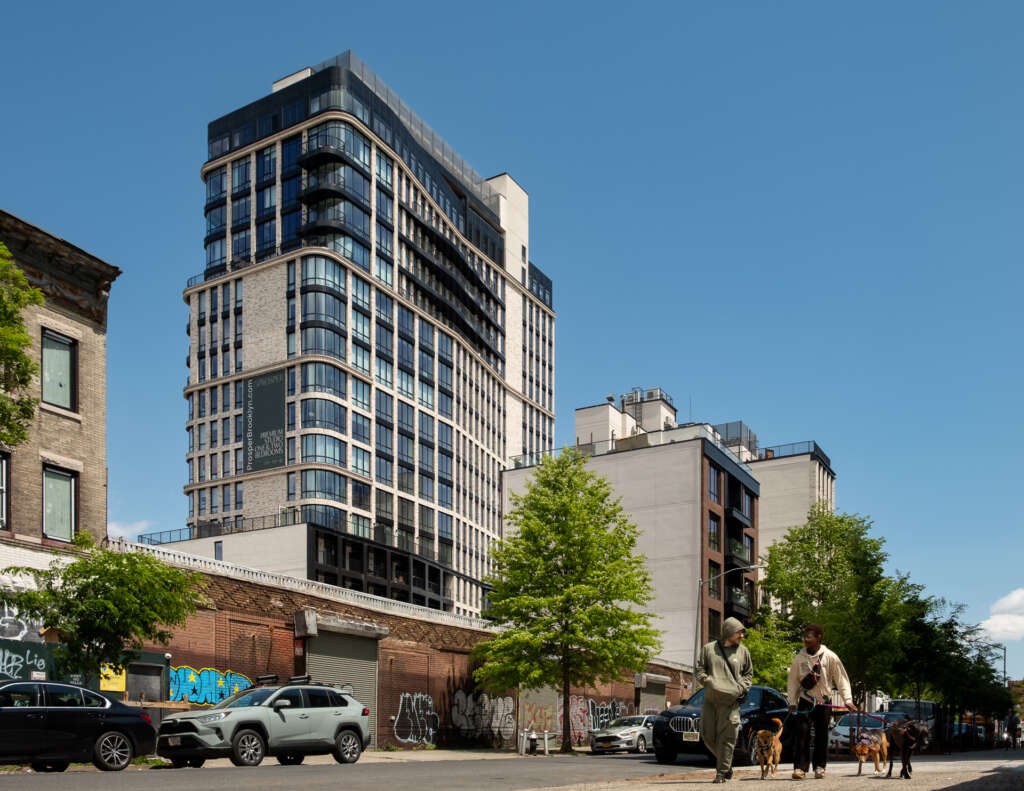
In 2022, Councilmember Crystal Hudson announced that developers behind two Atlantic Avenue rezonings had committed to a "record-setting" 35% affordable housing, about 153 of 438 apartments [191]. Four years later, the two 19-story buildings, now branded Eight80 and Prosper Brooklyn, opened at 25% affordability [191]. After interest rates jumped from 0.33% in April 2022 to far higher, developer Elie Pariente of EMP Capital called the original pledge untenable, and on Feb. 10, 2025, the two nonprofits Hudson had recruited to enforce it, the Fifth Avenue Committee and IMPACCT Brooklyn, agreed to renegotiate rather than sue [191]. In place of the lost units, they accepted a nearby site Pariente donated, where they hope to build at least 46 apartments later [191]. The $200,000 in promised anti-displacement funds was redirected to predevelopment at that new site [191].
The takeaway
This is the soft underbelly of affordability won outside the zoning code: a handshake, however well-intentioned, is only as good as the willingness to enforce it, and when rates rose the willingness went first. The winner is EMP Capital's Pariente, who got the upzoning, the head start on rivals, and a 10-point haircut on his obligation [191]. The losers are the families who would have filled 50-some below-market apartments that now exist only as a pledge for a future building [191]. Hudson was cut out of the talks that undid her own deal [191]. If you want to know why New Yorkers distrust "affordable" in a press release, this is the file to read.
Around the Boroughs
Manhattan: The Knicks' first NBA title in over 50 years drew a ticker-tape parade up the Canyon of Heroes, ending at City Hall with Mamdani handing players the keys to the city [337]. The orange-and-blue-wrapped subway station and trophy displays stayed up around town all week [337].
Brooklyn: The landmarked South Bushwick Reformed Church, on its corner since 1853, lost much of its sanctuary and its steeple to a Friday fire; the DOB issued a full vacate order, and the congregation, dating to 1654, has started a fundraiser and vows to rebuild [125].
Brooklyn: Allegations of deed theft erupted in the 59th Assembly District on the eve of the primary, where incumbent Jaime Williams, sued by her own mother-in-law in 2020 over a Flatlands home, faces challenger Jibreel Jalloh, who called for an independent investigation [95].
Queens: The Brooklyn Nets used the No. 6 pick to take Louisville guard Mikel Brown Jr., capping a draft that, per NetsDaily, left rival front offices guessing under Sean Marks' no-leaks shop [413][421].
Manhattan: Tenants at NYCHA's Fulton and Elliott-Chelsea Houses won a second court pause of the demolition-and-rebuild plan on June 11, as a judge issued a temporary restraining order over a project to replace 2,056 aging apartments [187].
Citywide: Illegal e-scooters and e-motos that exceed the city's 15-mph limit remain a click away on Amazon and other sites, even as the NYPD and DCWP cleared out brick-and-mortar sellers; no city agency monitors online sales, Streetsblog found [173].
Bronx/Manhattan: The NY-13 primary between Espaillat and Avila Chevalier was, per Epicenter's count, drowned in ICE and immigration ads, six of seven a columnist was served, in a city that has not seen the mass federal deployments of Los Angeles or Minneapolis [248].
Manhattan: The New York Historical opened a $175 million democracy wing designed by Robert A.M. Stern, the museum's first expansion in nearly a century, with a future permanent home for the American LGBTQ+ Museum [116].
Upstate: In the NY-21 Republican fight to succeed Elise Stefanik, Sticker Mule CEO Anthony Constantino, backed by Trump and quietly aided by Stefanik's longtime strategist Alex deGrasse, led retired Marine colonel Robert Smullen in early returns [2].
Queens: The data breach at NYC Health + Hospitals exposed millions of patients' personal information to cybercriminals, according to a class-action lawsuit [144].
Citywide: NYC's school-bus system, 9,000 routes at over $2 billion a year, logged 4,476 no-shows and 8,068 delays in the first weeks of the school year, hitting the 43% of riders with disabilities hardest, Chalkbeat reported [268].
Manhattan/Nolita: The relocated Morini, now Piccolo Morini at the old Kimika space on Kenmare Street, opened with $9 martinis all night, a rare value play from the Altamarea Group [336].
Western Queens: In the Jessica-versus-Jessica Senate race, a Super PAC with suspected ties to Mets owner Steve Cohen spent $850,000 on ads against Sen. Jessica Ramos, who opposes his casino [213].
Citywide: Summer camp now runs $2,400 to $6,000 per child, and only about half of kids whose parents want a structured summer are enrolled, with cost the top barrier, per The 74; one NYC mom's tab hit $14,250 for four kids [285].
Only in New York
Photo: city & state
In the heat of primary night, with Claire Valdez's win flashing on the screens above the bar, the most New York scene was the one at the loser's party. Antonio Reynoso's supporters had laced up roller skates under the rainbow lights of Xanadu Roller Arts in Bushwick, waiting on the borough president who had not yet arrived, when NY1 called the race for the other side [2]. Nobody booed. The room just went quiet and kept chatting, half-watching, the way a city does when it has already moved on to the next thing. Over in Gramercy, an assembly district director who moonlights as a magician pulled a card trick to keep Alex Bores's crowd loose while the votes trickled in [2]. Win or lose, the night had drinks, a roller rink, and a man doing magic to pass the time. The grand reveal could wait.



 “Live blog: 2026 primary day in New York”
City & State New York - All Content
“Live blog: 2026 primary day in New York”
City & State New York - All Content
 “Mayor Mamdani faces political strength test with Tuesday's congressional primaries”
Gothamist
“Mayor Mamdani faces political strength test with Tuesday's congressional primaries”
Gothamist
 “Hell Gate's NYC Primary Day 2026 Live Blog”
Hell Gate
“Hell Gate's NYC Primary Day 2026 Live Blog”
Hell Gate


 “June primary election: What you need to know before you vote”
Politics | Spectrum News NY1
“June primary election: What you need to know before you vote”
Politics | Spectrum News NY1