The Supreme Court voted 6-3 Thursday to end Temporary Protected Status for roughly 330,000 Haitians nationwide, stripping legal status and work authorization from an estimated 40,000 New York State residents within days; TPS for Haitians has been renewed continuously since a 2010 earthquake killed 220,000 people, and the State Department still rates Haiti a Level 4 travel risk, its highest designation. [14]
02
Organized transnational crime rings are draining the EBT accounts of 1.7 million New York City SNAP recipients, and the state neither tracks the scope of the theft nor reimburses victims; a victim compensation fund died in Albany this year, reimbursement money was cut from the state budget, and New York's chip-card transition has no published timeline. [18]
03
NYC-DSA won 9 of 10 primary races Tuesday, unseating four incumbents including Rep. Adriano Espaillat in Harlem, whose challenger Darializa Ávila Chevalier was largely unknown before Mayor Mamdani's endorsement; the organization identified 6,000 new supporters in her district in the final days, providing her entire margin of victory. [1]
04
At least six sitting state legislators lost their primaries to progressive challengers Tuesday, the most incumbents toppled in Albany in a single primary night in recent memory, including State Sen. Jessica Ramos, Brooklyn Assembly Members Zinerman and Dilan, and Assembly Member Jenifer Rajkumar in Queens. [4]
05
Taylor Brown became the first transgender person to lead a New York City office or agency when she took the helm of the newly created Mayor's Office of LGBTQIA+ Affairs; Brown, who moved to New York from North Carolina in 2014 and spent years litigating transgender rights cases at Lambda Legal and the AG's office, was recruited by Mamdani's transition team via LinkedIn. [13]
Story: the same event, across the newsrooms that covered it
Supreme Court TPS Ruling Ends Legal Status for 40,000 Haitian New Yorkers
Forty thousand New York State residents woke up Friday with no path forward, and a State Department travel warning that still says the country they are being returned to is Level 4 dangerous.
Within Politics & Governmentthe internal split · 2 standpoints
The ruling landed in Flatbush, on Nostrand Avenue, while people were at work.
The standpoints · tap any headline for the read
Politics & Government“NYC's Haitian Community Reels in Wake of Supreme Court TPS Ruling”The City Reporter
“They are lost. They're wondering, 'What is next?'”
"They are lost. They're wondering, 'What is next?'" The City found Doudgy Charmant, 27, painting a mural honoring Haitian heritage at Newkirk and Nostrand when the news came down; he immigrated as a child on TPS and now holds a green card, but much of his family still depends on it. The City documented Dodor Vibe, the community radio station on Nostrand Avenue that doubles as a tax prep center and English classroom, whose director Pascal Antoine told reporters he was "at a loss" for what to say to neighbors already flooding in with questions. Community liaison Herold Dasque of Haitian-Americans United gave the starkest assessment: "Prepare themselves to leave the country." The City named the economic stakes in concrete numbers: 25,000 in the state workforce, $800 million in annual contributions, and a healthcare system warning from Hochul, though the union 1199 SEIU could not specify how many of its members actually hold TPS when asked directly. [14]
Politics & Government“Venezolanos en NY se activan para impulsar ayuda humanitaria...”El Diario NY
“Desde ayer no sabemos nada de mi sobrina”
"Desde ayer no sabemos nada de mi sobrina", since yesterday we know nothing about my niece. El Diario covered Venezuelan New Yorkers organizing earthquake aid from a food stand on Roosevelt Avenue in Queens on the same day their own TPS deadline approaches this fall. Ángel Mendoza, working an empanadas stand in Jackson Heights, could not reach his niece in La Guaira after the earthquakes struck. Within hours, more than a dozen Venezuelan organizations, restaurant owners, and volunteers formed a coalition to channel financial aid; organizers noted that Venezuela's deteriorated infrastructure turned a seismic event into a humanitarian catastrophe. The piece captured the double crisis: geographic displacement from disaster at home, legal displacement under U.S. immigration law. El Diario reported the Federation Hispana called on the State Department to reactivate Venezuelan TPS given the earthquakes. [107]
The Supreme Court voted 6-3 along ideological lines Thursday to end Temporary Protected Status for roughly 330,000 Haitians and 6,800 Syrians in the United States. The ruling is the first the court has issued explaining its reasoning on the Trump administration's TPS terminations, and it sets precedent for approximately a dozen other countries still holding the designation. New York State has an estimated 40,000 Haitian TPS holders, concentrated in Flatbush's Little Haiti along Nostrand Avenue, now Toussaint L'Ouverture Boulevard. TPS for Haitians has been renewed continuously since a 2010 earthquake killed an estimated 220,000 people; the State Department rates Haiti Level 4, its highest travel warning. The Department of Homeland Security posted "NOT TIRED OF WINNING" on X after the ruling. About 25,000 Haitian TPS holders work in the New York State workforce, contributing an estimated $800 million annually in economic output and $280 million in federal, state, and local taxes; they are concentrated in home health aide, nursing assistant, mechanic, and hotel cleaning staff positions. Gov. Hochul, AG James, and Mayor Mamdani held a press conference condemning the ruling Thursday afternoon. Venezuelan TPS, covering 605,000 nationally, ends this fall; Venezuelan New Yorkers in Queens were simultaneously mobilizing earthquake relief after two earthquakes, measuring 7.2 and 7.5, struck Venezuela back to back Wednesday and Thursday.
The takeaway
--
Mamdani Sweeps the Primaries and Reshapes the City's Power Map
The mayor endorsed three congressional candidates. All three won. The organization is already looking at 2028.
2 of 9 desks covered thisNot covered by Public Safety & Justice, Transit & Streets, Business & Economy, Education, Health & Environment, Sports
Mayor Mamdani was not on the ballot Tuesday, but his fingerprints were on most of the results that mattered.
What each newsroom noticed · tap any headline for the read
Politics & Government“Here's how to avoid a DSA challenge”City & State New York
“We were kind of scared a year ago.”
"We were kind of scared a year ago." City & State interviewed NYC-DSA co-chair Gustavo Gordillo the morning after the results, who described the mechanics: the organization identified 6,000 new supporters in Ávila Chevalier's district in the final two to three days, exceeding her ultimate margin of about 2,500 votes. Gordillo said all nine victories were expected to be narrow and were instead landslides, except Ávila Chevalier's, which was the one genuinely close race. He noted that newly elected legislators tend to be "true believers" who come out of the organization itself, pointing to figures like Claire Valdez, who sat on DSA's steering committee for years. On 2028: redistricting makes it speculative, but Gordillo acknowledged the general conclusion that the organization needs to contest top-of-ticket races at the highest levels. [1]
Politics & Government“Lefties didn't just win state legislative races — incumbents lost big”City & State New York
“Zohran Mamdani was not on the ballot, but his impact sure was.”
"Zohran Mamdani was not on the ballot, but his impact sure was." City & State framed the incumbent losses as a compound phenomenon: anti-establishment energy amplified by demographic change in key districts. Rajkumar's trouble was geographic, the politically energized, younger and whiter Ridgewood section of her district outweighed her South Asian base in Richmond Hill and Woodhaven. Zinerman's Bed-Stuy district has grown younger and whiter. Democratic strategist Ryan Adams offered the clearest analysis of why name recognition failed these incumbents: "Name recognition is not trust." NYPIRG's Blair Horner called multiple incumbent defeats in one primary night "uncommon," and Mark Weprin summarized the base's frustration: "Short of setting themselves on fire on the Capitol steps, there's nothing they can do." Not all incumbents with progressive challengers lost; Didi Barrett in the Hudson Valley and Assembly Members Simon and Williams in Brooklyn all survived comfortably. [4]
Politics & Government“What does the Mamdani sweep mean?”Epicenter NYC
“If Mamdani can take out Espaillat, why not Jeffries?”
"If Mamdani can take out Espaillat, why not Jeffries?" Epicenter placed the wins in a longer frame, noting that Mamdani is now a credible kingmaker and that the national Democratic leadership (Jeffries, Schumer) knows it. The piece noted that AG Letitia James publicly compared Mamdani's effort to the MAGA demolition of the Republican establishment. The analysis distinguished two interpretations of the same results: institutional Democrats see dynamite being thrown at the party's experienced operator class; Mamdani's camp sees institutional Democrats as paralyzed by a "cautious, corporate institutionalism" while their constituents demand visible action against Trump. Epicenter was candid about its own prediction failure: it had written Ávila Chevalier off, and was wrong. [118]
Housing & Real Estate“Policy Pro: DSA wins could revive REST Act, Council strikes ULURP deals”The Real Deal
The Real Deal focused on what a 15-plus-member DSA caucus means for landlords outside New York City. The REST Act, which would let municipalities beyond New York City adopt and expand rent stabilization, died in Albany this session without reaching a floor vote; Bojak in Buffalo and Brown in Syracuse were explicitly endorsed by the New York State Tenants' Bloc on the strength of their support for the legislation. For upstate landlords who considered Albany a reliable bulwark against rent regulation, the results are an early warning. [59]
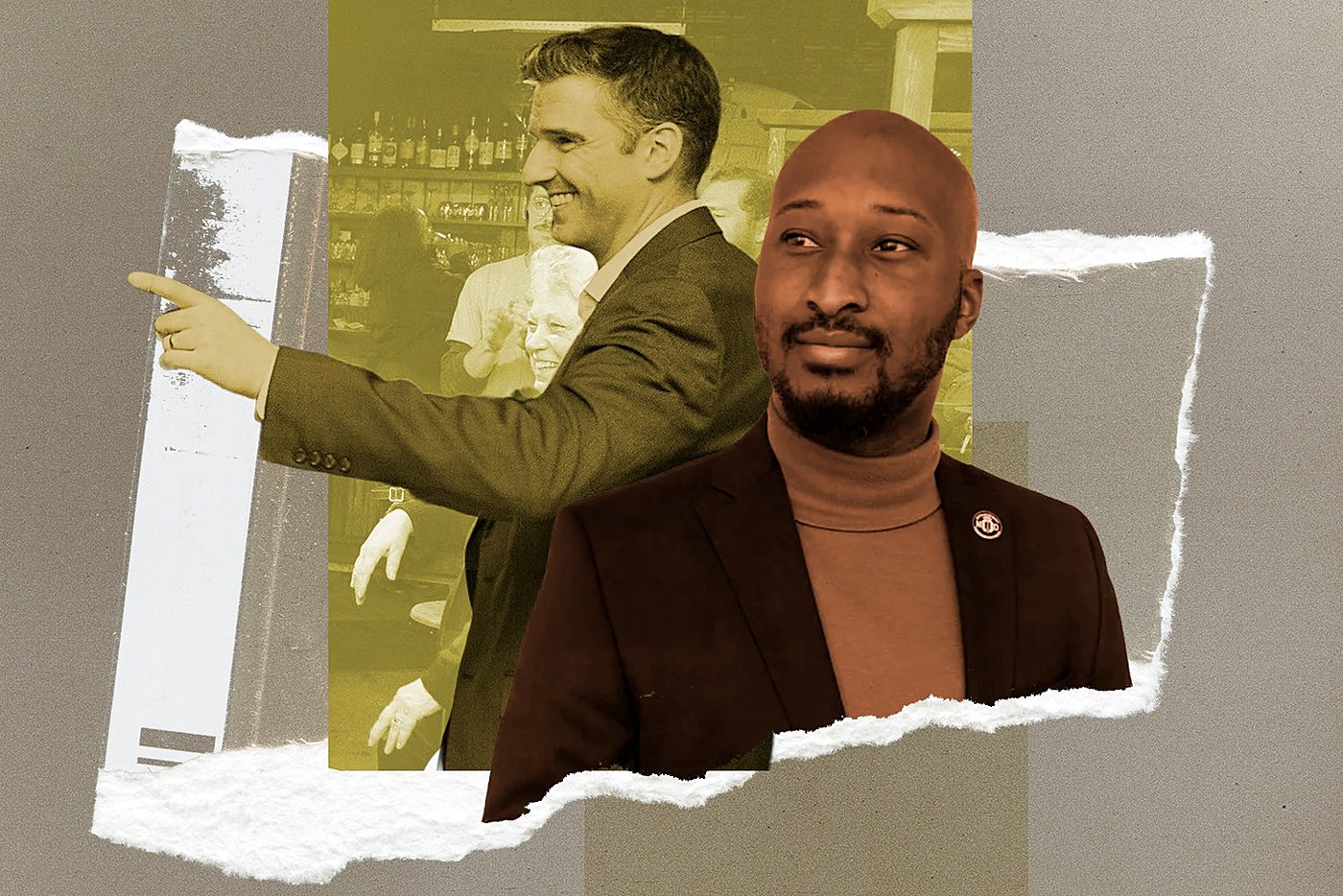
Tuesday's New York primaries produced the largest progressive sweep in a decade. NYC-DSA went 9-for-10 in its endorsed races, unseating four incumbents and winning five open seats. Mamdani endorsed three candidates in contested congressional primaries: Brad Lander (beat Rep. Dan Goldman), Claire Valdez (beat Brooklyn Borough President Antonio Reynoso for Nydia Velázquez's open seat), and Darializa Ávila Chevalier (beat Rep. Adriano Espaillat in Harlem's CD-13). All three won, including Ávila Chevalier's race, which most observers had written off before the endorsement. At the state legislative level, at least six incumbents fell: Brooklyn Assembly Members Zinerman and Dilan to DSA-backed candidates, State Sen. Jessica Ramos to Assembly Member Jessica González-Rojas, Assembly Member Jenifer Rajkumar to DSA-endorsed David Orkin in Queens, Assembly Member Eddie Gibbs to former Council Member Diana Ayala, and Sen. Jeremy Zellner upstate. In Syracuse, Bill Magnarelli trails DSA-backed Onondaga County Legislator Maurice Brown by 82 votes with ballots still being counted. The DSA's Albany caucus is set to grow from 9 members to at least 15, possibly 16. Tenant-rights attorney Adam Bojak won an open Buffalo Assembly seat. Mamdani endorsed only open state legislative seats, not incumbents, to avoid friction with Assembly Speaker Carl Heastie.
The takeaway
--
NYC Rent Guidelines Board Freezes Rents on One- and Two-Year Leases
Mamdani got his rent freeze. Now the landlords say they're getting their lawyers.
1 of 9 desks covered thisNot covered by Politics & Government, Public Safety & Justice, Housing & Real Estate, Transit & Streets, Education, Health & Environment, Sports
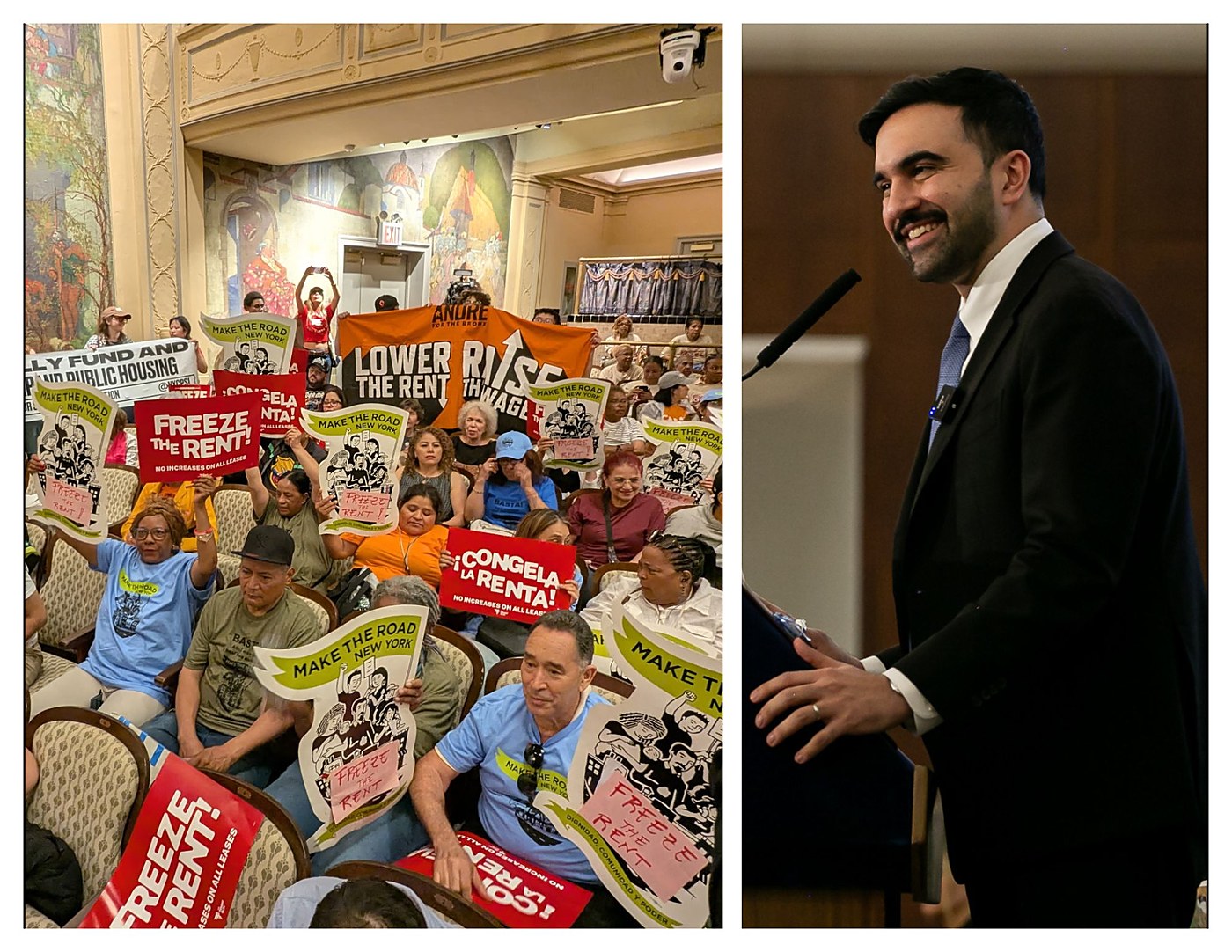
The vote happened at Museo del Barrio in East Harlem, where tenants erupted in cheers when the result came in.
What each newsroom noticed · tap any headline for the read
Business & Economy“Mamdani Gets His Rent Freeze”City Limits
“I kept saying, just like the Knicks won the championship, let's make history today. We did.”
"I kept saying, just like the Knicks won the championship, let's make history today. We did." City Limits covered the vote as a moment of genuine tenant victory and genuine landlord alarm. The article gave real weight to both sides: economist Emily Eisner of the Fiscal Policy Institute argued that landlords' net operating income rose 6% while tenants saw rents jump 12% under Adams, and wages haven't kept pace with prices. Against that, City Limits quoted a community housing finance executive directly: "Buildings can't absorb it." One in 10 rent-stabilized buildings already can't cover operating costs from rent rolls, per the board's own data. The Mamdani administration's announced relief measures, a city-backed insurance program, property tax reform pledges, won't arrive quickly, and the Smyth resignation created an opening for legal challenge on procedural grounds. City Limits noted the mayor's own careful restraint: he downplayed overt support for the freeze after taking office, perhaps wary of the board's independence mandate. [76]
The NYC Rent Guidelines Board voted 7-1 Thursday night at a packed Museo del Barrio in East Harlem to freeze rents on both one- and two-year lease renewals for the city's roughly 1 million rent-stabilized apartments, covering an estimated 2.4 million tenants. The two-year freeze is the first in the board's history; Mayor de Blasio froze rents three times but never on two-year leases. Mamdani appointed six of the board's nine members. Christina Smyth, the landlord representative appointed by former Mayor Adams, resigned Thursday morning before the vote, writing in her resignation letter that "this year's RGB order was decided last year on the campaign trail." Arpit Gupta, also an Adams appointee, cast the lone "no" vote. The freeze applies to leases beginning between October 1, 2026, and September 30, 2027. The board's own data showed a 5.3% increase in operating costs and found one in 10 rent-stabilized buildings with rent rolls that do not cover expenses. Landlord groups immediately threatened lawsuits; Real Estate Board of New York president James Whelan called it "a terrible decision," and New York Apartment Association president Kenny Burgos warned of "more dilapidated housing and potentially more foreclosures." The Mamdani administration announced a city-backed insurance program and pledged to pursue property tax reform in Albany as concessions to landlords.
The takeaway
--
EBT Food Stamp Theft Drains Accounts Across the City, and Albany Has No Fix
New York knows its food stamp cards are easy to steal from. It does not know how many people are being robbed, because it stopped collecting the data.
1 of 9 desks covered thisNot covered by Public Safety & Justice, Housing & Real Estate, Transit & Streets, Business & Economy, Education, Health & Environment, Sports
The story is not about one type of fraud but about a structural gap: EBT cardholders have no legal protection equivalent to what federal law provides to credit card users.
What each newsroom noticed · tap any headline for the read
Politics & Government“Stolen Food Stamp Funds Leave Thousands Hungry as New York Sleeps on Reforms”The City Reporter
“It's not seen as a crisis, because it's poor people.”
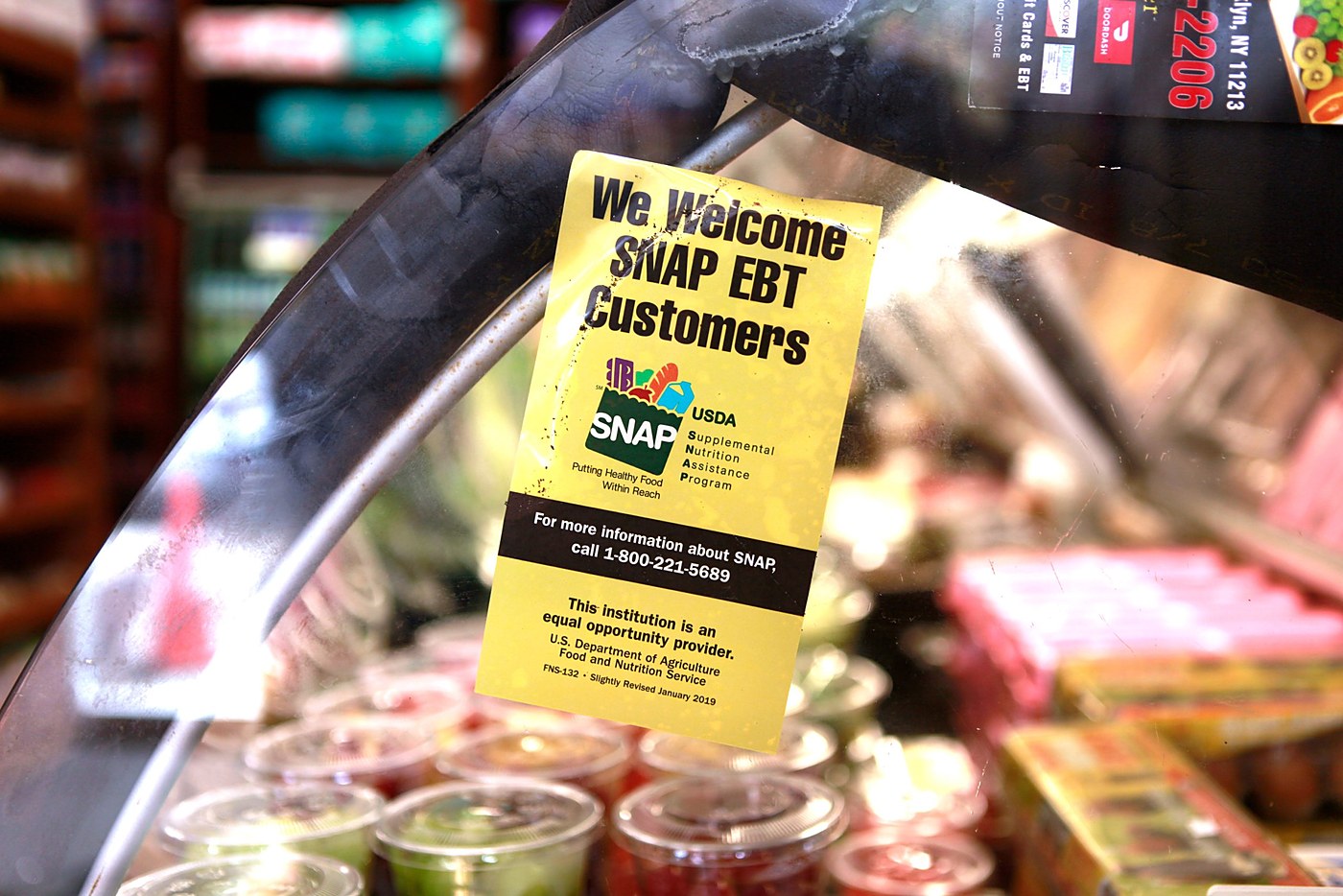
"It's not seen as a crisis, because it's poor people." The City led with Dolly R., a Holocaust survivor in her 90s in Borough Park, who discovered her $224.47 balance wiped at the grocery store checkout; she will not be reimbursed. The story put faces on the scale without turning it into a parade of misery: a Flushing father buying his two teenagers instant ramen at three for 99 cents; a single preschool-teacher mother who could not buy her six-year-old fruit that month. The City described the technical vulnerabilities: the state balance-check hotline requires no identity verification, which lets thieves capture account information; there is no anomaly detection to flag even obviously impossible charges. The governor's office blamed Washington for cutting federal reimbursements. The OTDA spokeperson focused on the chip-card plans. The City found neither would specify a dollar figure or a timeline when pressed. Joel Berg of Hunger Free America provided the verdict: the state doesn't define this as a crisis because the victims are poor. [18]
Organized transnational crime rings are systematically draining the EBT food stamp accounts of New York City's 1.7 million SNAP recipients, and the state has no fraud detection, no reimbursement mechanism, and no published data on the scope of the theft. New York's EBT cards still use magnetic stripe technology; California, Alabama, and at least six other states have switched to chip-and-tap cards. California also built a machine-learning fraud detection model and has cut reported benefit theft 76% from its 2024 peak. New York stopped collecting fraud claims after the federal government ceased reimbursements in late 2024, meaning the state no longer has a number to defend in budget negotiations. Legislation to create a victim compensation fund died in Albany this year; reimbursement money was cut from the state budget entirely. The state budget did include unspecified funding to begin the chip-card transition, but neither the Office of Temporary and Disability Assistance nor the governor's office would tell The City how much was allocated or how long the conversion would take. Roughly 20% of New York City's population receives SNAP; half a million of the recipients are children. To qualify, an individual's income generally cannot exceed $20,000 a year.
The takeaway
--
Federal Indictment Charges Former Adams Chief of Staff in Migrant Shelter Bribery
The city's own agency said no twice. City Hall said yes anyway. Prosecutors say it cost $120,000.
1 of 9 desks covered thisNot covered by Public Safety & Justice, Housing & Real Estate, Transit & Streets, Business & Economy, Education, Health & Environment, Sports
Three federal corruption cases have now touched the Adams administration; all three involve the migrant emergency and its contract stream.
What each newsroom noticed · tap any headline for the read
Politics & Government“The Adviser and the Businessman”Documented
“Please help me get done we need to refinance.”
"Please help me get done we need to refinance." Documented reconstructed the relationship between Zhu and Carone through text messages cited in the indictment, Chinese-language media accounts, and federal court filings. The piece placed Zhu within the city's Chinese business and civic organization networks, where he cultivated relationships with former NYPD spokesperson Tarik Sheppard and Gov. Hochul's former top aide Linda Sun, whose federal corruption trial ended in a mistrial earlier this year. Documented noted the procedural detail that makes the case structurally significant: a DSS subagency official's October email explicitly attributed the Microtel approval to having "come directly from the top," meaning career staff knew they were being overruled by a political directive and said so in writing. The piece also traced Carone's post-City Hall career: he left at the end of 2022 and launched the consulting and lobbying firm Oaktree Solutions in 2023. [92]
Federal prosecutors in the Eastern District of New York unsealed a 13-count indictment Wednesday charging four defendants: Frank Carone, former chief of staff to Mayor Eric Adams; his brother Anthony Carone; hotel owner Yan Po "Andy" Zhu; and Zhu's employee Crystal Chen. Prosecutors allege Carone used his position to steer a $6.825 million emergency shelter contract to Zhu's 75-room Microtel Inn by Wyndham in Long Island City, Queens, despite the Department of Social Services twice determining the hotel was too small and located in a neighborhood already saturated with migrant shelters. Zhu then paid $10,000 per month, totaling $120,000, funneled through Anthony Carone's law firm, which Frank Carone fed with client referrals from inside City Hall. An October 11, 2022 email from a DSS subagency official stated the Microtel proposal had "come directly from the top" and should be treated as approved despite the agency's objections. The contract was awarded two weeks later. According to the Department of Justice press release, the scheme unfolded as the city was receiving approximately $1.8 billion in federal funding for migrant housing. All four pleaded not guilty and were released on bond. Adams himself was indicted in 2024 on separate federal bribery charges, later dropped after he agreed to cooperate with Trump immigration enforcement; businesswoman Weihong Hu was charged last year in a separate migrant shelter contract scheme.
The takeaway
--
Greenpoint's Monitor Point Gets Land Use Approval at 50% Affordable
Gotham gets three waterfront towers. The neighborhood gets 662 income-restricted apartments. The activists who wanted parkland get $300,000 a year and a public shoreline.
Within Housing & Real Estatethe internal split · 2 standpoints
The Monitor Point approval resolves a months-long standoff between Gotham Organization and the Council member whose land use vote the developer needed.
The standpoints · tap any headline for the read
Housing & Real Estate“Policy Pro: DSA wins could revive REST Act, Council strikes ULURP deals”The Real Deal
“nickeling and diming”
The Real Deal framed Monitor Point as the Mamdani administration's first major ULURP test. The piece noted the appeals board as a new pressure mechanism whose composition (Menin, Reynoso, Mamdani) heavily favored the administration's housing priorities, making Restler's alternative to deal-making not a block but a different kind of approval. The Real Deal also flagged a parallel affordability fight across town: Council Member Gale Brewer managed only 14 additional affordable units out of developers Chapman Group and Friedland Properties for the 1,094-unit Dewey Clinton Park North project on the West Side, accusing the developers of "nickeling and diming" the community before reluctantly voting to advance it anyway. [59]
Housing & Real Estate“City Council greenlights Gotham's controversial Monitor Point”The Real Deal
“On public land we have a much higher standard for what we should expect.”
"On public land we have a much higher standard for what we should expect." The Real Deal's closing piece focused on Restler's account of the mechanics: no single tool got to 50%, but rather a combination of air rights, commercial conversion, and MTA concessions. Restler credited the Mamdani administration, Gotham, and the MTA for each contributing a piece. The developer's financial model for the added affordability was not disclosed. Gotham issued a statement; HPD and the Mamdani administration did not respond to comment requests before publication. [63]
The City Council's zoning and land use committees voted Thursday to approve Gotham Organization's Monitor Point development at 40 Quay Street in Greenpoint, Brooklyn. The project proposes three waterfront towers on MTA-owned land, with 1,324 total apartments, 662 of them affordable (50% of the total). The affordability breakdown: 329 units at 40-60% AMI, 172 at 80-125% AMI, 161 reserved for seniors, and 110 supportive housing units for formerly homeless New Yorkers. Brooklyn Council Member Lincoln Restler had threatened to block the project mid-ULURP unless Gotham hit 50% affordability and fully funded the adjacent Bushwick Inlet Park. The final deal added 202 affordable apartments from an earlier 40% figure, through a combination of air rights transfers, commercial space conversions, and MTA concessions. Restler called it "the hardest negotiation of my entire Council career." Full Council votes Monday. NIMBY activists who wanted the entire site reserved for parkland lost; they got $300,000 per year for Bushwick Inlet Park and public waterfront access instead. If Restler had blocked the project, it would have become the first test of a newly formed affordable housing appeals board consisting of Council Speaker Julie Menin, Brooklyn BP Antonio Reynoso, and Mayor Mamdani.
The takeaway
--
MTA Rejects Amtrak's Penn Station Partnership Offer, Citing 160-Year Lease Rights
Amtrak invited the MTA back to Penn Station. MTA Chair Lieber said the invite came with strings he wasn't willing to sign. Amtrak said it'll build anyway.
1 of 9 desks covered thisNot covered by Politics & Government, Public Safety & Justice, Transit & Streets, Business & Economy, Education, Health & Environment, Sports
Penn Station's reconstruction has become a jurisdictional standoff between two agencies with overlapping legal claims over the same building.
What each newsroom noticed · tap any headline for the read
Housing & Real Estate“MTA and Amtrak at odds over Penn Station redesign”6sqft
“The MTA's Long Island Rail Road and the MTA's subways carry two-thirds of the daily users of Penn Station.”
"The MTA's Long Island Rail Road and the MTA's subways carry two-thirds of the daily users of Penn Station." 6sqft laid out the legal geography: Amtrak needs MTA sign-off for construction in the northern half under the existing lease, but the collaboration agreement Amtrak proposed would have granted the federal government more say over those very decisions. Lieber's refusal to sign keeps the lease intact while leaving him in a reactive position. The piece noted the new Seventh Avenue entrance and 33rd Street concourse, opened in November 2023 under Lieber's tenure, are not part of the current dispute. It also reported Amtrak has not yet secured full project funding and has not reached agreement with all parties involved. [52]
MTA Chair and CEO Janno Lieber declined to sign a "collaboration agreement" sent by Amtrak senior adviser Andy Byford, which would have made the MTA a "fully involved partner" in the Penn Station reconstruction. The Trump administration removed the MTA from the project last year, scrapping its original 250,000-square-foot, single-level train hall plan, and gave Amtrak control. Last month, the federal government selected Halmar International and Skanska as master developer; Lieber called the selection process "opaque" and said it had the "appearance of impropriety." Amtrak released first renderings this month from architect Practice for Architecture and Urbanism (PAU), describing a 50-foot train hall and widened concourses with ceiling heights of at least 20 feet, referencing the original McKim, Mead & White station demolished in the 1960s. Lieber's counter-offer: send the plans and brief us; we will give feedback. He will not sign an agreement that would override the MTA's existing 160-year prepaid lease giving it approval rights over the northern half of the station. Byford said Amtrak plans to proceed regardless, with construction beginning by end of 2027. Byford denied the plan would raise costs for LIRR riders, a claim Lieber disputes.
The takeaway
--
Around the Boroughs
Bronx: FDNY's Chief of Fire Operations Kevin Woods wrote DOT a letter opposing the Harlem River Greenway's protected bike lane segment on Sedgwick Avenue, and a local battalion chief testified in uniform against it at a community board meeting last week; Bronx bike advocates say FDNY opposition has killed key cycling infrastructure before, and the Boogie Down is already far behind other boroughs. (Streetsblog) [71]
Staten Island: NYPD has barred Officer James Giovansanti, who accumulated 547 speed and red-light camera violations since 2022, from driving squad cars, and the Internal Affairs Bureau has opened a formal investigation, the first public acknowledgment of the probe since Streetsblog's April report stunned the city. (Streetsblog) [70]
Bushwick, Brooklyn: The historic South Bushwick Reformed Church, which has stood at 855 Bushwick Avenue since 1853, will be mostly demolished after Friday's fire; the church plans to save Fellowship Hall and part of the north wall but raze the sanctuary, pending emergency plans the city is demanding be filed immediately. (Brownstoner) [57]
Citywide: ICE arrests of Asian immigrants in New York have surged sevenfold since January 2025, with Chinese immigrant arrests up 1,044% and Bangladeshi immigrant arrests up 1,000%; advocates are pushing the City Council to fully fund the RISE Network at $3.5 million in the FY2027 budget before the June 30 deadline, up from $2 million last year. (Documented) [95]
Jackson Heights, Queens: Venezuelan New Yorkers on Roosevelt Avenue organized a relief coalition within hours of two back-to-back earthquakes, coordinating financial donations through restaurant owners as staging points; the Venezuelan diaspora also called on the State Department to reactivate Venezuelan TPS, which ends this fall. (El Diario NY) [107]
East Harlem, Manhattan: DOT added dedicated bus lanes in both directions on E. 116th Street from Fifth Avenue to Pleasant Avenue, running 24 hours a day; the crosstown corridor carries some of Harlem's heaviest bus traffic. (Streetsblog) [74]
Citywide: Gov. Hochul gave New York City two more years to comply with the state childcare voucher "coupling" rule that ties benefits to work and school hours, sparing more than 100,000 children from disruptions to their care and the providers from enrollment losses; 26,000 more children are on the waitlist. (Chalkbeat) [119]
Brooklyn/Citywide: COPA, the Community Opportunity to Purchase Act that former Mayor Adams vetoed last year, was revived with a City Council majority and Mamdani's support; the bill would give community land trusts and other nonprofits a right of first offer on distressed multifamily buildings before they reach the open market. (City Limits) [78]
Midtown, Manhattan: Life sciences leaders from drug companies, real estate firms, and universities are pushing Mayor Mamdani to reverse an EDC decision that slashed the agency's life sciences division from eight employees to two, warning the move will stall growth in New York's still-developing biotech industry. (Crain's New York) [89]
Upper West Side, Manhattan: Film at Lincoln Center's Elaine May retrospective runs June 26 through July 2; May appears in person at a Thursday screening of a new 4K restoration of Mikey and Nicky, the 1976 film marking its 50th anniversary, with tickets at $25 for the Q&A screening. (Time Out New York) [141]
East Village / Lower East Side / Astoria / SoHo: Four New York City ice cream shops landed on Yelp's national top-15: Soft Swerve in the East Village at No. 2, il laboratorio del gelato on the Lower East Side at No. 6, Figo Il Gelato Italiano in Astoria at No. 11, and KITH Treats in SoHo at No. 13. (Time Out New York) [142]
Buffalo / Syracuse: DSA wins in Buffalo (tenant-rights attorney Adam Bojak) and an 82-vote lead in Syracuse (Maurice Brown, still being counted) could give the REST Act, which would let non-NYC municipalities adopt rent stabilization, the upstate Assembly votes it lacked when it died in Albany without reaching a floor vote this session. (The Real Deal) [59]
Bronx: Thousands of Bronx apartments under a separate city affordable housing program are facing rent increases even as the Rent Guidelines Board froze rents city-wide Thursday, an awkward contrast the Mamdani administration has not fully resolved. (The Real Deal) [59]
Only in New York
Photo: hell gate
Robin Byrd spent two decades as the crochet-bikinied host of a softcore public access late-night call-in show, airing from 1977 to 1998, with guests ranging from downtown porn stars to Sandra Bernhard. George Carroll Whipple III, a Columbia-educated descendant of three signers of the Declaration of Independence, has spent 32 years as the eyebrowed red-carpet reporter for NY1, interviewing what sounds like the entire history of Hollywood. Both turned 71 this year. Both are now the subjects of documentaries that premiered at Tribeca this month. Both recently sat together at a filmmaker's SoHo loft to compare notes, and they have known each other casually for decades. "Lie back, get comfortable," Byrd told her viewers at the top of every episode. Whipple described himself to Hell Gate as "extremely private." The city gave them both exactly what they needed: a cable channel and an audience. (Hell Gate) [50]






 “Venezolanos en NY se activan para impulsar ayuda humanitaria...”
El Diario NY
“Venezolanos en NY se activan para impulsar ayuda humanitaria...”
El Diario NY