Historic rent freeze. The Rent Guidelines Board voted 7-1 Thursday night to freeze rent on New York City's 1 million stabilized apartments, the first 0% increase on both one- and two-year leases in the board's history, with the change covering 2.5 million tenants on leases starting October 1 [4], [6], [7].
02
Budget deal stalls. Mayor Mamdani and the City Council remain deadlocked over CityFHEPS, the housing voucher program whose annual cost has climbed from $26 million in 2019 to $1.8 billion today; the council is demanding $300 million more and two Bronx and Brooklyn progressive members have threatened to vote against the budget if there is no deal before Tuesday's scheduled vote [9].
03
Board member quits before vote. Christina Smyth, the Rent Guidelines Board's only remaining Adams-appointed member representing landlords, resigned hours before Thursday's decision, writing the board had "stopped being a fact-finding body," giving landlords their best evidence for an imminent legal challenge [6].
04
City Council interns sue. Former unpaid interns filed a class-action lawsuit against New York City Friday and rallied at City Hall, alleging retaliation for organizing; one was fired the day after launching a pay campaign by the council member who chairs the Committee on Consumer and Worker Protection [1].
05
Six months without an EDC leader. The New York City Economic Development Corporation has gone half a year into the Mamdani administration without a permanent president, leaving the agency's role in maritime infrastructure, ferry expansion, and waterfront development without executive direction just as the FIFA World Cup draws millions to the city's shores [2].
Story: the same event, across the newsrooms that covered it
The Historic NYC Rent Freeze
Seven Mamdani appointees voted to hold 1 million rents flat at El Museo del Barrio on Thursday night, and landlord groups were already calling their lawyers before the chanting stopped.
5 of 9 desks covered thisNot covered by Transit & Streets, Education, Health & Environment, Sports
The vote was the largest New York housing story of the year, and every desk read it through a different lens.
What each newsroom noticed · tap any headline for the read
Politics & Government“Mamdani takes victory lap on rent freeze”Spectrum News NY1
“If you're one of the more than 2 million New Yorkers who lives in a rent stabilized apartment, your rent is going to be frozen next year.”
"If you're one of the more than 2 million New Yorkers who lives in a rent stabilized apartment, your rent is going to be frozen next year." NY1 tracked Mamdani's East Harlem victory celebration and the immediate landlord backlash. Kenny Burgos, CEO of the New York Apartment Association, accused the mayor of building the board to deliver a predetermined outcome. Fiscal Policy Institute director Emily Eisner countered that landlord profits in the stabilized sector have risen more than 50% since the 1990s, and that absorbing flat rents is financially feasible, especially as the mayor has also backed a new city-funded insurance program to reduce one of landlords' fastest-rising costs [4].
Politics & Government“Tenants and landlords sharply divided”Spectrum News NY1
“The fix was in. There was pressure from City Hall for the members to vote this way.”
"The fix was in. There was pressure from City Hall for the members to vote this way." NY1's second piece recorded the texture of the night: standing room only at El Museo, tenants chanting in four languages, Smyth's resignation letter accusing the board of ignoring its own data. The board's own Price Index showed insurance costs up 10.5% and total operating costs up 5.3% year-over-year, figures landlords say the board chose to set aside [6].
Politics & Government“How the Rent Freeze Will Work”The City Reporter
“He was right. And now, he plans to sign a two-year lease this October with a 0% increase.”
"He was right. And now, he plans to sign a two-year lease this October with a 0% increase." The City led with Stephen White, a Crown Heights tenant who has gamed his lease renewal timing against rent board predictions for 25 years, tracking $6,000 in cumulative savings on a spreadsheet. The practical guide built around White revealed a real enforcement gap: the state agency that handles overcharge complaints (DHCR) is chronically understaffed, and some tenants wait months or years for action [7].
Housing & Real Estate“Two-year rent freeze approved”6sqft
“No matter what landlords tell the courts or the legislature, it's clear the rent freeze has a democratic mandate.”
"No matter what landlords tell the courts or the legislature, it's clear the rent freeze has a democratic mandate." 6sqft provided the technical policy ground: which buildings qualify (6+ units built before 1974, plus newer buildings with qualifying tax incentives), how Adams's December board-seating gambit tried to prevent this outcome, and the tenant bloc's argument that landlord profits rose 30% under Adams while stabilized rents climbed 12% [47].
Housing & Real Estate“Mamdani's Rent Board Votes Through Stabilized Rent Freeze”Brownstoner
“Popsicles, paletas and now rents: all frozen.”
"Popsicles, paletas and now rents: all frozen." Brownstoner's piece was the most humanizing, ending with Darryl Randall, 57, out of work in Bed-Stuy: "I'm on cloud nine. I feel like this is a dream." It traced the political arc from Mamdani's New Year's Day Coney Island plunge through the raucous auditorium in East Harlem [50].
Public Safety & Justice“Already facing lawsuit threats”New York Post
“It's irrational. It's a sham. It was clearly politically motivated. The outcome was preordained.”
"It's irrational. It's a sham. It was clearly politically motivated. The outcome was preordained." The Post led with real estate attorney Massimo D'Angelo's legal analysis: two viable arguments for landlords in court, regulatory taking (the freeze denies reasonable return without just compensation) and due process (the board ignored its own operating cost data). The Post also cited 2023 city housing data showing roughly 30% of stabilized tenants earn more than $100,000 a year and 41% are single adults without children, framing the freeze's benefits as less targeted than advocates claim. Queens landlord Violet Zharku, who owns three rent-stabilized buildings, put it plainly: "I'm desperate" [26].
Housing & Real Estate“Here come the rent freeze lawsuits”The Real Deal
“It could be as quick as Monday, but generally it will take a couple weeks to assess and to file a carefully tailored pleading.”
"It could be as quick as Monday, but generally it will take a couple weeks to assess and to file a carefully tailored pleading." The Real Deal reported that the New York Apartment Association had been in active legal planning since May. D'Angelo said courts "usually defer to local jurisdictions" on rent regulation, making a landlord win uncertain, but Smyth's resignation and her specific claims about the board's process give the due process argument more traction than past constitutional challenges [58].
Business & Economy“Rising Costs, Flat Rents”City Limits
“Since 2020, operating expenses for rent-stabilized buildings have risen approximately 27 percent, while rents have increased only about 11 percent.”
"Since 2020, operating expenses for rent-stabilized buildings have risen approximately 27 percent, while rents have increased only about 11 percent." City Limits published the most careful financial analysis, drawing on Community Preservation Corporation data: insurance up 75% since 2020, utilities up 21%, general and administrative expenses up 52%. Repairs and maintenance spending rose only 1%, which the piece read as evidence that deferred maintenance is already compounding. It called the RGB process itself a "politically charged spectacle" and proposed CPI-linked adjustments as a more stable alternative [61].
Business & Economy“Election post-mortem”The Real Deal
“The real estate community and REBNY specifically are guilty of being extremely lazy, politically.”
"The real estate community and REBNY specifically are guilty of being extremely lazy, politically." TRD ran an unusually frank autopsy of the real estate industry's political strategy, quoting Bradley Tusk calling REBNY's check-writing approach a failure against DSA's year-round grassroots organizing. Tusk noted that anti-Trump and anti-Netanyahu sentiment is now an explicit driver of DSA's wins, an energy REBNY has no ready counter to [56].
The Rent Guidelines Board voted 7-1 Thursday night at El Museo del Barrio in East Harlem to approve 0% increases on both one- and two-year leases for New York City's roughly 1 million rent-stabilized apartments. The freeze covers leases beginning on or after October 1, 2026 through September 30, 2027. Mayor Mamdani appointed six of the nine board members in February, after former Mayor Eric Adams tried in his final weeks to seat allies who might block a freeze. Christina Smyth, one of three Adams holdovers and the board's only remaining landlord-aligned member, resigned hours before the vote, writing the board had "stopped being a fact-finding body" and "started with an answer." The final 7-1 tally came from eight members present; no landlord-representing members participated. This is the fourth rent freeze in the board's history. The three prior freezes (2015, 2016, 2020) covered only one-year leases; Thursday's is the first freeze ever on two-year leases. 2.5 million tenants in roughly 1 million apartments are covered. Landlord groups have signaled lawsuits within weeks [4], [6], [7], [47], [50].
The takeaway
2.5 million New Yorkers will not see a rent increase starting October 1. The legal challenge coming from landlords is real but historically weak: every constitutional challenge to New York rent stabilization has been turned away by federal courts, including two attempts the U.S. Supreme Court declined to hear since 2023. The current attack is narrower, a procedural due process argument that the board ignored its own data on landlord costs. Smyth's resignation letter is the best evidence landlords have, but it is one board member's account of a political body that mayors have always shaped through appointments. The financial counterargument from City Limits is the one worth watching over time: operating costs have outpaced rents by roughly 2-to-1 since 2020, and no court outcome changes that math. Small landlords with older Bronx buildings, where rent rolls are lowest and maintenance needs are highest, are under genuine financial pressure. The freeze does nothing about their insurance or property tax burden (which is five times what owner-occupied small homes pay per City Limits [61]), and may accelerate deferred maintenance. Who benefits now: the tenant whose lease renews after October 1. Who pays: landlords absorbing costs that grew faster than rents for six years straight. The long-run question, whether this accelerates building decay in the city's most financially distressed stabilized stock, will answer itself over the next few years [4], [6], [7], [26], [47], [50], [58], [61].
CityFHEPS Budget Impasse Stalls Tuesday Vote
Mamdani campaigned on protecting housing vouchers, then appealed the court ruling that would have expanded them, and now the same progressive council members who helped elect him are threatening to tank his budget over it.
“Right now we are stuck on FHEPS, so that is where we are.”
"Right now we are stuck on FHEPS, so that is where we are." The City reported the impasse with enough sourcing to establish that the council is unified on its demand and that multiple progressive members who are ostensibly Mamdani allies are willing to vote against the budget over it. Menin called the mayor's litigation "a costly, continued" delay and urged him to drop it. A Mamdani spokesperson said the administration wants to "protect" CityFHEPS by "placing it on firm financial footing," which is an acknowledgment that the program's current cost trajectory is unsustainable. Sanchez put the dilemma plainly: "What is the point of electing super progressives if they abandon the most needed in the most significant of ways?" [9]
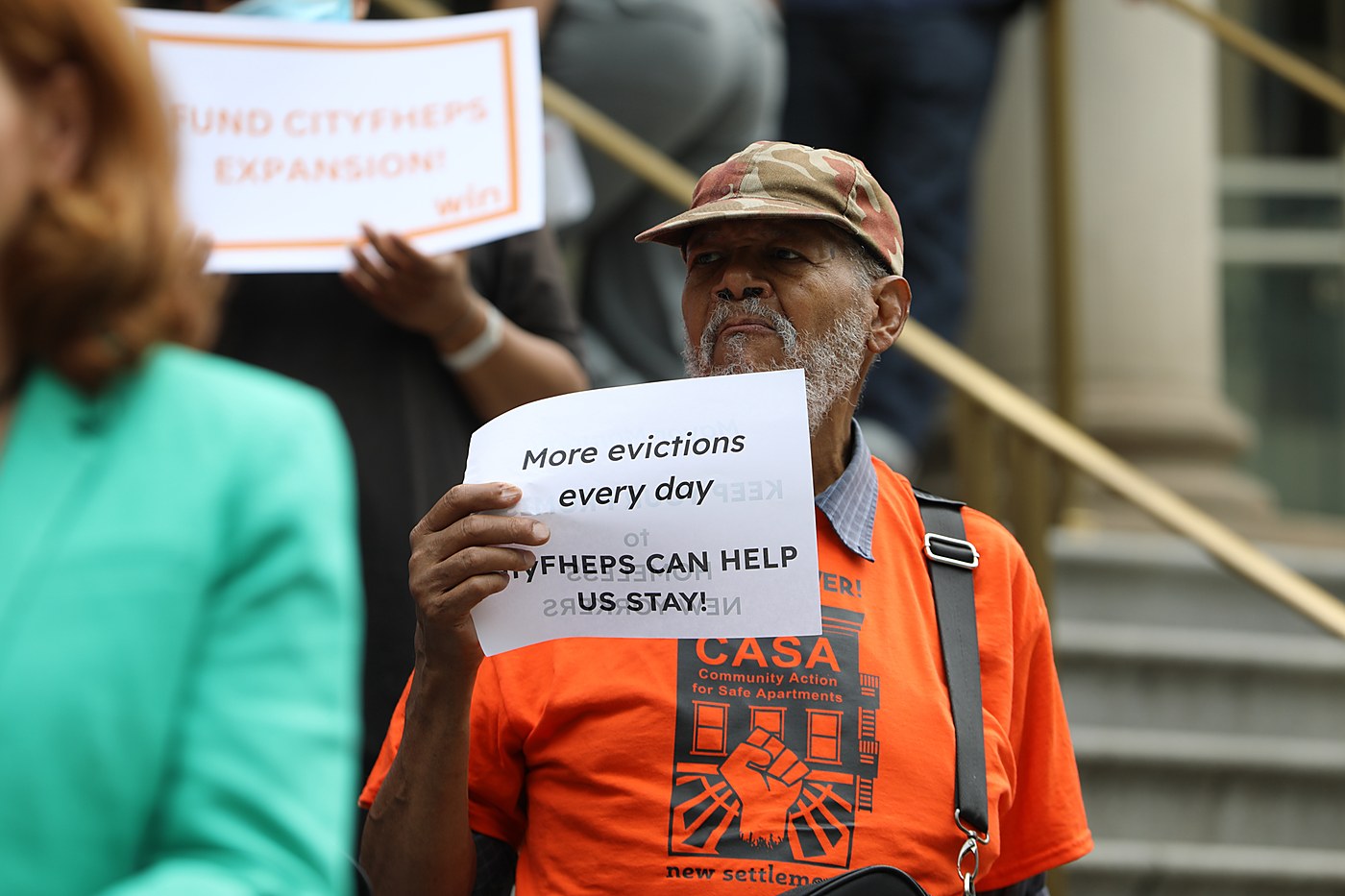
Budget negotiations between Mayor Mamdani and the City Council remained deadlocked Friday over CityFHEPS, the city-funded rental assistance program for people leaving homeless shelters. The council passed laws in 2023 to expand CityFHEPS, which Mamdani had supported as a candidate. Earlier this year he appealed a court ruling that would have required implementing the expansion, citing the program's ballooning cost. CityFHEPS cost the city $26 million in 2019 and $1.8 billion this year; the city projects costs will reach $3 billion annually by 2030, for a cumulative $12.6 billion through the decade. The council is demanding $300 million more for the program; some housing advocates say $500 million is needed. Council Members Pierina Sanchez (the Bronx) and Sandy Nurse (Brooklyn) said they would not vote for a budget without a deal. The council's budget vote is scheduled for Tuesday. A ceremonial handshake between Mamdani and Council Speaker Julie Menin must precede that vote, and there was none Friday. People familiar with the negotiations said talks would continue through the weekend [9].
The takeaway
CityFHEPS is the city's main lever for preventing people from cycling between shelters and the street. Its cost explosion from $26 million to $1.8 billion in seven years reflects both the scale of New York's homelessness crisis and the political difficulty of capping a benefit once it is in place. Mamdani's position is a genuine contradiction: he endorsed the expansion as a candidate, appealed the court order requiring it as mayor, and now must negotiate a number with the council members who helped elect him. If he meets the $300 million demand, he extends a program he has called financially unsustainable. If he does not, he loses progressive votes on his first real budget. The specific "reforms" he wants in exchange for more funding have not been made public. Not addressed in coverage: what those reforms would actually limit or change about program eligibility or cost structure [9].
Monitor Point Rezoning Clears Committee in Greenpoint
After five years of Lincoln Restler saying no, Gotham hit 50 percent affordable and 662 subsidized apartments are now heading to the Greenpoint waterfront on MTA-owned land.
2 of 9 desks covered thisNot covered by Politics & Government, Public Safety & Justice, Transit & Streets, Education, Health & Environment, Culture, Food & Nightlife, Sports
What each newsroom noticed · tap any headline for the read
Housing & Real Estate“Monitor Point rezoning moves forward with 660+ affordable apartments on Greenpoint waterfont”6sqft
“Our city is in the midst of a historic affordability crisis, and this project will help address the urgent shortage of affordable homes in Greenpoint.”
"Our city is in the midst of a historic affordability crisis, and this project will help address the urgent shortage of affordable homes in Greenpoint." 6sqft provided the income-tier breakdown in concrete terms: a family of three earning $76,300 could rent a two-bedroom for $1,822 a month; a senior earning $35,600 could rent a one-bedroom for $911. It noted that Gotham is partnering with RiseBoro Community Partnership, the same pairing that produced Gotham Point in Long Island City, a 1,132-unit development with 75% affordable and rent-stabilized units and RiseBoro-run social services on site [45].
Business & Economy“Brooklyn Waterfront Towers Rezoning Advances, and What Else Happened This Week in Housing”City Limits
"The result is consistent with what you see from a process where there is still an outsized role for the local member, just not an absolute power for them to obstruct projects." City Limits framed Monitor Point as a test case for how much leverage council members retain after last year's ballot measures that let the mayor, borough presidents, and speaker overrule a member's rejection of affordable housing proposals. Restler said support from Speaker Menin and Brooklyn Borough President Reynoso gave him negotiating cover. City Limits added a cautionary note: two Atlantic Avenue buildings that won council approval in 2022 by pledging 35% affordable opened this year at just 25%, citing rising construction costs [64].
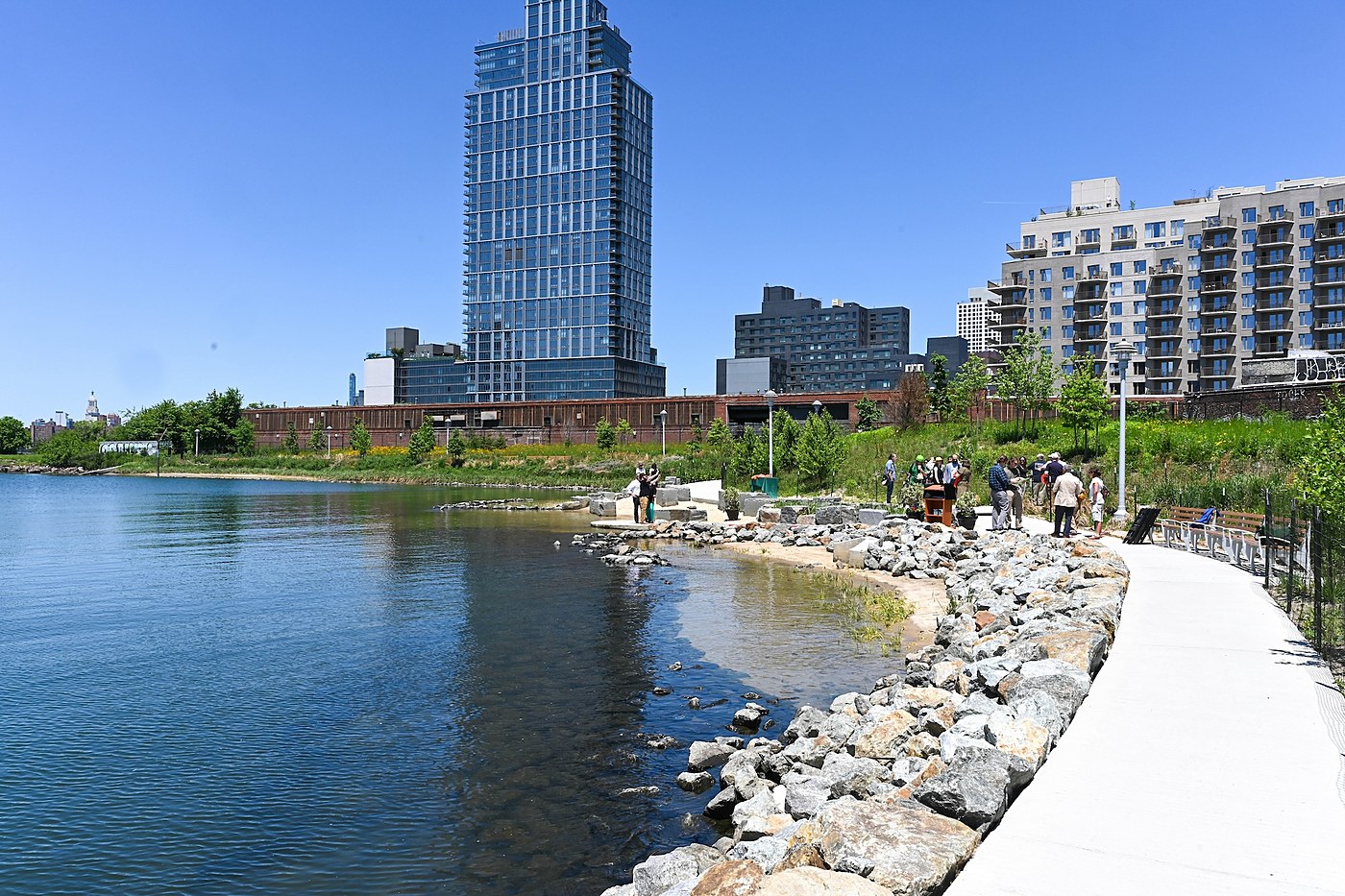
The City Council's Subcommittee on Zoning and Franchises and Committee on Land Use approved the Monitor Point rezoning Thursday. A full council vote follows next week. The project, on MTA-owned waterfront land at 40 Quay Street in Greenpoint, will bring 1,324 total apartments, with 662 permanently affordable (50%). Developer Gotham Organization had proposed just 225 affordable units in the original 2021 request for proposals; Council Member Lincoln Restler opposed the project for five years, and Gotham added 200 more affordable units Thursday to reach the 50% threshold. The breakdown: 329 deeply affordable units (40 to 60% of area median income), 172 moderate-income apartments (80 to 125% AMI), and 161 deeply affordable senior housing units including 110 for formerly homeless New Yorkers. Additional commitments include $300,000 annually for Bushwick Inlet Park maintenance, a 40-foot waterfront esplanade adding about 52,000 square feet of public space, and $60 million to make the Nassau Avenue G train ADA accessible in the current five-year capital plan [45], [64].
The takeaway
662 permanently affordable apartments on publicly owned land is a real number, not a press release. The unit mix, heavily weighted toward 40 to 60% AMI rather than 80 to 125%, means this housing reaches families priced out of virtually all of North Brooklyn. Gotham has a track record here: Gotham Point in Long Island City delivered 75% affordable units with RiseBoro social services on site. (RiseBoro) The City Limits caveat matters too: developers citing construction costs to under-deliver on affordability commitments is a documented pattern in New York, and Monitor Point's 50% pledge will require active monitoring after groundbreaking. The $60 million G train ADA accessibility commitment is separately significant, because the Nassau Avenue stop has long been inaccessible. The full council vote next week is expected to confirm Thursday's committee approval. One group is still opposed: Save the Inlet, which argues the project's location in a flood zone is not adequately addressed by the resiliency measures in the plan [45], [64].
Fare Evasion Arrests Hit New High Under Mamdani
The NYPD made more fare evasion arrests in the first three months of 2026 than any quarter under Adams, 94% of them people of color, and Mamdani's office had no comment.
1 of 9 desks covered thisNot covered by Politics & Government, Public Safety & Justice, Housing & Real Estate, Business & Economy, Education, Health & Environment, Culture, Food & Nightlife, Sports
What each newsroom noticed · tap any headline for the read
Transit & Streets“Fare evasion: Transit and legal advocates slam Mamdani’s NYPD for continuing ‘aggressive’ enforcement despite campaign promises to ease back”amNewYork
“The NYPD won't just lay off the subway turnstiles so the mayor must provide free or reduced fares for many more New Yorkers”
"This data makes clear that Mayor Mamdani is continuing the same aggressive enforcement approach as the Adams administration over a $3 subway fare, one that continues to disproportionately target New Yorkers of color." amNewYork reported the data and the competing framing without resolving it. Legal Aid attorney Phil Desgranges noted that for immigrants, a single fare evasion arrest can trigger ICE detention and deportation, raising the stakes well above the fare itself. Riders Alliance director Danny Pearlstein connected the enforcement question directly to the ongoing budget fight: "The NYPD won't just lay off the subway turnstiles so the mayor must provide free or reduced fares for many more New Yorkers" [59].
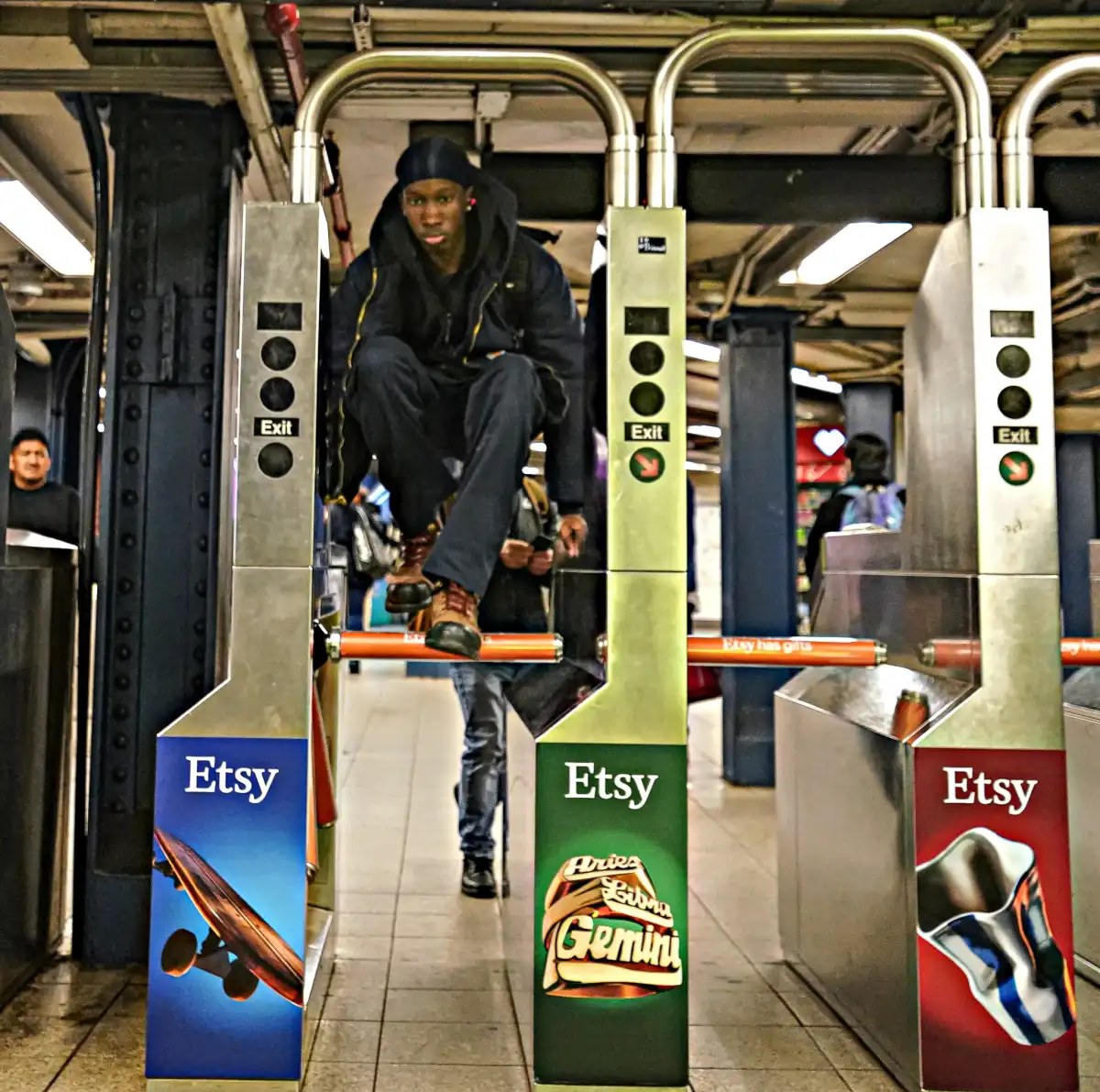
The Legal Aid Society published newly released NYPD data Friday showing 3,188 fare evasion arrests in Q1 2026, higher than any quarter under the Adams administration. The NYPD also issued 26,267 fare evasion summonses in Q1 2026, up 6,433 from Q4 2025. People of color account for 94% of fare evasion arrests and 81% of summonses. Mamdani campaigned on moving away from aggressive enforcement of low-level offenses. His office did not respond to a request for comment. The NYPD disputed Legal Aid's framing: year-over-year (Q1 2026 vs. Q1 2025), enforcement declined 15%, and NYPD spokesperson Bradley Weekes said the department has "strategically shifted" officers to trains and platforms where transit crime occurs, with major crime in the subway down compared to last year. The Riders Alliance used the moment to push for Fair Fares expansion in the current budget, arguing that without reduced-fare access, arresting poor New Yorkers for a $3 infraction remains the city's de facto equity policy [59].
The takeaway
Both statistics are true: quarter-over-quarter, arrests are up; year-over-year, arrests are down. Neither reading resolves the underlying question, which is whether a mayor who campaigned on racial justice is running a transit enforcement operation that disproportionately targets Black and Latino New Yorkers for a $3 infraction. The 94% figure is not disputed by either side. For immigrants, the consequences extend beyond the fare: a fare evasion arrest can result in ICE detention and removal, the exact outcome Mamdani's sanctuary city posture is supposed to prevent. Whether this reflects a police department that has not received new operational guidance, a mayor who made promises he could not keep on the ground, or a genuine measurement dispute, the administration has not addressed it. The Fair Fares expansion pending in the current budget would reduce enforcement pressure by giving low-income riders a legal route around the $3 turnstile [59].
Supreme Court Clears the Way to End TPS for Hundreds of Thousands
The court gave the Trump administration permission to strip Temporary Protected Status from Haitian and Syrian immigrants while lower courts deliberate, and wrote language suggesting the same result awaits El Salvador's TPS holders in September.
1 of 9 desks covered thisNot covered by Public Safety & Justice, Housing & Real Estate, Transit & Streets, Business & Economy, Education, Health & Environment, Culture, Food & Nightlife, Sports
What each newsroom noticed · tap any headline for the read
Politics & Government“The Throughline: The Supreme Court Just Gave The Trump Administration Permission To Kill TPS”Documented
"TPS holders can't sue the government for violating federal laws by terminating their protections — they can only sue to keep their TPS if the government violated the Constitution." Documented, which covers immigrant New York in depth, treated the ruling as a potential death blow for all TPS protections nationwide. The piece flagged the new evidence about political appointees overriding career staff on Haiti's safety, submitted days before the ruling, suggesting the court chose to sidestep the factual record entirely. It also explained the asylum ruling plainly: the government just received formal court permission to do what advocates had been documenting for years [81].
The Supreme Court ruled Thursday in two immigration cases. In Mullin v. Doe, the court allowed the Trump administration to begin stripping Temporary Protected Status from Haiti and Syria while lower courts consider the underlying merits. More significantly, the majority opinion, authored by Justice Samuel Alito, held that TPS holders cannot sue the government for violating the federal statute that governs TPS terminations. They can only challenge the government on constitutional grounds, a much higher bar. That interpretation would kill pending lawsuits over other TPS designations, including El Salvador's, which comes up for termination in September. Days before the ruling, new documents were filed in lower court showing Trump political appointees had overruled career civil servants who said Haiti was not safe for return; the court appeared to set this evidence aside. The court also ruled in Mullin v. Al Otro Lado that the federal government can physically block asylum seekers from presenting at ports of entry, formally legalizing a practice the U.S. had been executing covertly for years [81].
The takeaway
Roughly 5,400 Haitian TPS holders live in New York City, with an estimated 40,000 in the broader New York state region. Haitian TPS holders contribute an estimated $1.1 billion annually to the regional economy, concentrated in home health care, transportation, and food service. (fwd.us) El Salvador's TPS termination in September would add thousands more New York-area residents to the affected group, people who have been here for years or decades, paying taxes and working in essential sectors. New York State Attorney General Letitia James filed a brief urging the court to protect TPS status and her office has flagged that revoking TPS would disrupt New York's healthcare workforce. The Alito opinion's legal reasoning, that Congress gave the executive branch essentially unreviewable discretion over TPS, closes the most effective legal avenue that had protected TPS holders across multiple administrations. The only remaining protection is a constitutional argument, which requires showing not just that the administration violated the law but that it violated the Constitution. The full scope of the ruling's reach will only become clear as lower courts interpret Alito's language [81].
City Council Interns File Class-Action Suit Over Pay and Alleged Retaliation
An unpaid intern in Harvey Epstein's office organized for a living wage, got fired the next day, and discovered her boss chairs the committee that writes New York City's worker protection laws.
1 of 9 desks covered thisNot covered by Public Safety & Justice, Housing & Real Estate, Transit & Streets, Business & Economy, Education, Health & Environment, Culture, Food & Nightlife, Sports
What each newsroom noticed · tap any headline for the read
Politics & Government“It’s a hot socialist summer – but not for these interns”City & State
“How dare they, in this so-called workers' rights capital of the world fire me for organizing for pay as an unpaid intern.”
"How dare they, in this so-called workers' rights capital of the world fire me for organizing for pay as an unpaid intern." City & State reported the structural hypocrisy with specificity: the city already pays $32 an hour to Legislative Fellows, but council members can hire part-time interns working for academic credit and pay them nothing. The piece named Epstein's committee chairmanship directly and noted that interns for state Senator Julia Salazar, who is also among the city's most prominent progressives, were also unpaid. Salazar's office said it "would love to pay all interns" but "only receives a budget for full-time staff." Former Assembly Member Niou, the only elected official present, said other officials likely stayed away out of "fear of reprimand or retribution" [1].
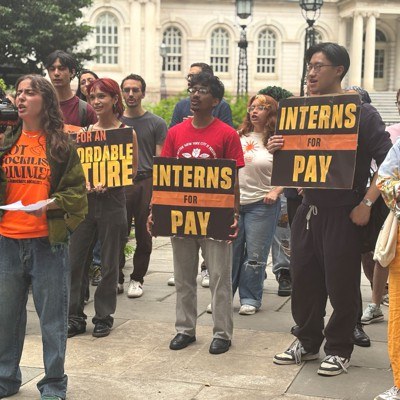
Former City Council and state Legislature interns rallied at City Hall Friday and announced a class-action lawsuit against New York City, alleging unfair termination and retaliation. Mina Farahmand, an unpaid intern in Council Member Harvey Epstein's office, was fired one day after she launched a campaign demanding the council pay all interns $32 per hour, the same rate paid to interns in the council's central Legislative Fellow program and in council caucus offices. A second intern was fired after reposting a video supporting the campaign. Epstein, who chairs the Committee on Consumer and Worker Protection, said in a statement the termination was "performance-related" and "fully unrelated to organizing." Council Speaker Julie Menin said she always paid her own interns and supports paying them, but maintained the decision is each member's to make individually. No elected officials attended the rally. Former Assembly Member Yuh-Line Niou was the only current or former elected official present [1].
The takeaway
Epstein chairs the committee responsible for worker protections in New York City. Firing an intern who organized for pay is the kind of contradiction that follows a politician for years, especially in a council moving left. The class-action lawsuit faces real legal hurdles: unpaid internships remain legal for government and nonprofit employers when they are primarily educational and tied to academic credit, and proving retaliation requires showing causation the city will contest. The structural issue Farahmand named is the more durable one: unpaid public service internships function as credentials available primarily to students who already have financial security, locking out the New Yorkers most likely to make government more representative of the people it serves. Speaker Menin, who endorses paying interns in principle and controls the council's central budget, has not moved to mandate it. That gap between principle and budget allocation is where this issue will be resolved or not [1].
Mets Fire Manager Mendoza at Season's Halfway Point
The Mets are 34-47, on pace for their worst season since Art Howe managed them in 2003, nine games out of a playoff spot, and the man they just fired got them there in six months.
1 of 9 desks covered thisNot covered by Politics & Government, Public Safety & Justice, Housing & Real Estate, Transit & Streets, Business & Economy, Education, Health & Environment, Culture, Food & Nightlife
What each newsroom noticed · tap any headline for the read
Sports“Mets look to avoid further humiliation as they host Phillies”Amazin' Avenue
“The vibes are literally lower than I can ever remember with this club.”
"The vibes are literally lower than I can ever remember with this club." Amazin' Avenue's preview of the Phillies series read, in retrospect, as a pre-firing eulogy. The piece catalogued the collapse: the Cubs series, Senga's ERA, the six-error game, Swanson's historic series. It ran the math on what 68 wins would mean historically and noted that the Mets are now debating draft lottery positioning alongside the trade deadline, since finishing in the bottom six preserves their draft slot against a payroll-penalty demotion. Francisco Alvarez (.294/.345/.529 since returning from the IL) is the one keeper in a field of question marks [146].
The Mets fired manager Carlos Mendoza Thursday following a Cubs sweep at Citi Field that included a game in which the Mets infield committed six errors and left 14 runners on base. Andy Green takes over as interim manager for the rest of the season. The Mets are 34-47 at the exact halfway point, on pace for 68 wins, their worst total since 2003. They are 9.5 games back of the final National League Wild Card spot. Kodai Senga, returning from injury, posted a 10.08 ERA in seven starts and has been moved to the bullpen. Dansby Swanson drove in 15 runs against the Mets across three games in the Cubs series alone. David Stearns, president of baseball operations, has indicated the team is open to selling ahead of the August 3 trade deadline; David Peterson was already traded for an infield prospect. Francisco Alvarez, with a 145 wRC+ since returning from the IL on June 9, is the one unambiguous bright spot [146].
The takeaway
The Mets won 101 games in 2022 and made the playoffs in 2024. At this pace, they are heading for their worst season since the Art Howe years, which is not a comparison any Mets fan makes proudly. David Stearns has real decisions to make: trade veterans whose contracts expire and pocket prospects, or hold, assume 2026 is an injury-driven anomaly, and run it back with a new manager. The draft lottery math gives the franchise a perverse short-term incentive to keep losing. The Phillies, who come to Citi Field this weekend at 45-36 in the Wild Card hunt, will provide a clear measure of how far the gap has grown. Mets fans are used to suffering, but 68 wins, a fired manager, and Kodai Senga in the bullpen with a 10.08 ERA is a particular flavor of it [146].
Around the Boroughs
Two teenage girls in the Bronx were sexually assaulted in parks after being followed from MTA buses and the subway; 18-year-old James Whiskey surrendered for the June 14 attack at Ferry Point Park in Throggs Neck, while the suspect who followed a 13-year-old off the Bx9 bus to Van Cortlandt Park on June 23 remains at large [88].
The South Bushwick Reformed Church in Bushwick, Brooklyn, built in 1853 and landmarked, faces full emergency demolition as early as Tuesday after a fire; the congregation is scrambling to find DOB-approved contractors to save Fellowship Hall, the 1881 Greek Revival addition, with Council Member Sandy Nurse's office now involved [48].
Body Hack, the monthly trans community rave at Nowadays on the Ridgewood-Bushwick border, now offers free dental screenings from a licensed dentist in its backyard; this weekend's 30-hour Pride event benefits the Black Trans Liberation Kitchen and the Celebration of Black Trans Women [39].
The Jacob Riis Bathhouse in the Rockaways, Queens, empty since the early 1970s, reopens as the Rockaway Ocean Club next month after an $88 million restoration, with a members-only pool (memberships starting at $1,000 for local Rockaway residents), a public courtyard with food trucks, and an 1,800-capacity concert venue to follow [136].
Amtrak's redesigned Penn Station in Midtown Manhattan plans rows of public wooden benches throughout the concourse, an explicit reversal of the hostile-architecture trend that stripped seating from Moynihan Train Hall and Grand Central Madison; the federal funding to build it is not yet secured [36].
Getting to the World Cup at MetLife Stadium in East Rutherford costs: about $200 to $400 per hour for a private charter, nearly $100 round-trip on NJ Transit during tournament dates, or $60 in Uber post-game surcharges, per one writer who road-tested all the options Tuesday [135].
The state DOT has begun a $4.8 million paving project on Route 167 from Little Falls through Manheim in Herkimer County, expected to finish by November [60].
Nando's, the South African peri-peri chicken chain with a global following, opens its first NYC pop-up at 341 Broome Street in SoHo starting Saturday, with free food and World Cup watch parties, and signals a possible permanent location [124].
Selene, a new 10,000-square-foot Greek restaurant at 23 Grand Street in SoHo, opened last month with a retractable atrium roof designed to open to the night sky and a whole branzino over open flame that reportedly earns the price [134].
After the Knicks won the NBA Finals, the subway logged 329,000 overnight riders from midnight to 5 a.m., 18 percent above New Year's Eve levels, per MTA President Demetrius Crichlow, who credited transit workers for keeping celebrations moving [36].
The Board of Regents proposed replacing Regents exam requirements with a competency-based "Portrait of a Graduate" diploma for students entering high school in 2029, the biggest overhaul to New York graduation requirements in generations [108].
New SNAP work requirements that took effect March 1 are cutting food benefits for some New Yorkers who have not logged 80 work, training, or volunteer hours per month; Documented published a Spanish-language guide on the rules, exemptions, and appeal options [82].
One Bensonhurst-based volunteer has personally assessed 7,280 trees in the city's decennial parks census since last summer, 11 percent of all trees counted so far by 2,800 total volunteers, making him by a wide margin the most prolific surveyor in the count of 150,000 park trees [42].
The IDNYC card, available to all city residents regardless of immigration status, now includes discounts at AMC and Regal Cinemas and free memberships at more than 35 cultural institutions including MoMA and the Met; Documented and La Colmena on Staten Island explain how to apply and what documents to bring [85].
Only in New York
Stephen White moved into his Crown Heights apartment in 2002. For 25 years, he has been treating his lease renewals the way a careful investor watches the market: sign the one-year lease when he expects the board to vote low, take the two-year when hikes are coming. He tracks every decision on a spreadsheet. The system has saved him $6,000. Last year, faced with a one-year lease at 3% or a two-year at 4.5%, he bet on Mamdani's promise of a freeze and took the one-year. He told The City Reporter this week he was right, and that he will sign the two-year lease in October at 0%. "The idea that this agenda, that was thought to be unattainable, has been achieved immediately from the onset is really inspiring," he said. There is an entire borough of people who would recognize him. You do your homework on city government, you keep a spreadsheet, and sometimes the city gives something back [7].



 “Mamdani takes victory lap on rent freeze”
Spectrum News NY1
“Mamdani takes victory lap on rent freeze”
Spectrum News NY1

 “Two-year rent freeze approved”
6sqft
“Two-year rent freeze approved”
6sqft


 “Rising Costs, Flat Rents”
City Limits
“Rising Costs, Flat Rents”
City Limits


