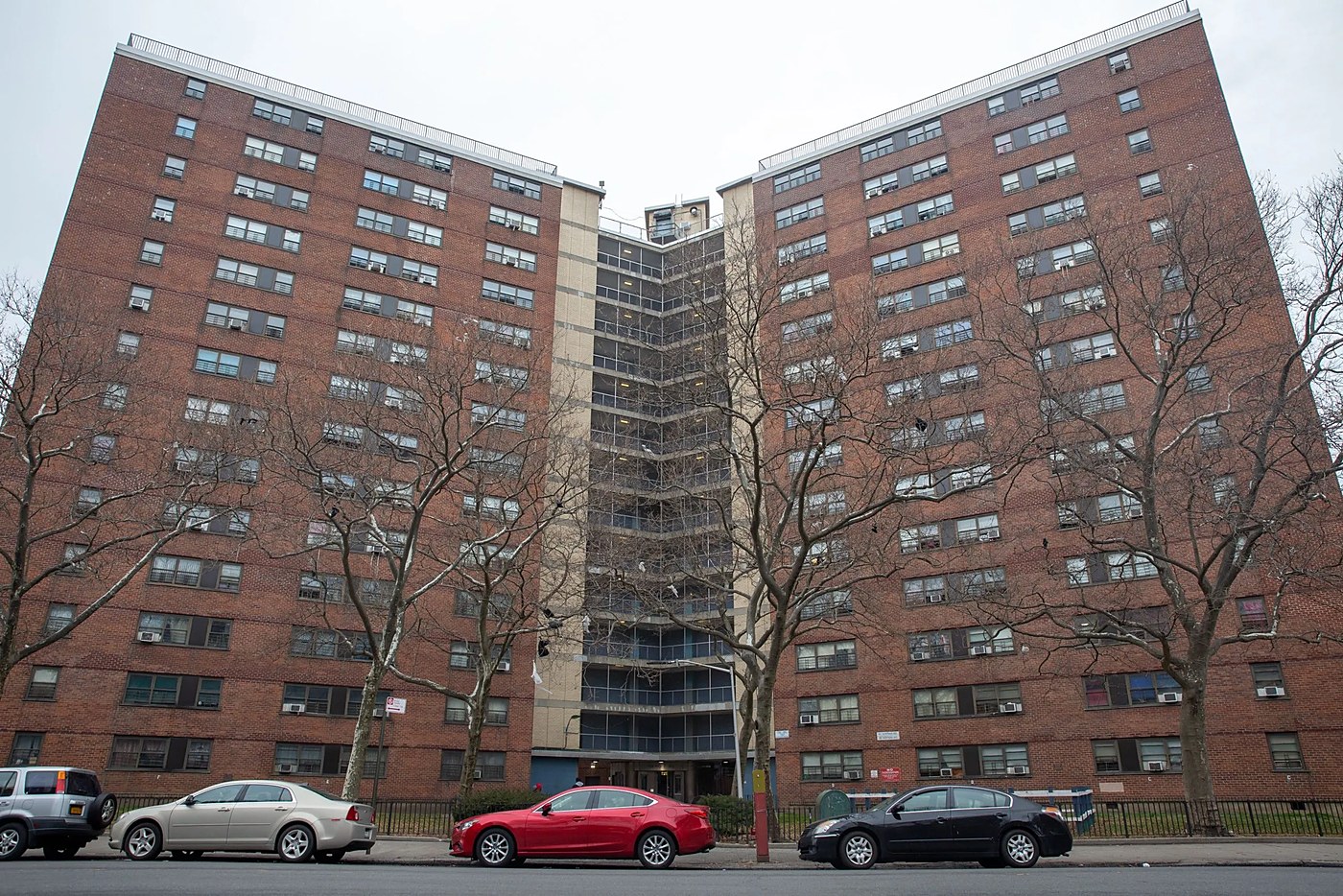
NYCHA admitted that a scanning backlog caused the authority to wrongly terminate Section 8 rent subsidies for hundreds of tenants at privately managed PACT developments, triggering eviction notices for families at Linden, Boulevard, and Penn-Wortman Houses in East New York who insist they filed every required document on time. [51]
02
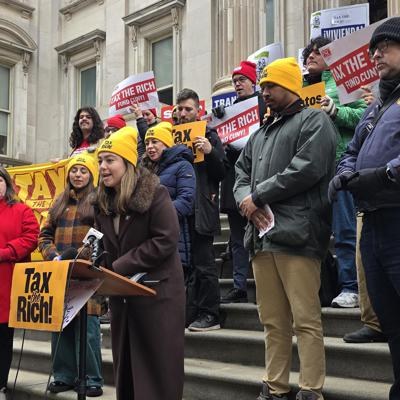
Section 8 terminations at PACT developments for failure to recertify jumped from 42 in 2024 to 836 last year, a nearly 2,000% increase in a single year, according to a Legal Aid Society public records request; the housing advocacy group Metro Industrial Areas Foundation held a Sunday rally at the Boulevard Houses in East New York. [51]
03
The authority says the scanning backlog is resolved, but the damage stands: private building managers billed tenants at full unsubsidized rates, one tenant was told she owes $80,000 in back rent she never actually accumulated, and hundreds of families are now fighting their cases in housing court. [51]
04
DSA candidates won nearly every legislative primary they contested last week, and with at least 15 socialist lawmakers expected in Albany next year, including four state senators and 11 Assembly members, the caucus is on track to be the largest ideological voting bloc in either chamber in modern memory. [6]
05
State Sen. Kristen Gonzalez says the socialists plan to stay inside the Democratic conference, Senate Majority Leader Andrea Stewart-Cousins called her existing DSA members "positive and productive senators," and State Sen. Jabari Brisport says the New York Health Act may now actually be within reach. [6]
1 of 9 desks covered thisNot covered by Public Safety & Justice, Housing & Real Estate, Transit & Streets, Business & Economy, Education, Health & Environment, Sports
NYCHA's own spokesman acknowledged wrongful termination letters, but housing advocates say the structural design of PACT, split between the authority and private managers, makes accountability nearly impossible to locate.
What each newsroom noticed · tap any headline for the read
Politics & Government“Hundreds Threatened With Eviction in Botched NYCHA Paperwork 'Crisis'”The City Reporter
“There's confusion with tenants. There's confusion with building managers in the management office”
"There's confusion with tenants. There's confusion with building managers in the management office," said Anna Luft of the New York Legal Assistance Group. "They don't seem to ever have a clear answer on what to do and when to do it." The City Reporter focused on the accountability gap at the center of the problem: neither NYCHA nor the private managers could tell advocates what caused the backlog, how many tenants were affected, or when the problem would be fully corrected. Luft said fixing it will take "a very heavy hand from the mayor's office," and that NYCHA has "not demonstrated any willingness to foster the structure for this program to run smoothly." Tenant leader Yolanda Moore of the Boulevard Houses named both parties: NYCHA loses the paperwork, while building managers "have been unable to navigate the Section 8 recertification system sufficiently." [51]
NYCHA admitted Friday that a backlog in scanning and processing recertification paperwork caused the authority to wrongly terminate Section 8 rent subsidies for hundreds of tenants at PACT-managed buildings citywide. Under the Permanent Affordability Commitment Together program, NYCHA keeps ownership of properties but turns management over to private firms; tenants' rent is subsidized by Section 8 vouchers, and households must file annual paperwork recertifying income and household makeup to retain those vouchers. Section 8 terminations for failure to recertify jumped from 42 in 2024 to 836 last year at PACT developments, according to a Legal Aid Society public records request. NYCHA spokesman Andrew Sklar told The City Reporter that a "scanning backlog issue" caused "erroneous termination warning letters" and said the backlog "has since been resolved." Without the subsidy, private building managers began billing tenants at full, unsubsidized rates. Stanley Avenue Preservation LLC, the management entity at Penn-Wortman and Linden Houses, has filed more than 900 eviction proceedings against tenants there since 2023. One tenant was told she owed $80,000 in arrears. NYCHA says the error hit only tenants who submitted paperwork by mail or at walk-in centers, which advocates note are the preferred methods for seniors. [51]
Who pays: When NYCHA's paperwork chain breaks, the private managers bill the difference, tenants pile up arrears they never actually owed, and housing court follows. [51]
What changes: PACT was sold as the fix for NYCHA's chronic dysfunction, trading federal Rental Assistance dollars for private-sector competence; this is the first real stress test of that bargain, and it failed hundreds of families. [51]
Watch: Mamdani made NYCHA reform a pillar of his early mayoralty, and advocates are now calling on him by name to step in. [51]
Pied-à-Terre Tax Enforcement Rules Released
The city publishes how it will collect the luxury second-home tax, the first notices go out by August 30, and Ken Griffin's bill goes up.
1 of 9 desks covered thisNot covered by Politics & Government, Housing & Real Estate, Transit & Streets, Business & Economy, Education, Health & Environment, Sports
New York City's Department of Finance will begin sending surcharge notices to owners of luxury second homes this summer, the first formal enforcement step for a tax the state Legislature approved at Mayor Mamdani's request.
What each newsroom noticed · tap any headline for the read
Public Safety & Justice“NYC sending out first pied-à-terre tax notices to owners of luxury second homes”New York Post
“The Department of Finance's proposed rules highlight the serious challenges of implementing the second-home tax fairly”
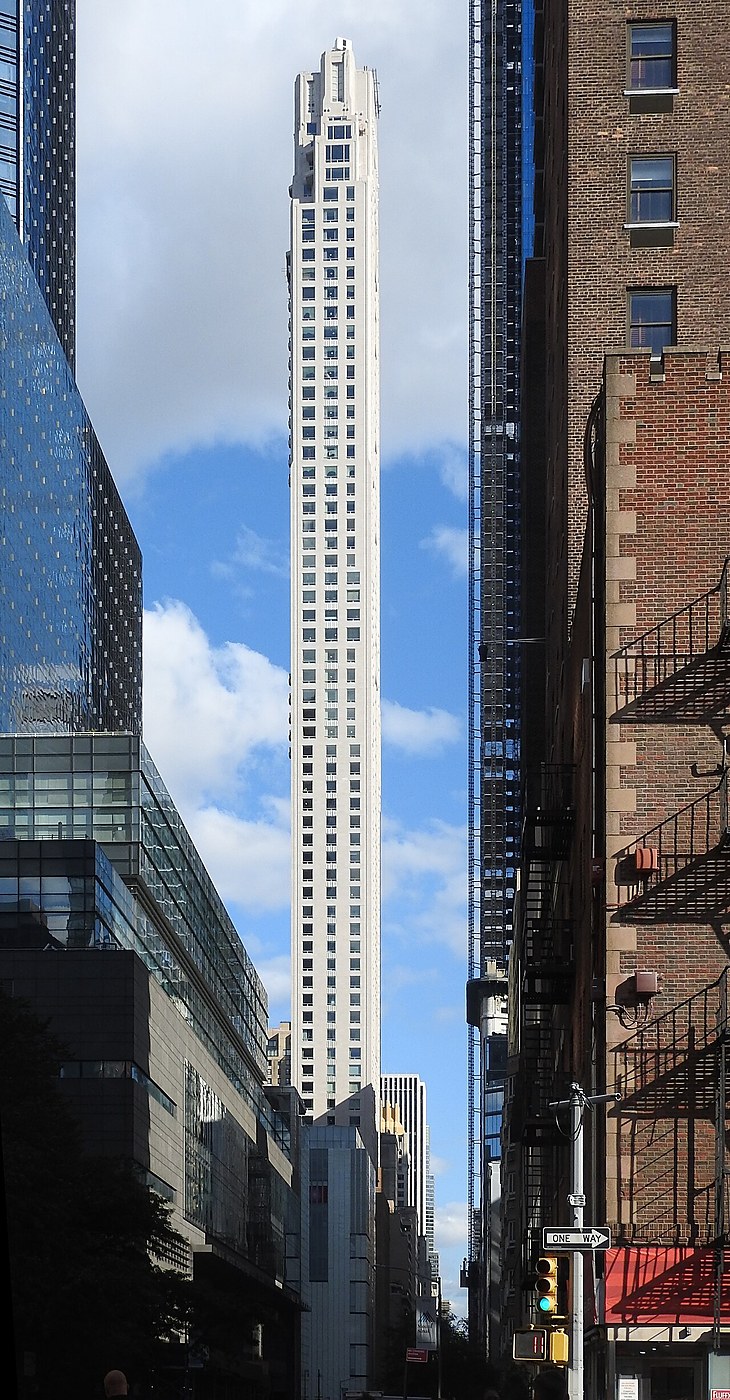
"The Department of Finance's proposed rules highlight the serious challenges of implementing the second-home tax fairly," said Zachary Steinberg, executive vice president at the Real Estate Board of New York, framing co-op owners as unintended victims. The Post covered this through the lens of industry resistance, quoting an anonymous commenter calling it "communism at its finest" alongside a licensed agent who argued the tax "will not chase a single multimillionaire or billionaire away from the city." The paper noted Griffin's viral moment: Mamdani filmed himself outside Griffin's penthouse at 220 Central Park South calling it eligible for the tax. REBNY's specific concern is that co-op boards, not the city, are responsible for helping collect the surcharge from shareholders, a logistical and legal headache the rules do not fully resolve. [70]
The Post reports that the Mamdani administration has published enforcement rules for the city's new pied-à-terre tax, with the Department of Finance beginning to notify eligible property owners by August 30. The tax covers one-to-three family homes worth at least $5 million and co-ops or condos valued at $1 million or more that are non-primary residences. Rates run from 0.8% to 1.3% for townhouses and 4% to 6.5% for co-ops and condos; the higher condo rates reflect the city's longstanding undervaluation of those properties. The DOF has subpoena power and can audit back six years; providing false information to avoid the tax carries a 50% penalty on top of the bill itself. The city estimates the tax will generate $340 million to $500 million annually from about 10,000 properties. Billionaire Ken Griffin's annual property tax bill is expected to rise by approximately $1.3 million to $1.4 million, the Post reports. Owners have 30 days to appeal. The public comment period closes July 9, after which the rules take effect. [70]
The takeaway
What changes: The pied-à-terre tax is the Mamdani administration's largest single new revenue measure, $340 million to $500 million a year from roughly 10,000 luxury second homes. [70]
Who pays: Citadel's Ken Griffin reportedly faces an annual bill increase of $1.3 million to $1.4 million, and Citadel has suggested the attention on his 220 Central Park South penthouse could jeopardize a $6 billion expansion it had floated for New York. [70]
The fight: REBNY flags a real headache for co-op boards, who are made to help collect it; the city undervalues co-ops, so the higher condo-and-co-op rate is meant to compensate, but the "phase two" recalculation isn't scheduled until 2029, and lawsuits are expected. [70]
Watch: The rules go final after the July 9 comment period, so the city will be collecting this revenue, or fighting for it in court, before the year is out. [70]
DSA Becomes Albany's New Voting Bloc
Fifteen socialists walk into a legislature and no one quite knows what happens next.
1 of 9 desks covered thisNot covered by Public Safety & Justice, Housing & Real Estate, Transit & Streets, Business & Economy, Education, Health & Environment, Sports
The DSA's primary sweep raised the question of how 15 socialists inside a Democratic supermajority would actually translate numbers into leverage.
What each newsroom noticed · tap any headline for the read
Politics & Government“With growing numbers in Albany, DSA is the new kid on the bloc”City & State New York
"When you work on things that are popular, that bring people together, I think that's really what we're seeking to do, we don't need to isolate ourselves," State Sen. Kristen Gonzalez told City & State, explicitly rejecting the IDC comparison. City & State ran through every available historical analogy, from the IDC to the Tea Party to the Long Island Nine, and concluded the informal suburban bloc model is the most apt: a group that stays in conference but exerts directional pressure on leadership. The skeptic's read came from Shontell Plummer, a former top Stewart-Cousins adviser: "I think this is a lot of DSA hysteria right now, but at the end of the day, I think the new members will push conferences to consider and discuss issues maybe." Brisport praised Stewart-Cousins directly for supporting his reelection, which is not nothing. [6]
After last week's congressional primary sweep, the DSA is expected to have at least 15 members across both chambers in Albany next year: four state senators and 11 Assembly members, with potentially more depending on outstanding races including a close contest in Syracuse. City & State reports the caucus is discussing how to operate as a voting bloc without breaking from the Democratic conference, in contrast to the IDC, the breakaway group that shared power with Republicans from 2011 to 2018. Senate Majority Leader Andrea Stewart-Cousins said in a statement she has "no concerns about the growing socialist bloc" and called her DSA members "positive and productive senators." State Sen. Jabari Brisport cited the Long Island bloc of suburban Democrats as a more relevant comparison: a group that stayed inside the conference but shifted policy during periods of slim majorities. The New York Health Act is now back in the conversation, Brisport said. Democrats hold a 103-member supermajority in the Assembly and a 41-seat near-supermajority in the Senate. Assembly Speaker Carl Heastie prefers 86 votes before bringing bills to the floor; 11 socialists alone cannot deny him that threshold. [6]
The takeaway
What changes: Fifteen DSA members can't block legislation on their own, but in a conference where the Governor and the speaker are the gatekeepers, a bloc that votes together can pressure leaders to at least bring bills to the floor. [6]
Watch: The New York Health Act has failed for years; Brisport says "it might be on the table now," and the first real test is whether that leverage survives the budget fight with Governor Hochul. [6]
The stakes: 15 allied socialists in Albany means more left alignment between the city and the state than at any point in modern New York history, tied directly to the Mamdani mayoralty, which either eases his agenda or raises the stakes when they disagree. [6]
Monitor Point Clears City Council, 1,324 Apartments Coming to Greenpoint Waterfront
Council Member Restler spent five years saying no, then said yes at the last possible moment.
1 of 9 desks covered thisNot covered by Politics & Government, Public Safety & Justice, Transit & Streets, Business & Economy, Education, Health & Environment, Sports
The Council's Land Use Committee approved Monitor Point, ending a five-year fight over the future of an MTA-owned waterfront site above the G train yard in Greenpoint.
What each newsroom noticed · tap any headline for the read
Housing & Real Estate“Greenpoint's Monitor Point Tweaks Affordable Housing to Pass City Council”Brownstoner
“I've been clear over these five years that any development of this publicly owned land must be primarily in the public interest”
"I've been clear over these five years that any development of this publicly owned land must be primarily in the public interest," Restler told Brownstoner, and the piece tracked the deal's final hours like a deal diary: negotiations came "moments" before the June 25 hearing, according to Restler. The outlet named specific income thresholds, giving readers a concrete sense of who the affordable units will serve. Save The Inlet's opposition statement pointed squarely at the flood zone and bird corridor; the project will also overshadow the inlet section of Bushwick Inlet Park, which only opened to the public in April 2026. Restler first learned of the project five years ago and said he "screamed on the phone" at the MTA. [113]
The City Council's Subcommittee on Zoning and Franchises and Land Use Committee each voted unanimously on June 25 to approve Monitor Point, a three-tower development at 40 Quay Street in Greenpoint on an MTA-owned waterfront site just north of Bushwick Inlet Park. Council Member Lincoln Restler secured last-minute concessions: the project grew from 1,150 to 1,324 units, with 662 now designated affordable, exactly 50% of the total. Of those affordable units, roughly half are "deeply affordable," including 110 supportive housing units for formerly homeless people. Another 172 units are at moderate income, and seniors can access units starting around $911 a month for a one-bedroom. A family of three earning $76,350 qualifies for a two-bedroom at $1,822 a month. Market-rate studios start at about $4,000; three-bedrooms reach $9,500. Mayor Mamdani committed to completing Bushwick Inlet Park, which has sat partially built for 20 years. The Gotham Organization will pay the MTA about $39 million over the first 25 years of the ground lease. Environmental group Save The Inlet opposed the project; the site sits in a FEMA Special Flood Hazard Zone and a migratory bird corridor. [113]
The takeaway
Who benefits: The Gotham Organization is the developer of record, paying the MTA roughly $39 million over 25 years for the ground lease, money the MTA has committed to making the Nassau Avenue G train station ADA accessible. [113]
Who can afford it: Half of the 662 "affordable" units sit in a moderate-income band where a two-bedroom runs $2,916 to $4,374 a month for a family earning $122,000 to $183,000, affordable by AMI definition and expensive by most Greenpoint renters' lived experience. [113]
The risk: The site is in a FEMA Special Flood Hazard area, and three towers will permanently alter the inlet section of a park that was promised to the neighborhood back in 2005. [113]
Watch: Restler bet that the affordable units, the park commitment, 110 supportive-housing units, and union jobs justify it; his constituents will spend the next several years finding out if he was right. [113]
Independent Commission Recommends 18.2% Pay Raise for NYC Elected Officials
Officials who said they did not want a raise got larger numbers than they had asked for, published on election day.
2 of 9 desks covered thisNot covered by Politics & Government, Public Safety & Justice, Business & Economy, Education, Health & Environment, Sports
An independent commission recommended salary increases that exceed what elected officials had publicly sought, landing during the same week the city is fighting a $5.6 billion budget gap.
What each newsroom noticed · tap any headline for the read
Transit & Streets“NYC elected officials could get nearly 20% pay raises this summer – far more than they asked for”Bronx Times
“Elected office should be fairly compensated and accessible to all qualified candidates, not only those with substantial wealth”
"Elected office should be fairly compensated and accessible to all qualified candidates, not only those with substantial wealth," the commission wrote, according to the Bronx Times. The paper's framing leaned into the income-equity argument: ranked-choice voting and public matching funds have made running for office accessible to people without family wealth, and low pay pushes them back toward the donor class. [126]
Housing & Real Estate“NYC elected officials could get nearly 20% pay raises this summer – far more than they asked for”Brooklyn Paper
The Brooklyn Paper ran the same story and emphasized the contrast between the commission's final number and the Council's earlier proposal; the Council had sought $172,500 for members, the commission recommended $175,500. Getting a bigger number through the independent process watchdog groups demanded is an awkward outcome. [129]
Transit & Streets“NYC elected officials could get nearly 20% pay raises this summer – far more than they asked for”QNS
QNS added the detail that Queens Council Member Phil Wong publicly urged the commission not to recommend any salary increase at this time, the only sitting member quoted in opposition, which is the most interesting sentence in the coverage. [138]
A Quadrennial Advisory Commission appointed by Mayor Mamdani in March released its final report on June 23, published on the same day as primary election results, recommending that City Council members receive an 18.2% salary increase, from $148,500 to $175,500. The mayor's salary would rise from $258,750 to $305,800; the public advocate from $184,800 to $218,400; borough presidents from $179,200 to $211,800; and the Council speaker from $164,500 to $194,400. The commission framed the increase as a cost-of-living adjustment, noting that NYC-area inflation grew 31% between 2016 (when elected officials last received a pay increase) and 2025. Both Speaker Julie Menin and Mayor Mamdani said they would not personally take the pay increase. Any change requires City Council approval; the speaker's office said a vote is expected this summer. The recommendation exceeds the 16% raise some Council members had previously sought through legislation. The city has not yet finalized its budget by today's June 30 deadline, which aims to close a $5.6 billion deficit. [126][129][138]
The takeaway
What changes: The commission's core argument holds, that a 31% cumulative inflation rise over nine years with no cost-of-living adjustment is a real pay cut for elected officials. [126][129][138]
The precedent: The independent commission was exactly what watchdog groups demanded last year when the Council tried to raise its own salary legislatively, and it has now handed members a bigger number than they sought. [126][129][138]
Watch: Whether that independent imprimatur makes the raise easier or harder to vote for, as the city closes a multi-billion-dollar budget gap, is a question the speaker's office has declined to answer. [126][129][138]
DALE Program Ended, Immigrant Workers Left Without Protection
The quiet federal rollback of a two-year program has left immigrant workers in New York who reported workplace abuse with no shield against deportation while their cases are still open.
1 of 9 desks covered thisNot covered by Public Safety & Justice, Housing & Real Estate, Transit & Streets, Business & Economy, Education, Health & Environment, Sports
The Trump administration ended DALE in 2025, removing a tool that gave undocumented workers temporary status while they served as witnesses in labor enforcement cases.
What each newsroom noticed · tap any headline for the read
Politics & Government“The End of DALE Program Leaves Immigrant Workers Exposed to Abuse”Documented
“By the time it picks up, a lot of workers are either deported or voluntarily go back to their home country”
"By the time it picks up, a lot of workers are either deported or voluntarily go back to their home country," González told Documented. "Getting immigration relief from DALE helped people speak up." The outlet, focused on immigrant communities in New York and nationally, told the story entirely through A.B.'s experience: the years of alleged harassment at the shoe company, the four-year legal battle, and the discovery that a U-visa application will now take most of a decade. Documented noted that the primary goal of DALE was labor law enforcement, not immigration relief; the deportation protection existed to make witnesses available. Without it, employers retain a structural advantage in cases where the key witness can be pressured into leaving. [9]
The Trump administration in 2025 quietly ended the Deferred Action for Labor Enforcement program, which between 2023 and 2025 gave 7,700 workers involved in active labor investigations temporary work authorization and deportation protection. Documented reports the story through A.B., an Ecuadoran immigrant in Queens who spent five years in a Manhattan shoe company under alleged sexual harassment and exploitation, filed a complaint with the New York State Division of Human Rights, and only learned what she had experienced was illegal after reaching Rep. Catalina Cruz's office in Queens. Her lawyers planned to apply for DALE; the Trump administration ended the program before the application was submitted. She is now applying for a U-visa, which can take five to ten years; the waiting period for just an initial "bona fide determination" runs approximately 35 months. Without DALE, workers who are key witnesses in labor investigations often leave the country, voluntarily or not, before cases can conclude. Mel González of the New York Legal Assistance Group said A.B.'s case took four years to settle partly because state and city enforcement agencies are understaffed and translation services at hearings were inadequate. [9]
The takeaway
What changes: DALE removed employers' strongest lever, the implicit threat of deportation against workers who report abuse; without it, the incentive shifts back to the employer to wait out the investigation until the key witness disappears. [9]
Who's exposed: Roughly 500,000 undocumented New Yorkers in restaurants, construction, domestic work, and light manufacturing across Queens, the Bronx, and Brooklyn, all protected by state and city anti-discrimination law regardless of immigration status. [9]
Watch: The programs that could fill the gap, U-visas and T-visas, run backlogs measured in years, and neither City Hall nor Albany can replace a federal status protection with local policy. [9]
Around the Boroughs
Brooklyn (Brooklyn Heights): Demolition is complete at 205 Montague Street, once home to the Brooklyn Dodgers' offices; a 47-story, 672-foot tower with 90 rentals, 46 condos averaging 2,100 square feet, and a rooftop jazz club is now under construction, with completion anticipated in 2029. [123]
Brooklyn (Williamsburg): Mayor Mamdani showed up at Toñita Fest Saturday to shout "Yo soy Boricua" from the main stage and present a framed Puerto Rican flag skirt to María Antonia "Toñita" Cay, who has kept her Caribbean Social Club open for 52 years while turning down millions to sell the building. [82]
Bronx: Family members of Teresa Gonzalez, 88, filed complaints against Jacobi Medical Center and Montefiore after their paralyzed mother was allegedly left "soiled in feces and urine" during a spring hospitalization, part of a documented pattern of emergency care shortfalls in the borough. [83]
Brooklyn (Navy Yard area): A 1,500-unit mixed-use complex at 240 Nassau Street near the Brooklyn Navy Yard, including a new K-8 school, 300 affordable units, and a Cultural Museum of African Art outpost, enters the public review process next month. [106]
Manhattan: All 17 Knicks championship players now have co-named streets along Sixth and Seventh Avenues in royal blue and orange, creating what the DOT calls a "championship route" through Midtown; the signs stay up four weeks. [132]
Manhattan: Andrew Cuomo has been named co-chair of a joint venture between Intercontinental Exchange (parent company of the New York Stock Exchange) and OKX, a $25 billion cryptocurrency platform with 120 million customers, his first prominent private-sector role since leaving office in 2021. [101]
Brooklyn (Prospect Heights/Flatbush): Empire State Development pitched a $5 billion plan to finally deck the Pacific Park railyards on Atlantic Avenue and complete the project, adding 5,600-plus units including 1,200 income-restricted homes; the Atlantic Yards plan was first announced in 2003 with Frank Gehry and Jay-Z. [115]
Citywide: Renewable energy certificates from the Champlain Hudson Power Express, the new Quebec-to-Astoria hydropower line, go on sale to building owners this summer; climate advocates warn property owners will use them to paper over Local Law 97 compliance rather than actually retrofitting buildings, with analysis showing up to 85% of office building excess emissions could be offset by buying credits alone. [144]
New Jersey: The state legislature advanced a record $60.7 billion budget Sunday night, capping StayNJ senior property tax rebates at a $200,000 income limit, cutting the projected deficit roughly in half, and leaving a $6 billion surplus; the full vote is set for Tuesday to avoid a government shutdown. [97]
Manhattan (Harlem): The Classical Theatre of Harlem opens a free outdoor production of Othello at Marcus Garvey Park's Richard Rogers Amphitheater, with previews July 2 to 3 and the run continuing through July 26. [216]
Brooklyn (Bed-Stuy/Fort Greene): Gotham Professional Arts Academy chemistry teacher Rayhan Ahmed won a $25,000 FLAG Award for teaching excellence after building a curriculum around the Flint water crisis and PFAS contamination, taking students to Washington to present findings to Sen. Kirsten Gillibrand's office. [169]
Manhattan (Fenway Park, technically): The Yankees were swept in four straight games by the last-place Red Sox, failing to collect a hit through five innings in each of the final three games; the slump is now the defining story of the team's season. [244]
Brooklyn (Brownsville): The Nets introduced top draft pick Mikel Brown Jr., the 6-foot-4 point guard from Louisville taken sixth overall, who called himself a "savant" of the game in his first press conference and told 85 children at his introduction that Julius Randle said: "We're gonna shock the world." [235]
Queens (then Toronto): The Mets fired manager Carlos Mendoza before a Phillies series, then lost two of three and finished a 1-6 homestand at 35-49; they now travel to Toronto to face the defending AL champion Blue Jays. [222]
Only in New York
Photo: eater
Ruben Santana grew up in Queens, started an HVAC business, bought a smoker in 2020 during the pandemic, and set it up in his driveway in Ozone Park. He started doing weekend pop-ups across from Vito Locascio Field and people kept showing up. More than once, he was told: "You can't really do barbecue in New York." He debuted at Smorgasburg in 2021. He got a stall at Time Out Market Dumbo in 2022. He spent the next four years working out a menu that runs from smoked brisket to Dominican longaniza sausages, cerdo a la Leña, and carnitas fritas on fried plantains, while running his side hustle and raising a family. On Wednesday, July 1, Bark Barbecue opens its first full restaurant: 8,000 square feet in Bushwick at 25 Thames Street, four smokers burning white oak visible behind glass, 200 seats inside, 90 on the patio, a stage, and a coffee program built around Dominican cortados. "It's big for me to be Dominican and to get acknowledgement in the culinary space as an individual," Santana told Eater. Driveway in Ozone Park to Bushwick restaurant. That is the route. [203]