
On this day in New York · May 25, 1879
St. Patrick's Cathedral Opens on Fifth Avenue
Twenty-one years after Archbishop John Hughes laid the cornerstone in a stretch of Fifth Avenue nobody thought mattered yet, New York's Catholics got their cathedral, built through a war that stopped the whole project cold.
Quotes checked against the sources July 15, 2026
The facts
- Cornerstone laid
- August 15, 1858, by Archbishop John Hughes
- Architect
- James Renwick Jr.
- Construction halted
- The Civil War stopped work for several years starting in 1861
- Seating capacity
- Built to hold 14,000 people
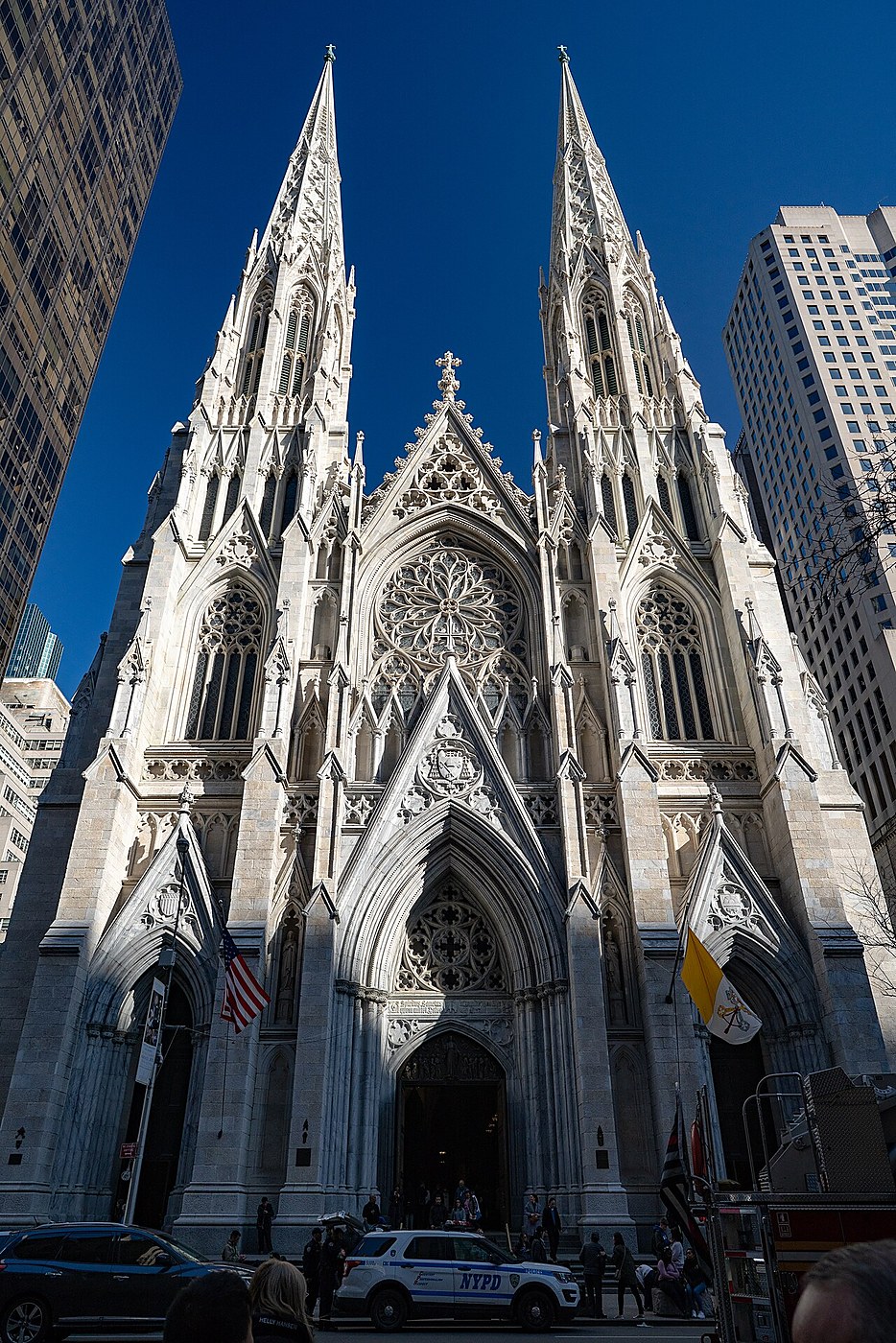
On May 25, 1879, the new St. Patrick's Cathedral opened on Fifth Avenue between 50th and 51st Streets, more than two decades after Archbishop John Hughes first pushed for a grand cathedral to replace the smaller, older St. Patrick's downtown. Hughes laid the cornerstone on August 15, 1858, betting that the city's growth would eventually catch up to a site then considered too far uptown to bother with. The Civil War broke out in 1861 and stopped construction for years, and Hughes died in 1864 without seeing the building finished. Architect James Renwick Jr. designed it in the French Gothic style, built to seat 14,000 people, a scale meant to say the city's Irish Catholic community had arrived as a real force, not just a population the Protestant establishment tolerated.
In their words
The day in the words of the people who were there. Every quote is verbatim, and every source links out so you can check it.
-
Thirty-five bishops and six archbishops attended the dedication.
on the May 25, 1879 dedication ceremony
Source: Wikipedia -
The onset of the American Civil War in 1861 prevented the resumption of work for several years.
on the construction delay that followed Hughes's 1860 suspension of work
Source: Wikipedia
Why it still matters
The cathedral was a statement in stone that New York's Irish Catholics, once mocked and burned out by nativist mobs, now had the money and standing to build the biggest church in the country right in the middle of Fifth Avenue's new mansions.
Sources
Get the day it happened, the day it happens.
Every morning brief ends with this day in New York history, and every day adds a page to this almanac. Free, in your inbox.
Free. One email each morning. One-click unsubscribe. Never sold.