
On this day in New York · June 18, 1873
Susan B. Anthony Refuses to Pay a Cent
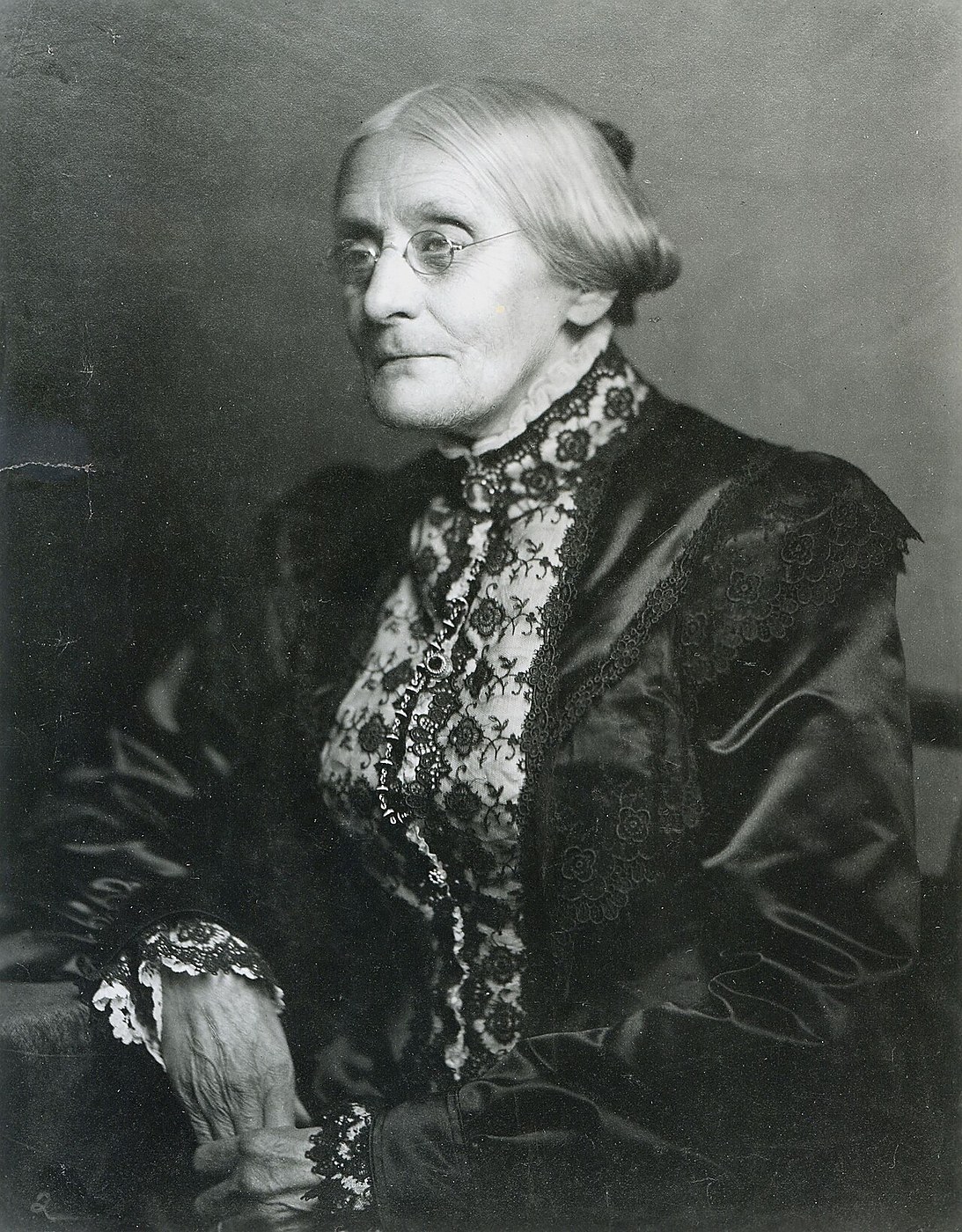
A federal judge in a quiet Finger Lakes courthouse told the jury how to vote before they'd said a word, fined Susan B. Anthony $100 for casting a ballot, and she looked him in the eye and said she'd never pay it.
Quotes checked against the sources July 15, 2026
The facts
- Trial dates
- June 17 to 18, 1873
- Location
- Ontario County Courthouse, Canandaigua, New York
- Judge
- Ward Hunt, U.S. Supreme Court Justice
- Fine
- $100, never paid
Susan B. Anthony had voted in the 1872 presidential election in Rochester, registering and casting her ballot along with several other women before being arrested for it. Her trial moved to Canandaigua, in Ontario County, because of pretrial publicity, and on June 17 and 18, 1873, she stood before Justice Ward Hunt of the U.S. Supreme Court, sitting as a circuit judge. Hunt had already written his opinion before testimony finished, and he directed the jury to return a guilty verdict without letting them deliberate. When he fined her $100, Anthony told him flatly that she would never pay it. She never did, and the government never tried to collect, because jailing her for nonpayment would have let her appeal all the way to the Supreme Court.
In their words
The day in the words of the people who were there. Every quote is verbatim, and every source links out so you can check it.
-
I shall never pay a dollar of your unjust penalty
Susan B. Anthony, addressing Justice Ward Hunt after he sentenced her, June 18, 1873
Source: Wikipedia -
you have trampled under foot every vital principle of our government. My natural rights, my civil rights, my political rights, my judicial rights, are all alike ignored.
Susan B. Anthony, courtroom speech after Justice Hunt directed the guilty verdict, June 1873
Source: Wikipedia
Why it still matters
The case became a rallying point for the suffrage movement precisely because Anthony never had to pay, and because Hunt's move to block her appeal exposed how far a court would bend to keep the question of women's voting rights out of the Supreme Court's hands. It took until 1920 and the 19th Amendment for the vote she cast in Rochester to become fully legal.
Sources
Get the day it happened, the day it happens.
Every morning brief ends with this day in New York history, and every day adds a page to this almanac. Free, in your inbox.
Free. One email each morning. One-click unsubscribe. Never sold.