
On this day in New York · August 17, 1807
Fulton's Steamboat Sails for Albany
A weird, smoking contraption pushed off from a Manhattan dock, out-ran the wind, and turned the Hudson into the first commercial steamboat run in history.
Quotes checked against the sources July 15, 2026
The facts
- Departure
- August 17, 1807, New York City to Albany
- Engine
- Boulton and Watt steam engine, built in Birmingham, England
- Dimensions
- 150 feet long, 12 feet wide, 7 feet deep
- Return speed
- Averaged about 5 mph on the trip back to New York
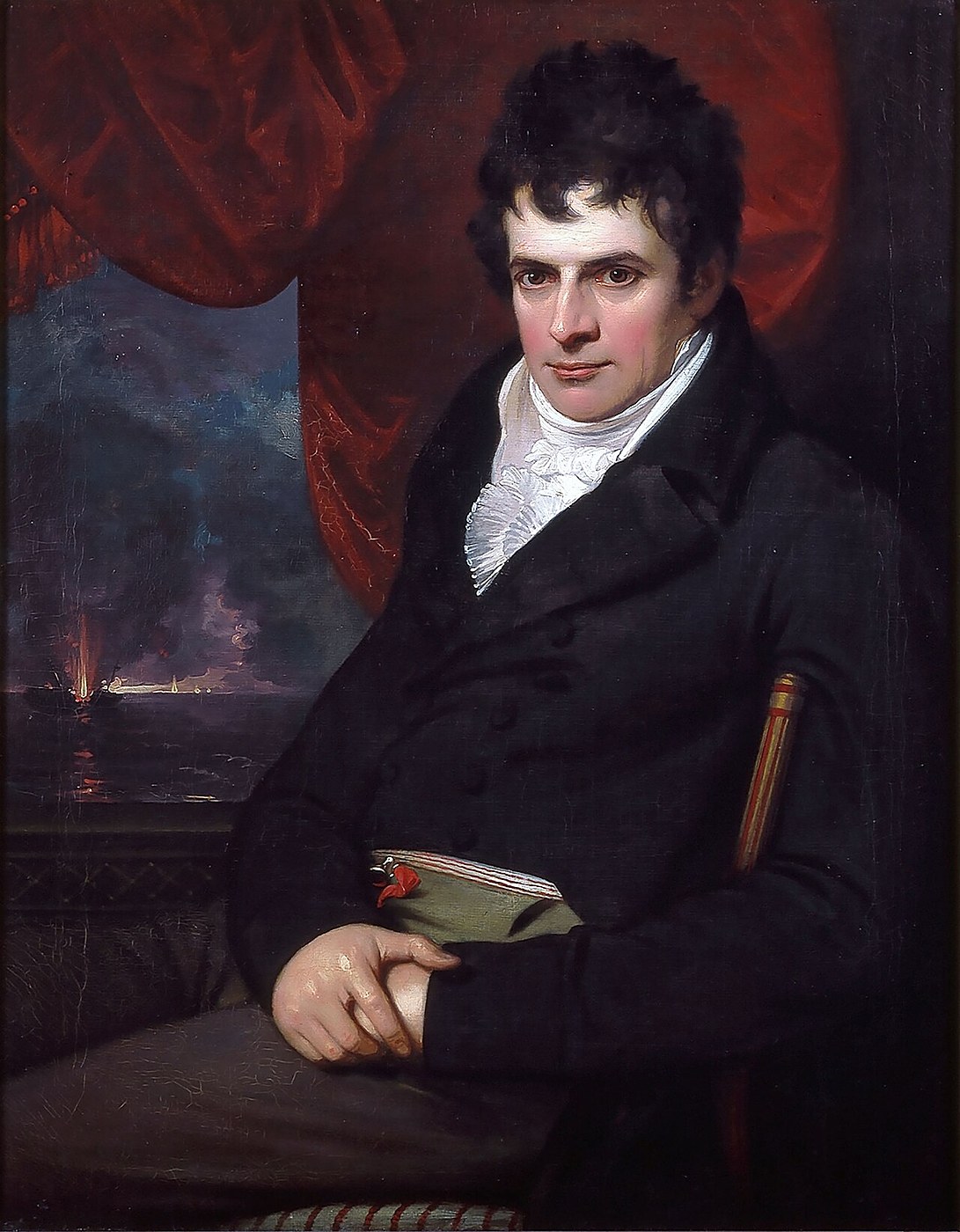
On August 17, 1807, Robert Fulton's North River Steamboat, later remembered as the Clermont, left New York City bound for Albany, roughly 150 miles up the Hudson. It was 150 feet long, powered by a steam engine built by Boulton and Watt in Birmingham, England, and driven by two paddle wheels rather than sail or oar. The trip took 32 hours of running time plus a stop at the Livingston family's Clermont estate, and the return run averaged about 5 miles an hour. Fulton had bankrolled the project with the politically connected Robert Livingston, and skeptics along the river had spent years calling the whole idea Fulton's Folly. The voyage proved a steam-powered boat could run a fixed route on a schedule, which is what made it a business and not just a stunt.
In their words
The day in the words of the people who were there. Every quote is verbatim, and every source links out so you can check it.
-
I overtook many sloops and schooners, beating to the windward, and parted with them as if they had been at anchor.
Robert Fulton, in a letter to Joel Barlow describing the voyage
Source: Wikipedia -
Some imagined it to be a sea-monster, while others did not hesitate to express their belief that it was a sign of the approaching judgment.
A Poughkeepsie resident describing the sight of the steamboat passing
Source: Wikipedia
Why it still matters
This was the run that made steam travel a real business instead of a rich man's science experiment, and it set the Hudson corridor, New York's original superhighway, up as the proving ground for it. Every ferry, tugboat, and ocean liner that later worked out of this harbor owes something to that first ugly, loud, wind-beating boat.
Sources
Get the day it happened, the day it happens.
Every morning brief ends with this day in New York history, and every day adds a page to this almanac. Free, in your inbox.
Free. One email each morning. One-click unsubscribe. Never sold.