
On this day in New York · November 7, 1989
David Dinkins Elected New York's First Black Mayor
A Manhattan borough president who'd already knocked out three-term mayor Ed Koch turned around and beat Rudy Giuliani by less than three points, breaking a barrier the city had never crossed in three centuries.
Quotes checked against the sources July 15, 2026
The facts
- Election Day
- November 7, 1989
- Final margin
- 917,544 votes to 870,464, a difference of 47,080
- Turnout
- 1,899,845 of 3,183,741 registered voters, about 60 percent
- Sworn in
- January 1, 1990, as the city's 106th mayor
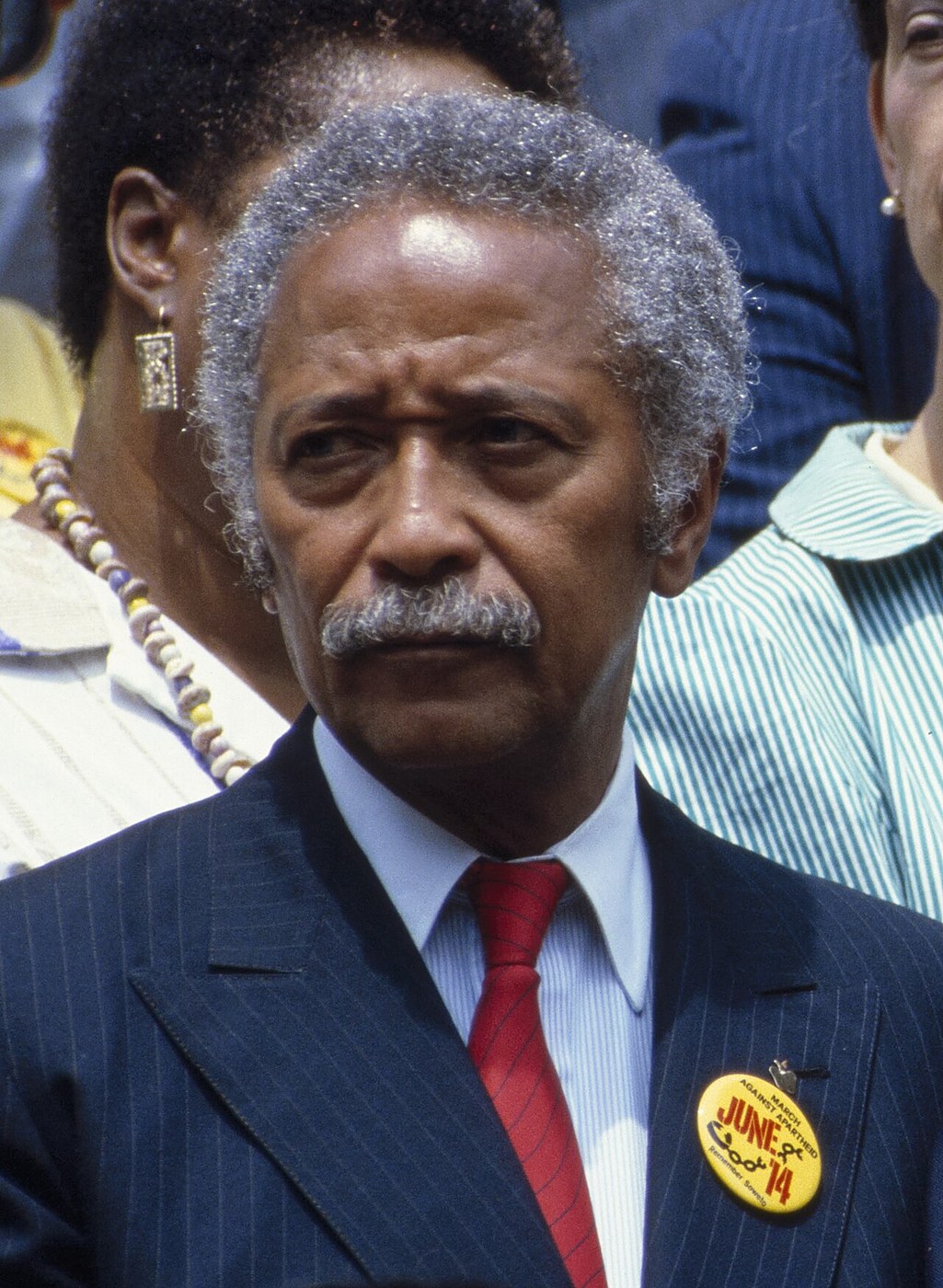
On November 7, 1989, David Dinkins defeated Republican Rudy Giuliani in the general election for mayor of New York City, becoming the first Black person elected to run the city. Dinkins, the Manhattan borough president, had gotten to the general election by beating three-term incumbent Ed Koch in the Democratic primary that September, 547,901 votes to 456,313. The general election itself was close: Dinkins took 917,544 votes to Giuliani's 870,464, a margin of just 47,080 out of nearly 1.9 million cast. Dinkins carried Manhattan, Brooklyn, and the Bronx; Giuliani carried Queens and Staten Island. Dinkins took office on January 1, 1990, as the city's 106th mayor.
In their words
The day in the words of the people who were there. Every quote is verbatim, and every source links out so you can check it.
-
I stand before you today as the elected leader of the greatest city of a great nation, to which my ancestors were brought, chained and whipped in the hold of a slave ship.
David Dinkins, inaugural remarks, January 1, 1990
Source: National Archives (Rediscovering Black History blog) -
not a melting pot, but a gorgeous mosaic
David Dinkins, describing New York City's diversity, January 1990
Source: Wikipedia
Why it still matters
It was the first time in the city's history that a Black New Yorker held the job, and it happened by a margin thin enough that both sides read it as a message about who the city belonged to next.
Sources
Get the day it happened, the day it happens.
Every morning brief ends with this day in New York history, and every day adds a page to this almanac. Free, in your inbox.
Free. One email each morning. One-click unsubscribe. Never sold.