
On this day in New York · December 19, 1903
The Williamsburg Bridge Opens
A steel-towered upstart beat the Brooklyn Bridge's own suspension span by four and a half feet, and within a year peddlers and pushcarts had turned it into the busiest sidewalk in New York.
Quotes checked against the sources July 15, 2026
The facts
- Date
- December 19, 1903
- Route
- Manhattan's Lower East Side to Williamsburg, Brooklyn, across the East River
- Chief engineer
- Leffert L. Buck; architect Henry Hornbostel
- Record
- 1,600-foot main span, the longest suspension span in the world at the time, beating the Brooklyn Bridge by 4.5 feet
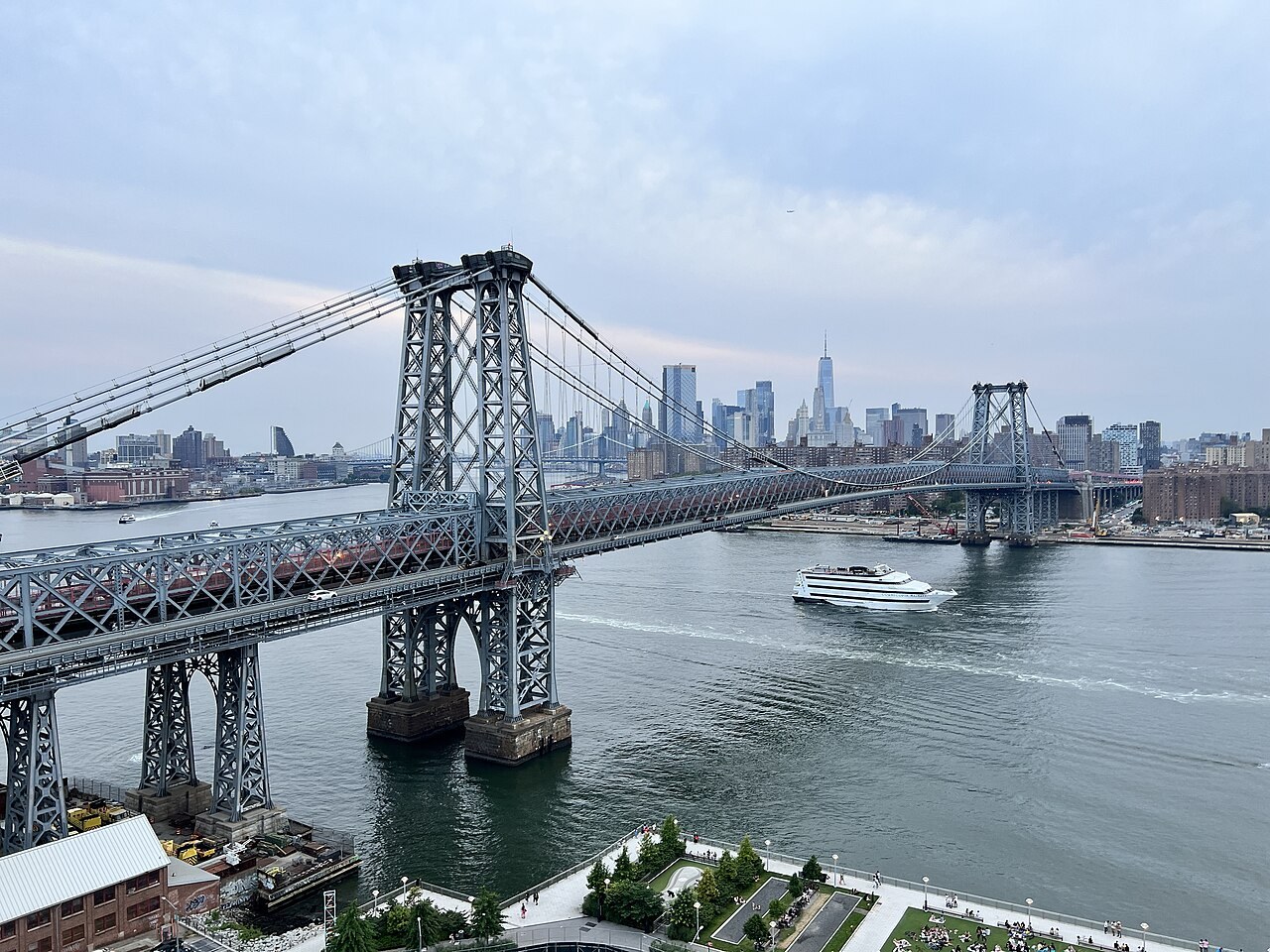
On December 19, 1903, Mayor Seth Low led a military parade up Broadway and over a brand-new bridge to meet Brooklyn Borough President John Swanstrom's delegation coming the other way. The two sides shook hands at 2:43 in the afternoon and declared the Williamsburg Bridge open, seven and a half years after construction began. Chief engineer Leffert L. Buck and architect Henry Hornbostel had built a 7,308-foot crossing whose 1,600-foot main span edged out the Brooklyn Bridge to become the longest suspension span on earth, the first of that size hung from steel towers instead of masonry. That night fireworks went up over the East River while two hundred boats paraded below. Within months, the walkway built wide enough for pushcarts was jammed with Jewish peddlers and families moving out of the packed Lower East Side into Brooklyn, and the New York Tribune had already given the crossing a nickname that stuck.
In their words
The day in the words of the people who were there. Every quote is verbatim, and every source links out so you can check it.
-
Yes: this is a Jew bridge, built for them with American money, and the Americans don't know it.
A German bridge workman, quoted in the New York Tribune, April 3, 1904
Source: The Big Apple (Barry Popik) -
Boat whistles shrieked. Bands played. Guns and cannons were fired. Speeches were made. The Star Spangled Banner was sung.
Description of the dedication ceremony, December 19, 1903
Source: Stuff Nobody Cares About
Why it still matters
The bridge did what the subway hadn't gotten around to doing yet: it gave the Lower East Side's most crowded blocks a release valve. Thousands of Jewish and Italian families walked or wheeled their carts across it into Williamsburg, and the neighborhood the bridge fed is still shaped by who came over that span first.
Sources
Get the day it happened, the day it happens.
Every morning brief ends with this day in New York history, and every day adds a page to this almanac. Free, in your inbox.
Free. One email each morning. One-click unsubscribe. Never sold.