
Lenapehoking & New Amsterdam · December 27, 1657
The Flushing Remonstrance
Thirty Englishmen in a Dutch colony refused an order to turn away Quakers, and wrote one of the first American arguments for religious freedom. None of them was a Quaker.

The facts
- When
- December 27, 1657
- Where
- Flushing (Vlissingen), New Netherland, today’s Queens
- Who
- Town clerk Edward Hart wrote it; about 30 residents signed; sheriff Tobias Feake delivered it
- What they defied
- Peter Stuyvesant’s ban on harboring Quakers or worshipping outside the Dutch Reformed Church
- The price
- Stuyvesant jailed the signing officers; Hart was freed under threat of banishment
- The payoff
- No change for years; tolerance came in 1663, after John Bowne’s appeal, and largely for commercial reasons
Peter Stuyvesant ran New Netherland as a one-church colony, and in 1657 he banned anyone from harboring the Quakers then arriving by ship. The town of Flushing said no. About thirty residents, led by town clerk Edward Hart, signed a protest grounded in their own 1645 charter and in a startling idea for the seventeenth century: that "love, peace and libertie" should reach "Jewes, Turkes and Egiptians," not just Christians. Here is the catch that makes it remarkable. Almost none of the signers was a Quaker. They were defending a faith most of them did not share. Stuyvesant jailed the officers, and the document changed nothing for six years. It is now called a forerunner of the First Amendment, and it still sits, singed by a 1911 fire, in the State Archives in Albany.
In their words
The event in the voices and documents of the people who were there. Every source links out so you can check it.
-
Petition
The most-quoted line. In 1657 usage, "Turkes" meant Muslims and "Egiptians" meant Roma, so the tolerance reaches well past Christians.
The law of love, peace and libertie in the states extending to Jewes, Turkes and Egiptians, as they are Considered sonnes of Adam, which is the glory of the outward State of Holland, soe love, peace and libertie, extending to all in Christ Jesus, Condemns hatred, warre and bondage.
The Flushing Remonstrance, signed by about 30 residents of Flushing, December 27, 1657
The surviving copy is a hand-rendered English version, so spelling varies slightly between transcriptions. This is the State Archives’ own.
Source: New York State Archives Partnership Trust transcription (Gehring & Venema, Council Minutes 1656-1658) -
Petition
The protest grounds itself in the town’s 1645 charter and closes in the clerk’s own hand.
Our desire is not to offend one of his little ones, in whatsoever forme, name or title hee appears in, whether presbyterian, independent, Baptist or Quaker, but shall be glad to see anything of God in any of them. ... Written this 27th of December in the year 1657, by mee Edward Hart, clericus.
The Flushing Remonstrance, closing lines, December 27, 1657
Source: New York State Archives Partnership Trust -
Document
The legal promise the townsmen accused Stuyvesant of breaking.
We do give and grant, unto the said Patentees ... to have and Enjoy the Liberty of Conscience, according to the Custome and manner of Holland, without molestacon or disturbance, from any Magistrate or Magistrates, or any other Ecclesiasticall Minister, that may extend Jurisdicon over them.
The Flushing town charter, granted by Director-General Willem Kieft, October 10, 1645
Source: R. Scott Hanson, NPS Flushing Remonstrance Special Resource Study -
Document
The four arrested officers were Edward Hart, Tobias Feake, Edward Farrington, and William Noble. Hart was released on penalty of banishment; Feake recanted.
Stuyvesant imprisoned the town clerk, removed council members, and declared a day of prayer against the "abominable Heresy."
Account drawn from the Dutch colonial council minutes
Stuyvesant was not moved. The document changed nothing in 1657.
Source: Historical Society of the New York Courts -
Letter
Three years before the Remonstrance, Stuyvesant asked Amsterdam to expel 23 Jewish refugees from Recife. The Company overruled him and let them stay.
Praying also most seriously ... that the deceitful race, such hateful enemies and blasphemers of the name of Christ, be not allowed to further infect and trouble this new colony.
Director-General Peter Stuyvesant to the Amsterdam Chamber of the Dutch West India Company, September 22, 1654
It shows what the Remonstrance was up against. New Amsterdam’s tolerance was contested, and often imposed on Stuyvesant from Amsterdam, for trade.
Source: Jewish Women’s Archive / Gilder Lehrman Institute -
Letter
After Flushing’s John Bowne was arrested and banished for hosting Quaker meetings, he appealed to Amsterdam. The Company sided with tolerance, fearing a reputation that would scare off immigrants.
You may therefore shut your eyes, at least not force people’s consciences, but allow every one to have his own belief, as long as he behaves quietly and legally, gives no offence to his neighbors and does not oppose the government.
Directors of the Dutch West India Company to Stuyvesant, April 16, 1663
Six years after the Remonstrance, the principle won, for a mix of conscience and commerce.
Source: R. Scott Hanson, NPS Special Resource Study
What people get wrong
-
The myth The Flushing Remonstrance was a Quaker document.
What’s true None of the roughly 31 signers publicly identified as a Quaker in 1657. Most were English Calvinists. They were defending the liberty of a faith they did not share.
-
The myth It established religious freedom in New Netherland.
What’s true It changed nothing right away. Stuyvesant rejected it and jailed the signers. Tolerance came only in 1663, through John Bowne’s separate case, and largely for commercial reasons.
-
The myth It directly shaped the First Amendment.
What’s true It is rightly called a forerunner, but historians find no documented line of influence to the Bill of Rights. It is a remarkable parallel, written 134 years earlier, not a cited source.
What it changed
- The original survives in the New York State Archives in Albany, singed by the 1911 fire that burned the State Capitol.
- It went further than its contemporaries: the Maryland Toleration Act of 1649 and the Rhode Island charter of 1663 limited tolerance to Christians. Flushing named "Jewes, Turkes and Egiptians."
- It has been called the religious Magna Carta of the New World, and has been displayed at Federal Hall and the New York Public Library.
- Congress recognized its national importance through the Flushing Remonstrance Study Act.
The New York Shelf
Read the whole story
Paid links. If you buy a book through these links, Bookshop.org pays us a small commission and sends a share of the sale to independent bookstores.
-
The history
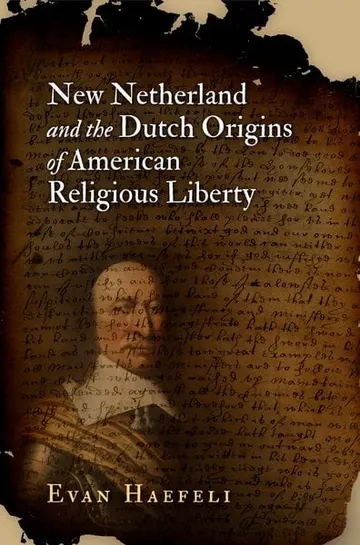
New Netherland and the Dutch Origins of American Religious Liberty (opens Bookshop.org)
Evan Haefeli · 2012
Haefeli examines how the Dutch colony handled Quakers, Jews and Lutherans, including the 1657 Flushing Remonstrance, and how that record fed later ideas of religious freedom.
-
The history
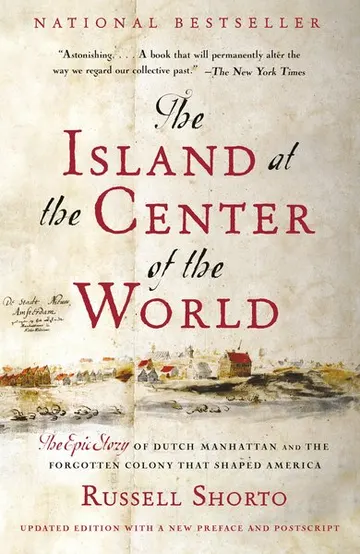
The Island at the Center of the World (opens Bookshop.org)
Russell Shorto · 2004
Shorto draws on the translated Dutch colonial records to reconstruct New Amsterdam under Peter Stuyvesant, and argues that its tolerant, commercial culture shaped the country.
The city is still writing this.
Four centuries end at this morning’s news. The daily brief picks up where the history leaves off: what changed in New York today and what it means, explained by breakfast.
Free. One email each morning. One-click unsubscribe. Never sold.