
Lenapehoking & New Amsterdam · September 1664
New Amsterdam Becomes New York
Four English warships sailed into the harbor, and the Dutch colony surrendered without a shot. Peter Stuyvesant wanted to fight. His own people would not let him.

The facts
- When
- The surrender was agreed August 27, 1664 (Old Style); the town was handed over in September
- Who
- Colonel Richard Nicolls, for James, Duke of York, the king’s brother and the city’s new namesake
- The Dutch side
- Director-General Peter Stuyvesant, who wanted to resist
- The turn
- 93 leading inhabitants, including Stuyvesant’s own son, petitioned him to surrender
- The terms
- The Articles of Surrender guaranteed the Dutch their property, their inheritance customs, and "liberty of their consciences in divine worship"
- The coda
- The Dutch briefly retook the city in 1673 as "New Orange" before it returned to England for good in 1674
New York got its name from a surrender. In late August 1664, four English frigates under Colonel Richard Nicolls sailed into the harbor and demanded that the Dutch hand over New Netherland. The colony belonged to the Dutch West India Company, and its director-general, Peter Stuyvesant, wanted to fight. Almost no one else did. The town was short of powder, the English offered generous terms, and 93 of the colony’s leading men, including Stuyvesant’s own teenage son, signed a petition begging him to surrender rather than see the place destroyed. He gave up without a shot. New Amsterdam became New York, named for James, Duke of York, the king’s brother. The surrender terms let the Dutch keep their property, their inheritance customs, and their liberty of conscience, so Dutch families and the Dutch church lived on in an English city. The Dutch even took it back briefly in 1673. It went to England for good the next year.
In their words
The event in the voices and documents of the people who were there. Every source links out so you can check it.
-
Treaty
The clause that wrote religious freedom into New York’s founding terms, carried over from the Dutch colony.
The Dutch here shall enjoy their Liberty of their Consciences in Divine Worship and Church Discipline.
The Articles of Capitulation, Article 8, agreed August 27, 1664
Source: Mapping Early New York (transcription of the Articles) -
Treaty
The Dutch would keep their estates under English rule. This is why the merchant town accepted the takeover.
All people shall continue free Denizens and enjoy their Lands, Houses, Goods, Ships, wherever they are within this Country, and dispose of them as they please.
The Articles of Capitulation, Article 3, August 27, 1664
Source: Mapping Early New York -
Document
The English came to take a prize intact, not to sack a town. The generous terms did the work.
Colonel Richard Nicolls promised "life, estate, and liberty to all who would submit to the king’s authority," undercutting Stuyvesant: ordinary New Amsterdammers concluded they would be no worse off under England.
Richard Nicolls’s surrender demand to Stuyvesant, August 1664
Source: Records of the surrender (collected) -
Document
The decisive moment. The merchant town chose its property and its lives over the Company’s flag.
A petition signed by 93 leading inhabitants, including Stuyvesant’s 17-year-old son Balthasar, begged him to surrender to spare the town, appealing to him "not to shed innocent blood."
The petition of the inhabitants of New Amsterdam to Stuyvesant, September 1664
Source: Russell Shorto, The Island at the Center of the World; Dutch colonial records -
Document
Stuyvesant’s resistance was real but isolated. His council, his clergy, and his citizens all wanted to give up.
On receiving the English demand, Stuyvesant tore it into pieces in anger, then, persuaded by the burgomasters, gathered up the fragments and gave them back. He still wanted to resist; he was overruled.
Account drawn from the New Netherland records
The defiant line often put in his mouth, that he would rather be carried to his grave than surrender, is a later legend with no contemporary record.
Source: Peter Stuyvesant biography (let.rug.nl) -
Document
The 1664 takeover was not quite final. The Dutch held the city again, briefly, before trading it away (they kept Suriname instead).
In August 1673, during another Anglo-Dutch war, a Dutch fleet recaptured the city, renamed it "New Orange," and re-established New Netherland for over a year before the 1674 Treaty of Westminster returned it to England for good.
The Dutch reconquest of 1673 and the Treaty of Westminster, 1674
Source: Records collected
What people get wrong
-
The myth Stuyvesant defiantly declared he would rather die than surrender.
What’s true There is no contemporary record of any such line. The records show him tearing up the demand and wanting to fight, then being overruled by his council, clergy, and 93 petitioning citizens. The heroic one-liner is later dramatization.
-
The myth There was a battle for New Amsterdam.
What’s true The surrender was bloodless. Four frigates demanded the town, the town refused to fight, and Stuyvesant signed. No shot was fired at New Amsterdam.
-
The myth New Amsterdam instantly became New York City in 1664.
What’s true It was renamed New York for the Duke of York in September 1664, but it was formally reincorporated as a city under English law only in 1665. And the Dutch took the place back in 1673.
What it changed
- The city has carried the name New York, for James, Duke of York, ever since.
- The surrender terms wrote liberty of conscience into New York’s founding, an early commitment that shaped its pluralism.
- Because the Dutch kept their property, language, and church, Dutch New York lived on for generations inside the English colony.
- The 1674 Treaty of Westminster made the takeover permanent, with the Dutch keeping Suriname in exchange.
The New York Shelf
Read the whole story
Paid links. If you buy a book through these links, Bookshop.org pays us a small commission and sends a share of the sale to independent bookstores.
-
The history
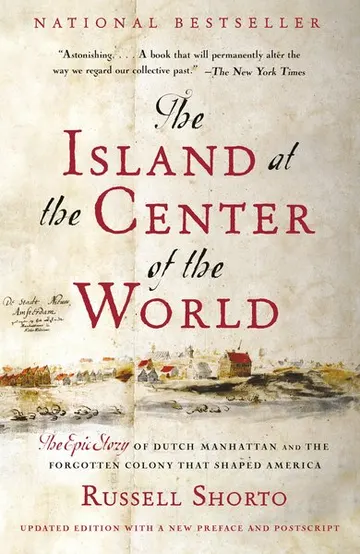
The Island at the Center of the World (opens Bookshop.org)
Russell Shorto · 2004
Shorto draws on the translated Dutch colonial records to reconstruct New Amsterdam under Peter Stuyvesant, and argues that its tolerant, commercial culture shaped the country.
-
The history
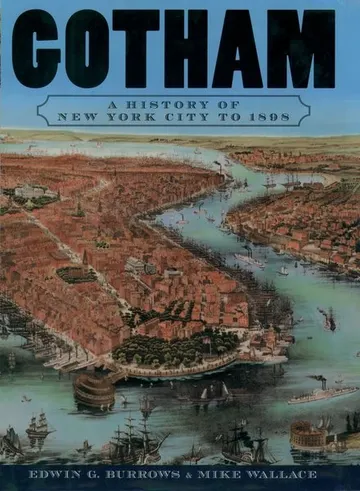
Gotham (opens Bookshop.org)
Edwin G. Burrows and Mike Wallace · 1999
Burrows and Wallace cover New York from its earliest settlement to consolidation in 1898, in a single volume of more than a thousand pages. It won the Pulitzer Prize for History.
The city is still writing this.
Four centuries end at this morning’s news. The daily brief picks up where the history leaves off: what changed in New York today and what it means, explained by breakfast.
Free. One email each morning. One-click unsubscribe. Never sold.