
Lenapehoking & New Amsterdam · 1626
The "Purchase" of Manhattan
No $24. No beads. No swindle. The most famous real-estate deal in history is mostly a myth, and the one real document is a single sentence.
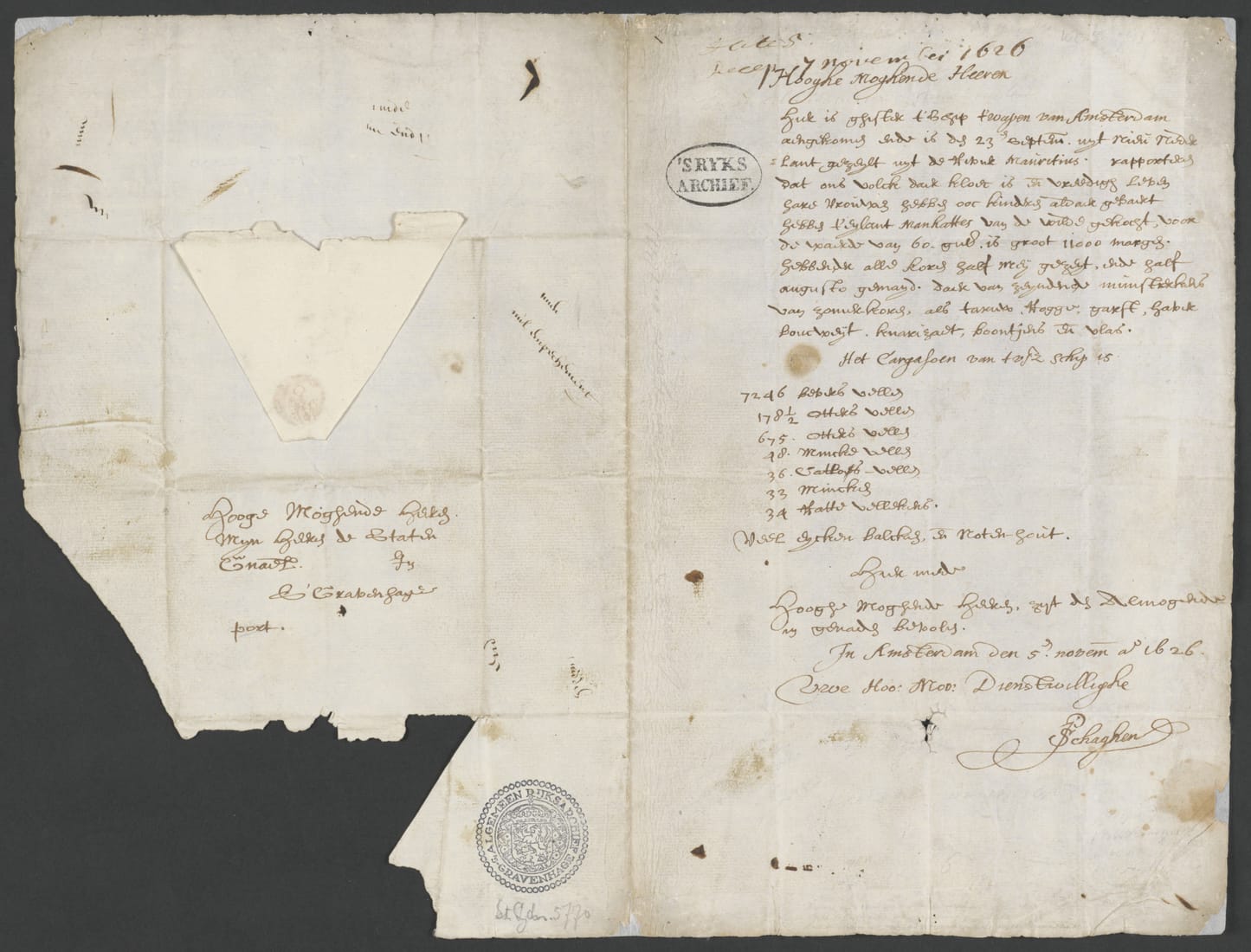
The facts
- Year
- 1626; the only record is a letter dated November 5, 1626
- The parties
- The Dutch West India Company, under director Peter Minuit, and Lenape (Munsee-speaking) people the record does not name
- The price
- 60 guilders "worth of trade goods." The letter names no goods, and no "$24"
- The document
- One sentence in Pieter Schagen’s letter to the Dutch States General. No deed survives
- What sailed home
- The same ship carried 7,246 beaver pelts back to Amsterdam. The colony was a fur business first
Almost everything most people "know" about the founding of New York is wrong. There was no $24, no string of beads, no swindle of naive natives. There is exactly one contemporary document: a single sentence in a Dutch official’s letter of November 1626, reporting that the colonists had bought Manhattan from its people "for the value of 60 guilders." It names no goods at all. The "$24" was invented by a historian in the 1840s, converting old guilders at the rate of his own day. And to the Lenape, land was not a thing you could sell away forever. The two sides almost certainly walked away believing they had agreed to two different things.
In their words
The event in the voices and documents of the people who were there. Every source links out so you can check it.
-
Letter
This sentence is the entire documentary basis for the "purchase." Everything else is inference.
They report that our people are in good spirit and live in peace. The women also have borne some children there. They have purchased the Island Manhattes from the Indians for the value of 60 guilders. It is 11,000 morgens in size.
Pieter Jansz Schagen to the States General of the Dutch Republic, November 5, 1626
It says 60 guilders, not $24, and lists no beads or trinkets. The same letter then itemizes the real cargo of interest: 7,246 beaver skins and other furs.
Source: New York State Library (translation); original at the Nationaal Archief, The Hague -
Document
Here is where "$24" was born: a New York historian in the 1840s did the currency math and froze it forever.
The island of Manhattans, estimated then to contain twenty-two thousand acres of land, was therefore purchased from the Indians, who received for that splendid tract the trifling sum of sixty guilders, or twenty-four dollars.
E. B. O’Callaghan, "History of New Netherland," 1846
Sixty 1626 guilders are worth closer to a thousand of today’s dollars. The "$24" is a 180-year-old conversion that nobody ever updated.
Source: Discovering NYC (quoting O’Callaghan) -
Document
The museum’s own myth-busting on the "beads and trinkets" story.
The "$24" figure was first advanced by a historian in 1846. The goods, if anything, were practical items like kettles, axes, hoes, Jew’s harps, and drilling awls.
Smithsonian National Museum of the American Indian, "America’s first urban myth?" (2011)
The word "beads" actually appears in the separate 1626 record for Staten Island, and got transplanted onto the Manhattan story over the centuries.
Source: Smithsonian NMAI -
Document
The correction at the heart of the story: the two parties did not understand the same transaction.
Indigenous peoples were likely not aware of European forms of property ownership and did not recognize individual rights over land at all. The Lenape may have seen the sale as akin to an agreement for the Dutch to use the land along with them, rather than an exclusive purchase.
Historian Paul Otto, quoted in National Geographic
There is no Lenape account of 1626. This is historians reconstructing the Lenape understanding from later land dealings, not a Native document.
Source: National Geographic -
Document
The other founding fact: slavery in New York is as old as the Dutch colony itself.
The eleven men brought to New Amsterdam and enslaved by the Dutch West India Company were recorded under the names Paulo Angola, Groot Manuel, Cleijn Manuel, Manuel de Gerrit de Reus, Sijmon Congo, Antonij Portugis, Gracia, Piter Santomee, Jan Francisco, Cleijn Antonij, and Jan Fort Orainge.
Dutch West India Company records, as compiled in the history of slavery in New York
Their surnames (Angola, Congo, Portugis, Santomee for São Tomé) trace to Central Africa. In 1644 they won "half-freedom" and farmland in what is now Greenwich Village, the city’s first free Black community.
Source: History of slavery in New York (state)
What people get wrong
-
The myth Manhattan was bought for $24 in beads and trinkets.
What’s true The only record says 60 guilders and names no goods. "$24" is a mid-1840s currency conversion; "beads" was borrowed from the separate Staten Island deal. In today’s money, 60 guilders is roughly a thousand dollars.
-
The myth The Dutch swindled natives who didn’t understand the deal.
What’s true The Lenape treated land as shared use, not something you could permanently sell. Calling it a swindle imposes a European idea of ownership the Lenape did not hold. Both sides likely thought they had agreed to different things.
-
The myth Minuit bought it from the tribe that lived there.
What’s true No 1626 record names the band at all. The popular claim that the sellers were Brooklyn’s Canarsee, who did not control Manhattan, traces to a 1959 magazine article, not a primary source.
What it changed
- New Amsterdam was planted at the island’s southern tip the same year, the direct ancestor of New York City.
- O’Callaghan’s 1846 "$24" line turned a routine trade note into "the greatest real-estate deal in history," repeated for almost two centuries.
- It marks the documented start of African slavery in what became New York; the men enslaved here founded the city’s first free Black landholding community in 1644.
- It set the template for Dutch-Lenape land "purchases" that Munsee leaders later used strategically, tying up colonial courts for generations.
The New York Shelf
Read the whole story
Paid links. If you buy a book through these links, Bookshop.org pays us a small commission and sends a share of the sale to independent bookstores.
-
The history
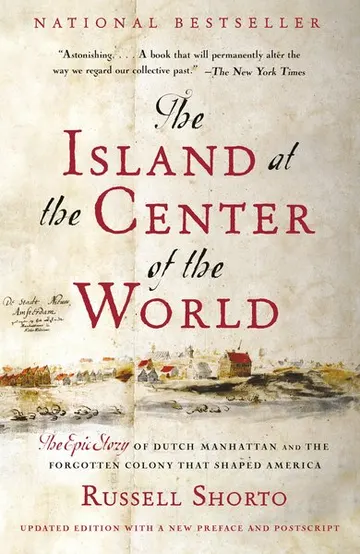
The Island at the Center of the World (opens Bookshop.org)
Russell Shorto · 2004
Shorto draws on the translated Dutch colonial records to reconstruct New Amsterdam under Peter Stuyvesant, and argues that its tolerant, commercial culture shaped the country.
-
The history
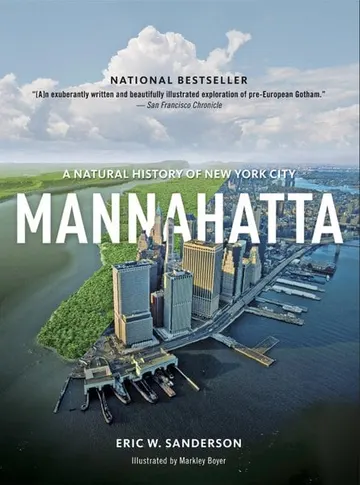
Mannahatta (opens Bookshop.org)
Eric W. Sanderson · 2009
Sanderson and the Wildlife Conservation Society's Mannahatta Project rebuild the island Henry Hudson saw in 1609, with its streams, forests, wetlands and animals, and lay them over today's streets.
-
The history
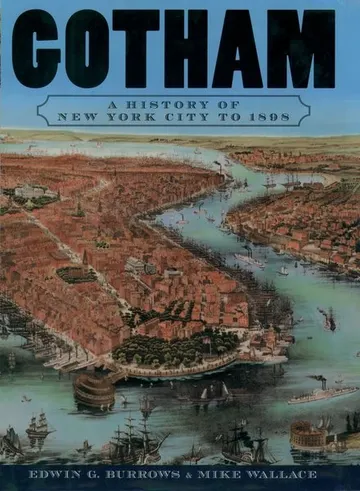
Gotham (opens Bookshop.org)
Edwin G. Burrows and Mike Wallace · 1999
Burrows and Wallace cover New York from its earliest settlement to consolidation in 1898, in a single volume of more than a thousand pages. It won the Pulitzer Prize for History.
The city is still writing this.
Four centuries end at this morning’s news. The daily brief picks up where the history leaves off: what changed in New York today and what it means, explained by breakfast.
Free. One email each morning. One-click unsubscribe. Never sold.