
The Colonial City & the Revolution · 1741
The 1741 "Conspiracy" Trials
After a string of fires, New York tried scores of enslaved people for a plot to burn the city. About thirty were executed, thirteen burned at the stake. Historians still doubt the plot was real.
The facts
- When
- A wave of fires and trials, March to August 1741
- Where
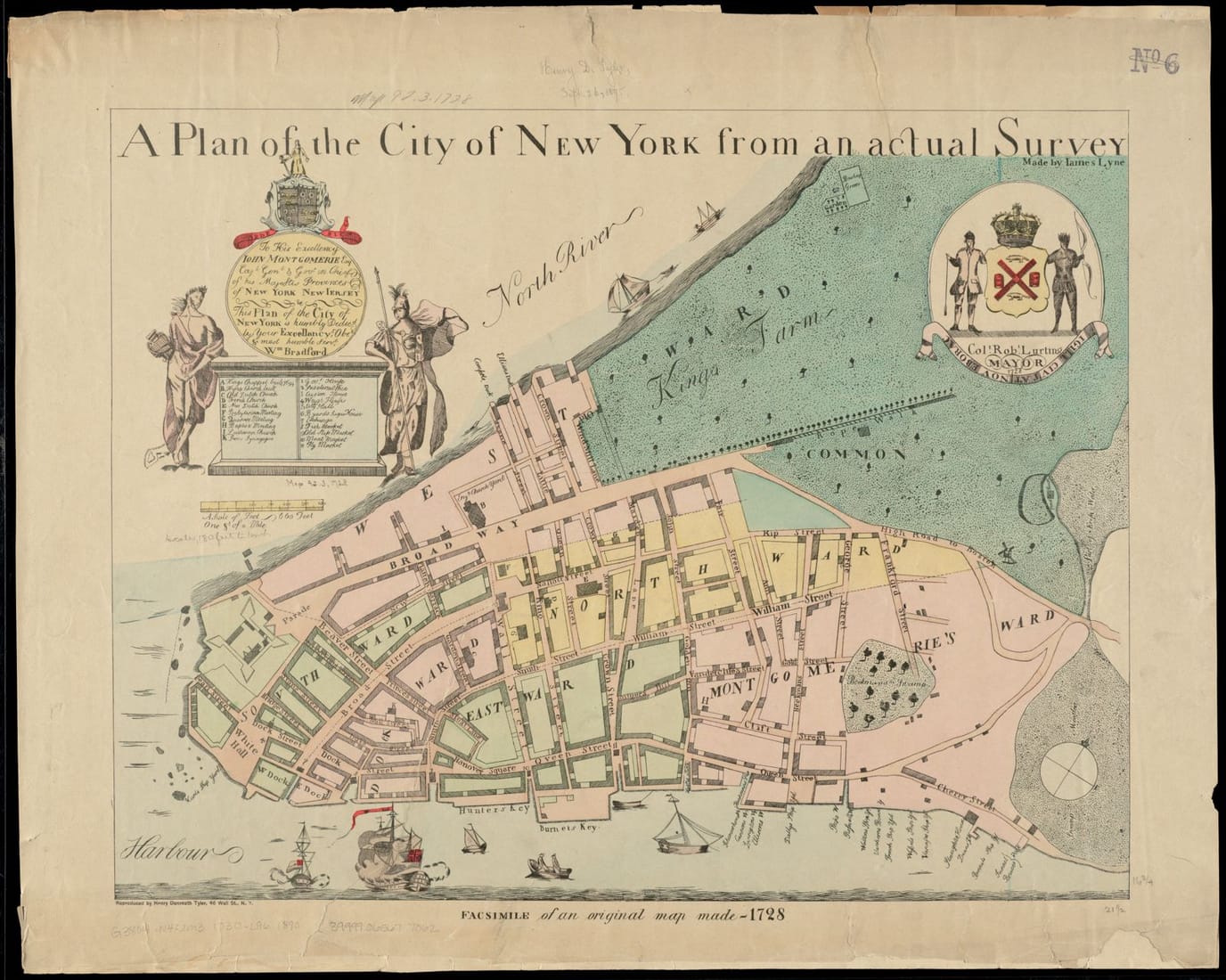
- Colonial New York City, a town of about 11,000, nearly a fifth of it enslaved
- The toll
- About 30 people executed (around 13 enslaved men burned at the stake, around 17 hanged), and 70 or more enslaved people sold and shipped out of the colony
- The accused
- More than 150 enslaved people and about 20 whites jailed
- The one source
- Almost everything we know comes from the journal of Daniel Horsmanden, a presiding judge
- The open question
- Whether any real, coordinated plot existed is still disputed
In the spring of 1741, Fort George burned, and over the next weeks a string of fires spread fear through a city where nearly one in five people was enslaved. The courts went looking for a conspiracy. Driven largely by the testimony of Mary Burton, a teenaged servant promised a reward and her freedom, New York convicted dozens of enslaved men and a handful of poor whites of plotting to burn the city and rise up. The punishment was staggering for a town this size: about thirty people executed, thirteen of them burned alive at the stake, and seventy or more sold off to the Caribbean. The judge who ran the trials, Daniel Horsmanden, later published a journal to justify them. It is now nearly the only record we have, which is exactly the problem. Most historians read 1741 not as a foiled plot but as a panic: fear, slavery, and anti-Catholic dread feeding a court that kept finding what it went looking for.
In their words
The event in the voices and documents of the people who were there. Every source links out so you can check it.
-
Document
The judge compiled his journal to defend the court against a growing sense that the panic had gone too far.
Horsmanden published his record under a title that is itself the whole thesis: "A Journal of the Proceedings in the Detection of the Conspiracy formed by some White People, in conjunction with Negro and other Slaves, for Burning the City of New-York in America, and Murdering the Inhabitants."
Daniel Horsmanden, a presiding justice, published 1744
Horsmanden is a hostile witness, writing to justify the executions. That is precisely why the document has to be read with care.
Source: Gilder Lehrman Institute (GLC04205) -
Testimony
Burton was the state’s star witness. Her accusations kept widening as the trials went on, eventually reaching people the court found implausible, which is part of what finally stopped it.
The prosecutions ran largely on the testimony of Mary Burton, a 16-year-old indentured servant at John Hughson’s waterfront tavern, who named dozens of enslaved men and several whites after the authorities offered a reward and her freedom to anyone who would talk.
Mary Burton’s testimony, as recorded in Horsmanden’s Journal, 1741
Testimony bought with a reward and freedom, in a court that burned the convicted alive, is the evidentiary heart of the case against the plot being real.
Source: Gilder Lehrman Institute -
Document
No one disputes that the fires happened. What the fires meant is the entire argument.
It began on March 18, 1741, when fire gutted Fort George, the governor’s house at the tip of Manhattan. Over the next three weeks a series of smaller fires broke out across the city, and suspicion hardened into a hunt for arsonists.
The events of spring 1741
Source: Encyclopedic record, drawing on Horsmanden and modern scholarship -
Document
For a city of about 11,000, this was one of the deadliest waves of public executions in its history.
Caesar and Prince, two enslaved men, were among the first executed, in 1741. By August the courts had condemned about thirty people to death, roughly thirteen enslaved men burned at the stake and about seventeen hanged, with seventy or more enslaved people transported and sold in the Caribbean.
The sentences of 1741, recorded in Horsmanden’s Journal
The exact counts vary slightly by historian. The order of magnitude, roughly thirty dead and thirteen burned alive, is not in dispute.
Source: Gilder Lehrman Institute -
Document
Four of the executed were white, including Ury and the tavernkeeper John Hughson and his wife. The shift from a slave revolt to a Catholic plot shows the fear searching for a target.
John Ury, a schoolmaster suspected of being a secret Catholic priest, was hanged on August 29, 1741. As the panic peaked, prosecutors recast the "plot" as a Popish conspiracy tied to Spain, with which Britain was then at war.
The trial of John Ury, August 1741
Source: Encyclopedic record of the 1741 trials -
Document
Historians divide between those who think a small real plot was wildly exaggerated and those who doubt any coordinated plot at all. Almost none accept Horsmanden’s sweeping version.
The historian Jill Lepore, in "New York Burning" (2005), reread the trials as a panic rather than a plot, shaped by the anxieties of a slave society and by the absence of any evidence beyond coerced and rewarded testimony.
Jill Lepore, New York Burning: Liberty, Slavery, and Conspiracy in Eighteenth-Century Manhattan, 2005
Source: Jill Lepore, New York Burning (2005)
What people get wrong
-
The myth A vast slave conspiracy to burn New York was uncovered and stopped.
What’s true The evidence was almost entirely coerced confessions and the reward-driven testimony of one teenager. Most historians now doubt any coordinated plot existed. The court kept finding what it feared.
-
The myth Only enslaved people were caught up in it.
What’s true Four of the roughly thirty executed were white, including the tavernkeeper John Hughson, his wife, and the schoolmaster John Ury, hanged as a supposed Catholic agent.
-
The myth It is a minor colonial footnote.
What’s true Thirteen people were burned alive at the stake in lower Manhattan in a single summer. It is one of the deadliest episodes of state violence in the city’s history, and it ran on slavery and fear.
What it changed
- Daniel Horsmanden’s 1744 journal is nearly the only surviving account, so the city’s record of 1741 is the prosecutor’s own defense of the verdicts.
- The trials exposed how central slavery was to colonial New York, which held one of the largest enslaved populations of any city in the mainland colonies.
- Jill Lepore’s "New York Burning" (2005) brought the episode back into public memory as a study of fear, rumor, and the machinery of a slave society.
- The executions took place on the Commons, today’s City Hall Park, ground most New Yorkers now walk past without knowing.
The New York Shelf
Read the whole story
Paid links. If you buy a book through these links, Bookshop.org pays us a small commission and sends a share of the sale to independent bookstores.
-
The history
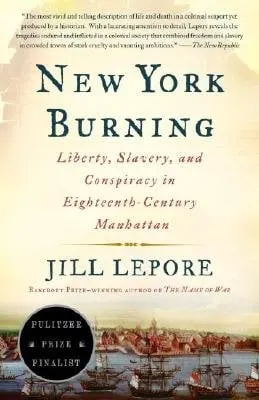
New York Burning (opens Bookshop.org)
Jill Lepore · 2005
Lepore reconstructs the fires and trials of 1741, when white New Yorkers accused enslaved people of plotting to burn the city and put dozens of them to death.
-
The history
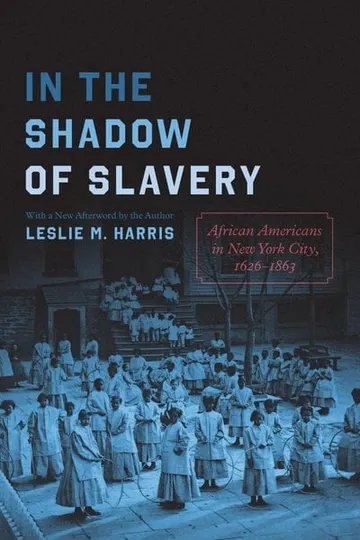
In the Shadow of Slavery (opens Bookshop.org)
Leslie M. Harris · 2003
Harris traces Black New Yorkers from the Dutch period to the Draft Riots, through enslavement, gradual emancipation, and the churches and neighborhoods they built.
-
The history
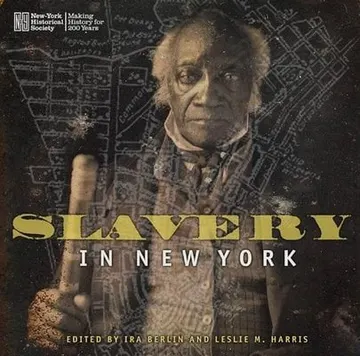
Slavery in New York (opens Bookshop.org)
Ira Berlin and Leslie M. Harris · 2005
Essays published with a New-York Historical Society exhibition follow slavery in the city from the Dutch era through emancipation in 1827, and its economic reach.
The city is still writing this.
Four centuries end at this morning’s news. The daily brief picks up where the history leaves off: what changed in New York today and what it means, explained by breakfast.
Free. One email each morning. One-click unsubscribe. Never sold.