
The Colonial City & the Revolution · 1765 to 1766
The Stamp Act
The first time the colonies acted as one against London, and they did it in New York. A tax on paper brought a congress, a riot, and the Liberty Pole.

The facts
- The tax
- Parliament’s Stamp Act, taxing paper goods, took effect November 1, 1765
- The congress
- Nine colonies met at New York’s City Hall in October 1765, the first intercolonial congress
- The document
- The Declaration of Rights and Grievances, denying that Parliament could tax without consent
- The riot
- On November 1, 1765, a New York crowd burned the lieutenant governor in effigy and sacked an officer’s house
- The repeal
- Parliament repealed the act in March 1766, but passed the Declaratory Act claiming power "in all cases whatsoever"
- The aftermath
- The Liberty Pole on the Common, and the 1770 Battle of Golden Hill
Britain’s plan to tax the colonies through stamped paper turned New York into the center of organized resistance. In October 1765, delegates from nine colonies met at the city’s old City Hall on Wall Street, the first time the colonies acted together, and issued the Declaration of Rights and Grievances: a careful, loyal document that nonetheless denied Parliament any right to tax people who had not consented. When the act took effect on November 1, a crowd hanged Lieutenant Governor Cadwallader Colden in effigy, burned his coach at Bowling Green, and gutted the house of a British officer who had bragged he would cram the stamps down New Yorkers’ throats. The stamps ended up locked in City Hall. Merchants boycotted British goods, repeal came in 1766, and the city raised a Liberty Pole on the Common. The running fights over that pole drew first blood at Golden Hill in January 1770, weeks before the Boston Massacre.
In their words
The event in the voices and documents of the people who were there. Every source links out so you can check it.
-
Document
Nine colonies sent delegates to New York to draft this, the first unified colonial protest. It is the constitutional heart of the crisis.
That it is inseparably essential to the freedom of a people, and the undoubted rights of Englishmen, that no taxes should be imposed on them, but with their own consent, given personally, or by their representatives.
The Declaration of Rights and Grievances, Stamp Act Congress, New York, October 19, 1765
Source: Teaching American History -
Document
The same document that denied Parliament’s taxing power opened by professing loyalty to the king. This was a demand for the rights of Englishmen, not a call for independence.
The members of this congress, sincerely devoted, with the warmest sentiments of affection and duty, to his majesty’s person and government...
The Declaration of Rights and Grievances, opening, October 19, 1765
Source: Encyclopedia Virginia -
Document
Posted on public buildings to terrify anyone who might enforce the tax. Colden himself sent one to London.
The first man that either distributes or makes use of stamped paper, let him take care of his house, person, and effects.
A Sons of Liberty placard posted around New York, October 1765
Source: Christie’s (provenance essay) -
Newspaper
James, a British officer, had boasted he would cram the stamps down New Yorkers’ throats. On November 5 the stamps were marched to City Hall for safekeeping.
On the night of November 1, 1765, a New York crowd hanged Lieutenant Governor Cadwallader Colden in effigy beside a figure of the Devil, dragged his own seized coach to Bowling Green, and made a bonfire of it under the walls of Fort George. The same night they gutted the house of Major Thomas James.
Contemporary account in the New-York Gazette, November 1765
Source: Massachusetts Historical Society -
Document
The "piece of wood" was the Liberty Pole, raised to celebrate repeal and repeatedly cut down by soldiers. The fight over it spilled blood at Golden Hill, weeks before the Boston Massacre.
The real enemies of society ... thought their freedom depended on a piece of wood.
A British soldiers’ handbill mocking the Liberty Pole and the Sons of Liberty, New York, January 1770
Source: Battle of Golden Hill (records collected) -
Document
New York celebrated with a Liberty Pole. But the victory sat on an unresolved fight: Parliament backed down on the tax while claiming it could tax anyway.
Parliament repealed the Stamp Act on March 18, 1766, and on the same day passed the Declaratory Act, asserting its authority to bind the colonies "in all cases whatsoever."
The repeal of the Stamp Act and the Declaratory Act, March 18, 1766
Source: Clements Library, University of Michigan
What people get wrong
-
The myth The Stamp Act Congress was a revolutionary break with Britain.
What’s true It was pointedly loyal. Its declaration opened with "the warmest sentiments of affection and duty" to the king and affirmed allegiance to the Crown, even as it denied Parliament the power to tax. It asked for repeal by humble petition, not independence.
-
The myth "No taxation without representation" was the slogan of the congress.
What’s true That exact phrase is not in the declaration. Its actual words were that no taxes could be imposed "but with their own consent, given personally, or by their representatives." The pithy slogan came later.
-
The myth The Battle of Golden Hill was the first death of the Revolution.
What’s true No one died at Golden Hill. Soldiers and citizens were wounded, some badly, in January 1770, weeks before the Boston Massacre. It was the first bloodshed, not the first death.
What it changed
- The Stamp Act Congress was the first time the colonies acted together, the institutional ancestor of the Continental Congress nine years later.
- The Liberty Pole, raised in New York and repeatedly cut down and re-raised, became a lasting emblem of resistance copied across the colonies.
- The repeal came packaged with the Declaratory Act, so the constitutional fight that led to revolution was left wide open.
- New York’s Sons of Liberty, led by Isaac Sears and Alexander McDougall, became a political force that carried the city toward 1776.
The New York Shelf
Read the whole story
Paid links. If you buy a book through these links, Bookshop.org pays us a small commission and sends a share of the sale to independent bookstores.
-
The history
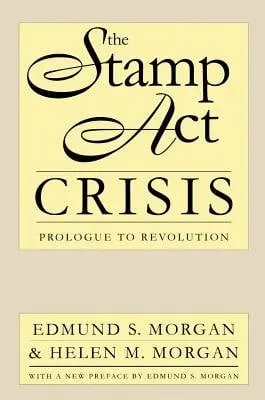
The Stamp Act Crisis (opens Bookshop.org)
Edmund S. Morgan and Helen M. Morgan · 1953
The Morgans trace colonial resistance to the 1765 tax, including the Stamp Act Congress that met in New York City and the riots that greeted the stamps.
-
The history
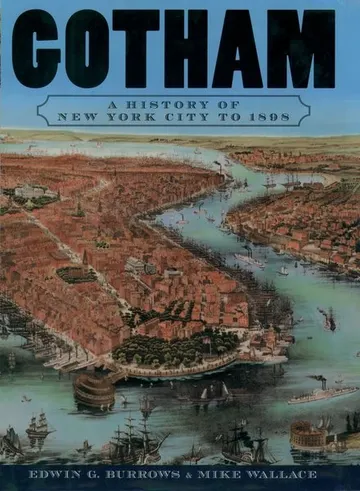
Gotham (opens Bookshop.org)
Edwin G. Burrows and Mike Wallace · 1999
Burrows and Wallace cover New York from its earliest settlement to consolidation in 1898, in a single volume of more than a thousand pages. It won the Pulitzer Prize for History.
The city is still writing this.
Four centuries end at this morning’s news. The daily brief picks up where the history leaves off: what changed in New York today and what it means, explained by breakfast.
Free. One email each morning. One-click unsubscribe. Never sold.