
Comeback & the 21st Century · October 29, 2012
Hurricane Sandy
A record fourteen-foot tide flooded Lower Manhattan, the subway, and the waterfront across all five boroughs. It killed at least 43 New Yorkers and forced the city to plan for the next one.
The facts
- When
- The night of October 29, 2012
- The water
- A storm tide of 14.06 feet at the Battery, the highest in the gauge’s recorded history
- The flooding
- About 17 percent of the city, roughly 51 square miles, underwater
- The toll in NYC
- At least 43 people killed, at least 21 of them on Staten Island
- The damage
- About $19 billion in losses, by the city’s estimate
- The blackout
- Lower Manhattan dark for days after a Con Edison substation failed
Sandy was barely a hurricane when it hit. By the time its center reached the coast near Brigantine, New Jersey, on the night of October 29, 2012, forecasters had downgraded it to a post-tropical storm, which is why people call it Superstorm Sandy. The damage came from water, not wind. The storm tide reached 14.06 feet at the Battery, the highest ever recorded there, and it poured into Lower Manhattan, every East River subway tunnel, and the waterfront across all five boroughs. A Con Edison substation exploded and blacked out Manhattan below 39th Street for days. On Staten Island, where most of the city’s 43 deaths happened, the surge drowned people in their homes. In Breezy Point, Queens, floodwater shorted a house’s wiring, and the fire that followed burned 126 homes no truck could reach. The storm reset how New York plans its own coastline.
In their words
The event in the voices and documents of the people who were there. Every source links out so you can check it.
-
Speech
The day before landfall, Bloomberg made evacuation of the coastal flood zone mandatory.
If you don’t evacuate, you are not only endangering your life, you are also endangering the lives of the first responders who are going in to rescue you.
Mayor Michael Bloomberg, ordering a mandatory evacuation of Zone A, October 28, 2012
Source: City of New York, Office of the Mayor (PR 377-12) -
Report
The federal government’s formal warning to the New York coastline, more than a day before the surge arrived.
Sandy expected to bring life-threatening storm surge and coastal hurricane winds.
National Hurricane Center, Public Advisory, October 29, 2012
Source: NOAA / National Hurricane Center advisory archive -
Document
Seven under-river subway tunnels flooded with corrosive saltwater. The system had been shut down before the surge, which saved lives.
The New York City subway system is 108 years old, but it has never faced a disaster as devastating as what we experienced last night.
MTA Chairman Joseph Lhota, October 30, 2012
Source: MTA statement, reported widely -
Document
Con Ed had planned for a surge of 10 to 12 feet. The tide reached about 14.
Just before 8:30 p.m. on October 29, the surge overwhelmed Con Edison’s East 14th Street substation, a transformer exploded, and all of Manhattan below roughly 39th Street went dark for days.
The Con Edison substation failure, October 29, 2012
Source: CBS New York -
Document
The single most destructive event of the night in the city, a residential fire no truck could reach.
A six-alarm fire destroyed 126 homes in Breezy Point, Queens. Fire marshals found it began when the storm surge flooded the electrical system of a single house. Firefighters could not reach it through seven feet of water.
FDNY fire marshals’ determination, announced December 2012
Source: CBS New York; FDNY -
Document
The city’s headline figure, the basis for its federal aid request and its resilience plan.
Mayor Bloomberg estimated that Hurricane Sandy caused about $19 billion in losses and damage across New York City.
Mayor Michael Bloomberg, City of New York, November 2012
Source: City of New York
What people get wrong
-
The myth Hurricane Sandy made a direct hit on New York.
What’s true By the time its center reached the coast, the Weather Service had reclassified it as a post-tropical storm, technically not a hurricane at landfall. That is why "Superstorm" stuck. The damage came from the surge, not a tropical hurricane.
-
The myth The fourteen-foot number was the storm surge.
What’s true That was the storm tide at the Battery, surge plus a high astronomical tide near a full moon. The surge component alone was about nine feet. The combination is what flooded the city.
-
The myth Most of the New York deaths were from wind and rain.
What’s true The main cause of death was drowning from the storm surge, concentrated on Staten Island, where about half the city’s deaths happened.
What it changed
- In 2013 the city released "A Stronger, More Resilient New York," a roughly $20 billion coastal-protection blueprint, its formal answer to Sandy.
- The saltwater that flooded seven subway tunnels drove years of repairs and a program to seal hundreds of openings against the next storm.
- Sandy flooded about 17 percent of the city, beyond the federal 100-year flood maps, which forced stricter flood-zone rules.
- The "Build It Back" program was created to rebuild and repair thousands of damaged and destroyed homes.
The New York Shelf
Read the whole story
Paid link. If you buy a book through this link, Bookshop.org pays us a small commission and sends a share of the sale to independent bookstores.
-
Reporting
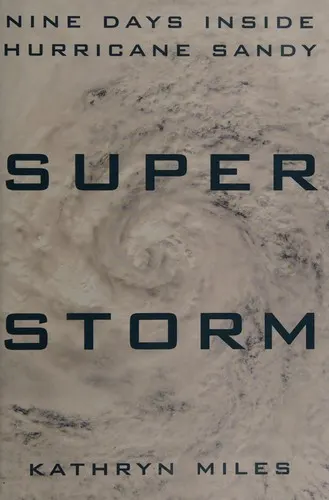
Superstorm (opens Bookshop.org)
Kathryn Miles · 2014
Miles traces the storm's path from the Caribbean to the Northeast coast, with New York City's flooding and blackouts a central part.
The city is still writing this.
Four centuries end at this morning’s news. The daily brief picks up where the history leaves off: what changed in New York today and what it means, explained by breakfast.
Free. One email each morning. One-click unsubscribe. Never sold.