
1980–today
Comeback & the 21st Century
From the deadliest year on record to the morning that changed everything, and back. A plague the government ignored, a crime wave and the argued-over comeback that followed, the towers, a protest that gave the country a phrase, and a storm tide up the avenues.
- 1983
March 1983
1,112 and Counting
Kramer’s polemic in a gay New York newspaper was one of the first sustained alarms about the scale of the AIDS epidemic, and helped spark the activism that became ACT UP.
If this article doesn’t scare the shit out of you, we’re in real trouble.
Larry Kramer, "1,112 and Counting," the New York Native, 1983The number in the title was the U.S. case count at the time. Within a few years AIDS would be the leading cause of death for young men in New York.
Source: The David Wojnarowicz Foundation - 1987
March 1987
Silence = Death
Wheatpasted across Lower Manhattan, the black poster with an upward-pointing pink triangle became the defining image of AIDS activism.
SILENCE = DEATH
The Silence=Death Project collective (Avram Finkelstein and five others); adopted by ACT UP New YorkIt’s often credited to the art collective Gran Fury, but six men made it earlier. The pink triangle reclaimed the badge the Nazis used to mark gay prisoners.
Source: The New York Public Library Read the full story - 1990
1990
The Deadliest Year
1990 was the deadliest year in modern New York history, the benchmark against which every later "comeback" was measured.
New York recorded 2,245 murders in 1990, its all-time peak, at the height of the crack epidemic — roughly six killings a day.
New York Police Department figure (1990)
The NYPD’s official count is 2,245; some sources put it as high as 2,605. By the 2010s the city would see fewer than 300 murders a year. How much credit goes to which mayor is still a bar fight.
Source: Newsweek (citing the NYPD) Read the full story - 2001
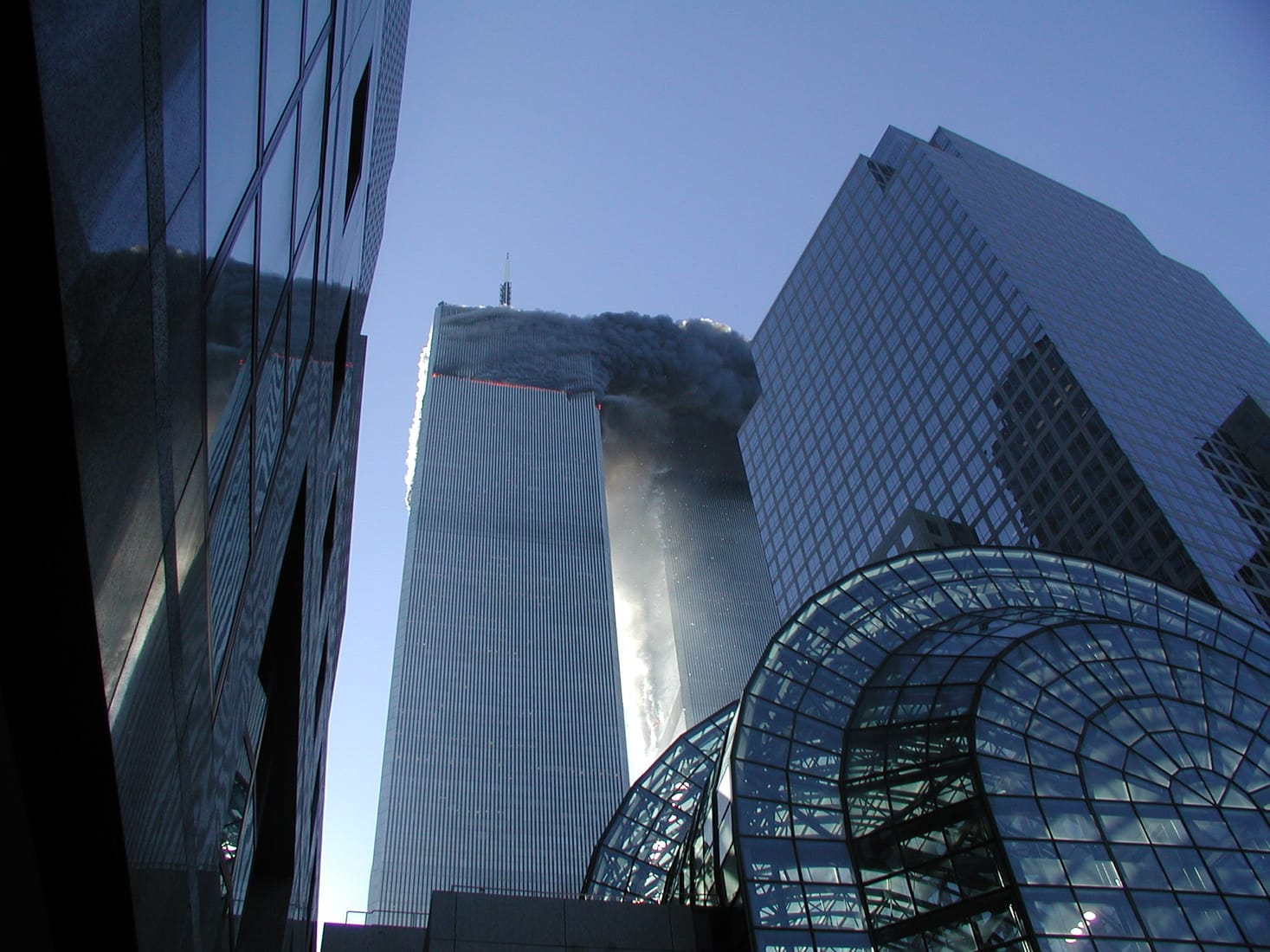
September 11, 2001
More Than Any of Us Can Bear
Hijackers flew two planes into the World Trade Center; both towers fell, killing 2,753 people in New York and turning Lower Manhattan into a ruin.
The number of casualties will be more than any of us can bear, ultimately.
Mayor Rudolph Giuliani, asked that afternoon to estimate the deadThe line is usually shortened to "more than we can bear." His actual words were "more than any of us can bear, ultimately." It is now inscribed at the memorial.
Source: 9/11 Memorial & Museum / CNN transcript Read the full story - 2001
September 11, 2001
Reaching the 78th Floor
Palmer climbed roughly 78 floors, reached the airplane’s impact zone, and was directing the rescue when the tower collapsed at 9:59 a.m. He and his company were killed.
Ladder 15, we’ve got two isolated pockets of fire. We should be able to knock it down with two lines.
FDNY Battalion Chief Orio Palmer, radio transmission from the South Tower’s impact zone, minutes before it fell343 firefighters died that morning. The recovered radio tapes catch Palmer calm and methodical to the end, doing the job.
Source: Port Authority radio transcript (Internet Archive) - 2009
June 2009
A Park in the Sky
An abandoned freight viaduct, saved from demolition by two neighbors and reborn as an elevated park the world copied.
We were from the community. We wanted to do it for the neighborhood. Ultimately, we failed.
Robert Hammond, co-founder of the High Line, reflecting in 2017The park drew millions and supercharged luxury development. Its own co-founder said it failed the neighbors who were there first.
Source: CityLab, via DNAinfo Read the full story - 2011
September 17, 2011
We Are the 99%
Protesters occupied a Financial District park for 59 days against economic inequality, and a slogan reframed the national argument around the wealthiest one percent.
We are the 99%.
Occupy Wall Street, Zuccotti Park, 2011It had no single leader and won no single law, but it put "the 1%" into the language for good, three years after the crash that started on the same streets.
Source: Occupy Wall Street (history) - 2012
October 29, 2012
Sandy’s Surge
Sandy’s surge flooded Lower Manhattan, the subway tunnels, and waterfront neighborhoods across all five boroughs, killing dozens of New Yorkers and cutting power to much of the city.
The greatest danger posed by Sandy is the coastal storm surge and flooding that it will produce.
Mayor Michael Bloomberg, briefing the city before Hurricane Sandy made landfall, October 2012The water hit nearly fourteen feet at the Battery. Sandy turned climate change from a forecast into a thing that had already happened here, and reset how the city plans its own coastline.
Source: City of New York, Office of the Mayor Read the full story - 2020
March 20, 2020
New York on PAUSE
Nineteen days after the city’s first confirmed COVID-19 case, the state ordered New York shut: the schools were already closed, and every nonessential business followed at 8 p.m. on March 22.
If someone is unhappy, somebody wants to blame someone, people complain about someone, blame me. There is no one else who is responsible for this decision.
Gov. Andrew Cuomo, signing the "New York State on PAUSE" order closing every nonessential business, March 20, 2020The spring that followed was the deadliest in modern city history. Between March 11 and May 2, the city recorded 32,107 deaths, some 24,000 more than a normal spring.
Source: Governor of New York (rush transcript) Read the full story - 2002
December 19, 2002
A Court Throws Out Five Convictions
Thirteen years after five teenagers were convicted in the 1989 Central Park jogger attack, DNA evidence and a confession from a different man led a court to vacate every conviction.
Ultimately, there proved to be no physical or forensic evidence recovered at the scene or from the person or effects of the victim which connected the defendants to the attack on the jogger, or could establish how many perpetrators participated.
New York County District Attorney's Office, Affirmation in Response to Motion to Vacate Judgment of Conviction, quoted in the court's decision, December 2002
Matias Reyes's DNA matched the crime scene evidence to a certainty of one in six billion.
Source: People v. Wise (2002), via FindLaw case law archive Read the full story
The New York Shelf
The book on this era
Paid links. If you buy a book through these links, Bookshop.org pays us a small commission and sends a share of the sale to independent bookstores.
-
The history
The City That Became Safe (opens Bookshop.org)
Franklin E. Zimring · 2012
Zimring, a criminologist, examines the decline in New York's crime rate after 1990 and tests which explanations hold up.
-
Reporting
102 Minutes (opens Bookshop.org)
Jim Dwyer and Kevin Flynn · 2005
Two New York Times reporters reconstruct minute by minute what happened inside the towers on September 11, from interviews and phone records.
-
Reporting
Superstorm (opens Bookshop.org)
Kathryn Miles · 2014
Miles traces the storm's path from the Caribbean to the Northeast coast, with New York City's flooding and blackouts a central part.
-
The history
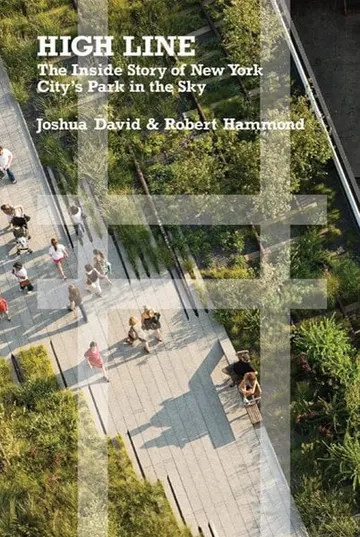
High Line (opens Bookshop.org)
Joshua David and Robert Hammond · 2011
The two founders of Friends of the High Line tell how a neighborhood group saved an abandoned rail viaduct and turned it into a park.
The city is still writing this.
Four centuries end at this morning’s news. The daily brief picks up where the history leaves off: what changed in New York today and what it means, explained by breakfast.
Free. One email each morning. One-click unsubscribe. Never sold.