
1945–1980
Crisis & Reinvention
The city almost died, then reinvented the culture of the world. A planner with a "meat ax," a writer who stopped him, an uprising at a Village bar, a near-bankruptcy summed up in one tabloid headline, a blackout, and a back-to-school party in the Bronx that started hip-hop.
- 1959
1959
Moses and the Meat Ax
Moses held unelected power over New York’s parks, bridges, and expressways for four decades and bulldozed whole neighborhoods to build highways.
When you operate in an overbuilt metropolis you have to hack your way with a meat ax.
Robert Moses, defending his expressway program (recorded in Robert Caro’s "The Power Broker," 1974)His highways displaced hundreds of thousands of people, most of them poor and Black or Latino. He never learned to drive.
Source: The Power Broker (Robert A. Caro) Read the full story - 1961
1961
The Sidewalk Ballet
Jacobs, a West Village writer with no planning degree, argued that lively, mixed-use streets, not Moses’s superblocks, are what keep a city safe and alive.
The stretch of Hudson Street where I live is each day the scene of an intricate sidewalk ballet... Cities have the capability of providing something for everybody, only because, and only when, they are created by everybody.
Jane Jacobs, "The Death and Life of Great American Cities," 1961Her book is still the most influential argument ever made against the kind of city Moses was building.
Source: The Death and Life of Great American Cities - 1963
October 1963
The Mob Breaks Its Silence
Lucky Luciano had organized the New York Mafia into five families back in 1931. For decades they taxed the docks, the markets, and the construction unions.
Cosa Nostra, meaning our thing and our family.
Joseph Valachi, the first made member to describe the Mafia in public, to a U.S. Senate committee, 1963It took an upstate traffic stop, this Senate witness, and the RICO law to break them. The families still exist, much weakened.
Source: The Valachi hearings (records collected) Read the full story - 1968
April 1968
Jacobs Stops the Expressway
Jacobs’s decade-long fight killed Moses’s plan to run an elevated expressway across Lower Manhattan through what is now SoHo and Little Italy.
Jane Jacobs, chairing the committee to stop the Lower Manhattan Expressway, was arrested at a state hearing after the crowd rushed the stage and the stenographer’s tape was destroyed; the charge was later reduced to disorderly conduct.
Account of the 1968 LOMEX hearing, from Jacobs’s biography and preservation records
SoHo, Little Italy, and much of the Village exist today because she won. It was the moment the city stopped letting Moses draw the map.
Source: Jane Jacobs (preservation history) - 1969
June 28, 1969
It Wasn’t No Riot
Police raided the Stonewall Inn in Greenwich Village before dawn on June 28, 1969, and the patrons fought back over several nights, igniting the modern LGBTQ rights movement.
It was a rebellion, it was an uprising... it wasn’t no damn riot.
Stormé DeLarverie, performer and Stonewall participant, on the night the patrons fought backMuch of what gets said about that night, including who threw the first brick, is contested. DeLarverie’s framing is one of the better-sourced lines, and it insists on the right word: not a riot, an uprising.
Source: Library of Congress, The Stonewall Era Read the full story - 1973
August 11, 1973
Hip-Hop Is Born
At a back-to-school party his sister threw in the rec room of 1520 Sedgwick Avenue in the Bronx, Kool Herc looped the drum breaks of funk records and invented hip-hop.
I was noticing people used to wait for particular parts of the record to dance, maybe to do their specialty move.
DJ Kool Herc (Clive Campbell), on the insight behind looping a record’s drum breakIt started in the borough Moses’s expressway had gutted. Out of the worst-off blocks in the city came the most influential music of the next half-century.
Source: HISTORY Read the full story - 1975
October 30, 1975
Ford to City: Drop Dead
Weeks from bankruptcy, the city begged Washington for help; President Ford gave a speech refusing a bailout, and the Daily News compressed it into the most famous headline in city history.
FORD TO CITY: DROP DEAD
New York Daily News front page, October 30, 1975Ford never said "drop dead." It was the News’s paraphrase of his speech. He later signed billions in federal loans anyway, and blamed the headline for costing him New York in 1976.
Source: Ford to City: Drop Dead (history) Read the full story - 1977
July 13–14, 1977
A Night of Terror
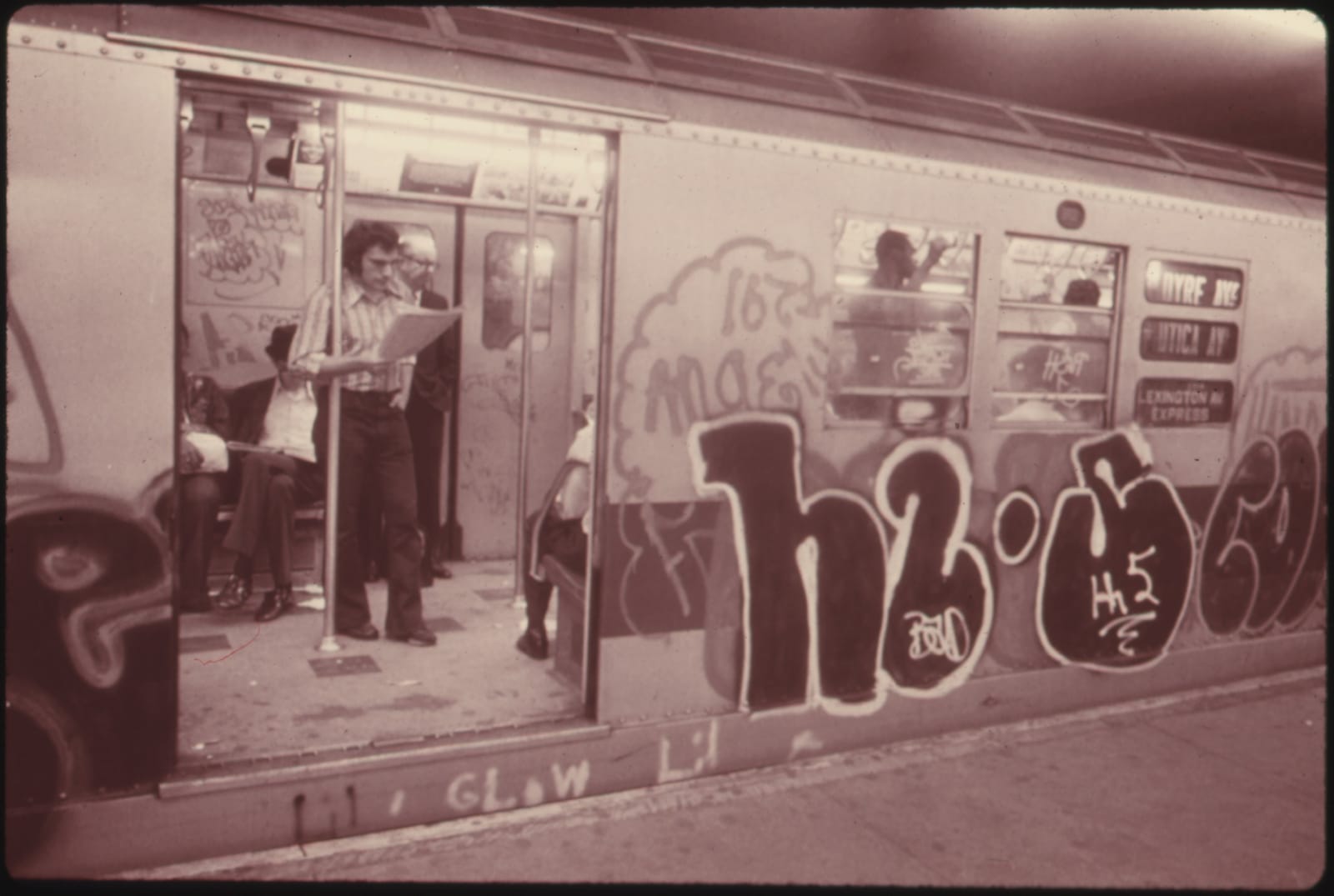
A lightning strike cut power across the city for about 25 hours, and in the dark some 1,600 stores were looted and over 1,000 fires set, hitting poor neighborhoods hardest.
a night of terror
Mayor Abraham Beame’s description of the citywide blackoutThe 1965 blackout had been orderly and almost romantic. The 1977 one, in a broke and angry city, was the opposite. The two nights mark how far New York had fallen in twelve years.
Source: TIME, "The Blackout: Night of Terror" (1977) Read the full story - 1968
May 9, 1968
The Telegram That Closed the Schools
The dismissal of nineteen union teachers and administrators from one Brooklyn school district triggered three citywide teacher strikes that fall.
A telegram from the Ocean Hill-Brownsville governing board informed nineteen teachers and administrators, eighteen white and one Black, that their employment in the district had been "terminated."
Ocean Hill-Brownsville Demonstration District governing board, telegram to nineteen staff members, May 9, 1968
By the time the strikes ended in November, nearly 57,000 teachers had walked picket lines.
Source: Nick Juravich, introduction to "Community Control and the 1968 Teacher Strikes in NYC at 50: A Roundtable," The Gotham Center for New York City History Read the full story
The New York Shelf
The book on this era
Paid links. If you buy a book through these links, Bookshop.org pays us a small commission and sends a share of the sale to independent bookstores.
-
The history
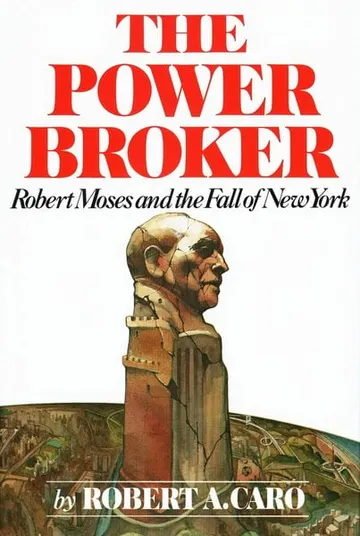
The Power Broker (opens Bookshop.org)
Robert A. Caro · 1974
Robert Moses built the parkways, bridges and housing projects that reshaped the city without ever winning an election. Caro's biography shows how, and who was displaced along the way. It won the Pulitzer Prize for Biography.
-
The history
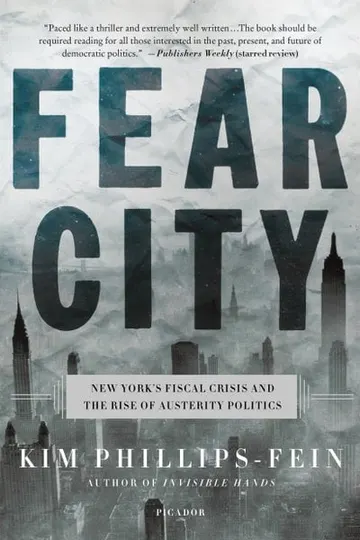
Fear City (opens Bookshop.org)
Kim Phillips-Fein · 2017
The 1975 near-bankruptcy, the bankers, unions and officials who negotiated the rescue, and the austerity that followed, from Phillips-Fein.
-
The history
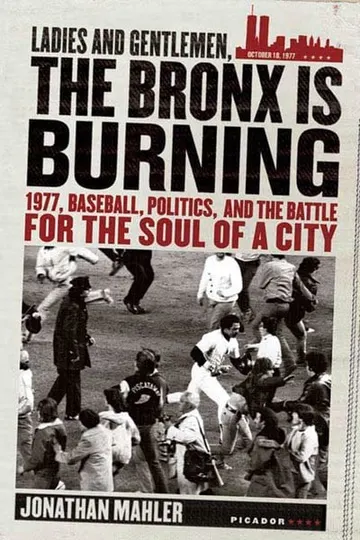
Ladies and Gentlemen, the Bronx Is Burning (opens Bookshop.org)
Jonathan Mahler · 2005
Mahler weaves the Yankees, the mayoral race, the July blackout and the Son of Sam murders into one account of the summer of 1977.
-
The history
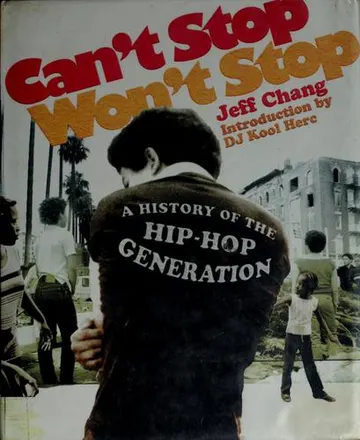
Can't Stop Won't Stop (opens Bookshop.org)
Jeff Chang · 2005
Chang traces hip-hop from Jamaican sound systems and the 1970s Bronx, and the role of urban renewal and disinvestment in the culture that came out of it.
The city is still writing this.
Four centuries end at this morning’s news. The daily brief picks up where the history leaves off: what changed in New York today and what it means, explained by breakfast.
Free. One email each morning. One-click unsubscribe. Never sold.