
Crisis & Reinvention · July 13-14, 1977
The Blackout of 1977
Lightning, a cascade of failures, and 25 hours of darkness: some 1,600 stores looted, about 1,000 fires set. Unlike the calm blackout of 1965, this one burned.
The facts
- When
- About 25 hours, the night of July 13 into July 14, 1977
- Cause
- Lightning hit Con Edison lines north of the city, then a cascade of equipment and operator failures isolated the grid
- The damage
- Roughly 1,600 stores looted, about 1,000 fires, around $300 million in losses
- Arrests
- Reported between about 3,000 and 4,500, the largest mass arrest in city history to that point
- Hardest hit
- Bushwick, Crown Heights, the South Bronx
- The backdrop
- The fiscal crisis, a brutal heat wave, and the Son of Sam summer
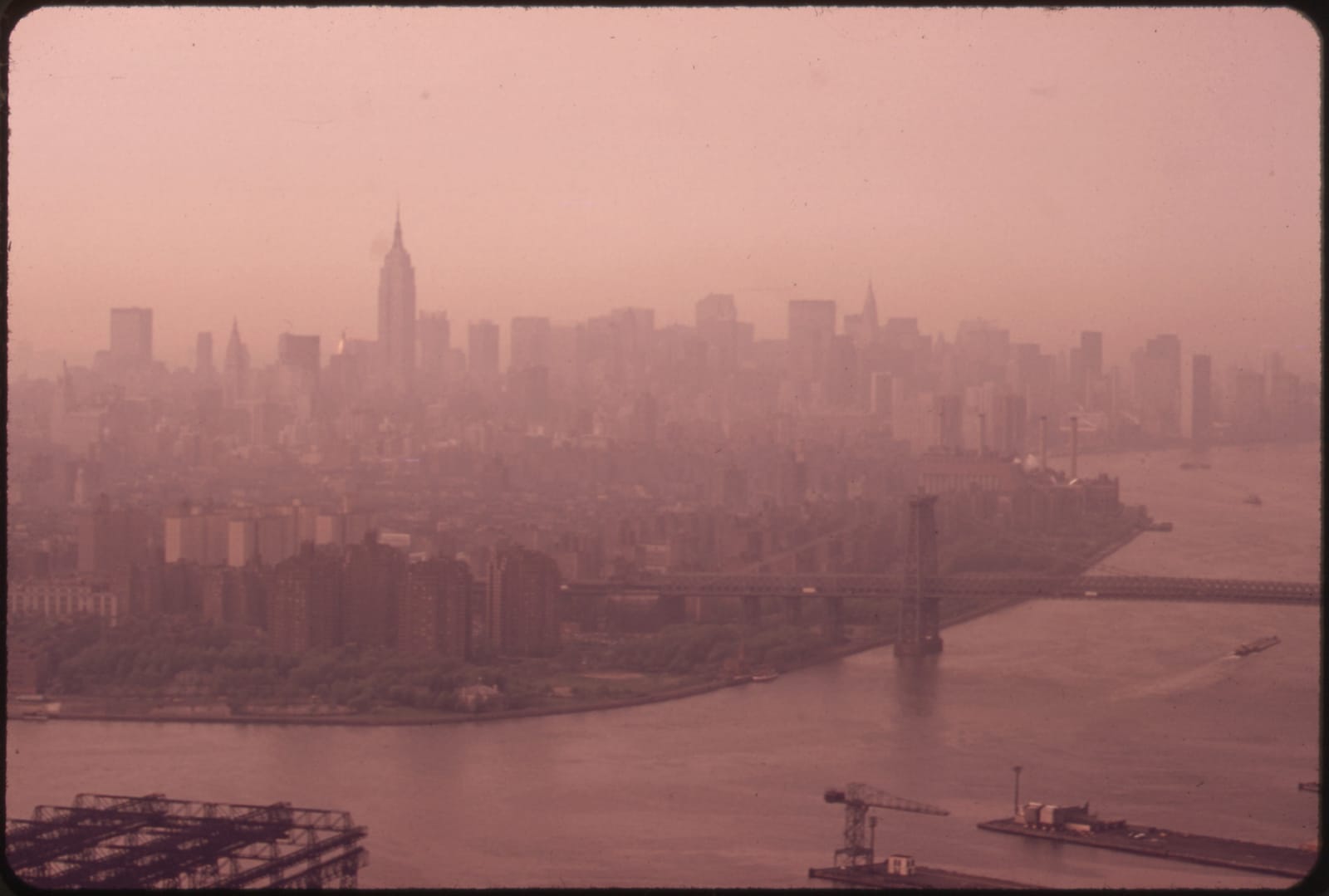
It started with lightning, at 8:37 on a July night, on a Con Edison substation north of the city. An hour later the whole grid had collapsed and New York went dark. What happened next is why 1977 is remembered where the calm 1965 blackout is not. Across about 25 hours, roughly 1,600 stores were looted and around 1,000 fires were set, concentrated in the poorest neighborhoods: Bushwick lost some 35 blocks of Broadway, and thieves drove 50 new Pontiacs out of one Bronx dealership. The city was already on the edge, broke from the fiscal crisis, sweating through a heat wave, frightened by the Son of Sam. Con Edison called the cause an act of God. The mayor called it gross negligence. The investigators sided with the mayor.
In their words
The event in the voices and documents of the people who were there. Every source links out so you can check it.
-
Speech
Beame’s condemnation gave the night its name.
We’ve seen our citizens subjected to violence, vandalism, theft and discomfort. ... We’ve been needlessly subjected to a night of terror in many communities that have been wantonly looted and burned.
Mayor Abraham Beame, the morning after, July 14, 1977
Source: Contemporary coverage; TIME used "night of terror" on its cover -
Document
Both short phrases are verbatim and well attested. The fight defined the aftermath.
Con Edison’s chairman, Charles Luce, called the cause "an act of God." Mayor Beame called it "gross negligence." That was the fight: a utility blaming the sky, a city blaming the utility.
The blame fight, July 1977
Source: Gothamist; federal DOE/FERC Impact Assessment -
Newspaper
The establishment paper’s first-morning account of the night.
Thousands of looters, emboldened by darkness and confusion, ranged through the city last night and early today in a wave of lawlessness.
The New York Times, page-one story, July 14, 1977
Source: The New York Times front page -
Report
The article’s title is the finding. Lightning was only the trigger; the cascade reflected preventable failures Con Ed had been warned about after 1965.
Investigators Agree N.Y. Blackout of 1977 Could Have Been Avoided.
Philip M. Boffey, Science, September 15, 1978
Source: Science, Vol. 201 (JSTOR) -
Report
The same report recorded the contrast with 1965, when looting was "negligible" and the city had just six multiple-alarm fires.
The federal Impact Assessment put the blackout’s economic cost "in excess of $350 million," and called that figure "no more than a reasonable lower bound."
U.S. Department of Energy, Impact Assessment of the 1977 New York City Blackout, July 1978
Source: FERC archive -
Oral history
Some DJs got their first equipment from looted electronics stores that night, the root of the claim that the blackout fed hip-hop.
I ran right around the corner to that place, helped pull the gate down, kicked the glass down and everything, and pulled me a mixer out of there.
DJ Grandmaster Caz (Curtis Fisher), on the looting
The claim is contested. Hip-hop predates 1977, and Afrika Bambaataa flatly rejects the story: "Blackout ’77 got nothin’ to do with hip-hop." At most, looted gear lowered the barrier for more DJs.
Source: Rolling Stone
What people get wrong
-
The myth The 1977 blackout was just a repeat of the calm 1965 one.
What’s true The difference was real, but it was timing and conditions, not character. 1965 hit in late afternoon with shopkeepers still in their stores. 1977 hit at 9:36 p.m., after closing, in a city broke and frightened.
-
The myth It was an unavoidable act of God.
What’s true That was Con Edison’s framing. Investigators concluded the opposite: lightning was the trigger, but the cascade was preventable, down to a loose locking nut and reforms Con Ed had only half-implemented after 1965.
-
The myth The blackout created hip-hop and gave us the "I Love New York" logo.
What’s true Both overstated. Hip-hop predates the night, and Bambaataa rejects the link. The "I Love NY" logo was designed in 1976; its campaign launched July 15, 1977, the day after the lights came back, which is why the two got fused in memory.
What it changed
- It was the largest mass arrest in the city’s history to that point, overwhelming the courts and jails.
- The cascade forced lasting changes to grid relay and load-shedding rules still in use.
- The "I Love New York" campaign launched the day after the lights returned and became the symbol of the comeback.
- The blackout is the durable shorthand for New York’s 1970s low point, the night the fiscal crisis, the heat, and the fear all arrived at once.
The New York Shelf
Read the whole story
Paid link. If you buy a book through this link, Bookshop.org pays us a small commission and sends a share of the sale to independent bookstores.
-
The history
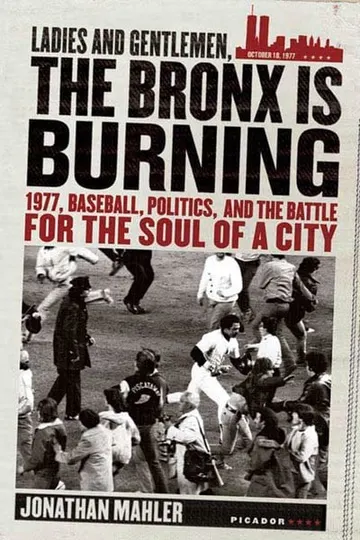
Ladies and Gentlemen, the Bronx Is Burning (opens Bookshop.org)
Jonathan Mahler · 2005
Mahler weaves the Yankees, the mayoral race, the July blackout and the Son of Sam murders into one account of the summer of 1977.
The city is still writing this.
Four centuries end at this morning’s news. The daily brief picks up where the history leaves off: what changed in New York today and what it means, explained by breakfast.
Free. One email each morning. One-click unsubscribe. Never sold.