
Crisis & Reinvention · The 1920s to 1968
Robert Moses, the Master Builder
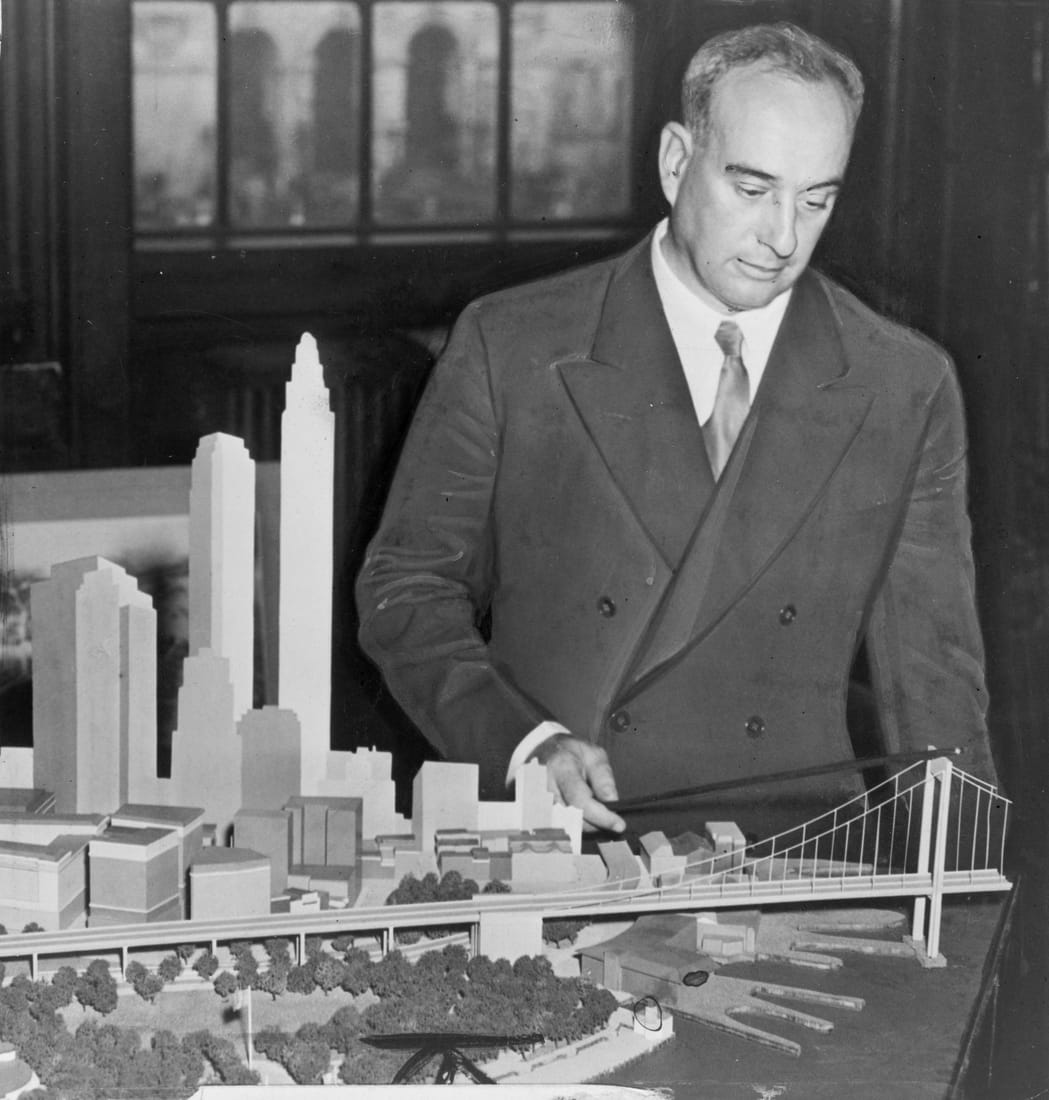
For four decades the most powerful man in New York held no elected office. He built the bridges, beaches, and expressways, and he displaced half a million people to do it.
The facts
- The power
- Roughly 44 years of appointed, never elected, control over New York’s parks, bridges, and highways
- The source
- Public authorities funded by their own tolls, above all the Triborough Bridge Authority he ran from 1934 to 1968
- The works
- The Triborough, Jones Beach, the parkways and expressways, Lincoln Center, the UN site, two World’s Fairs
- The cost
- By his biographer’s conservative count, about half a million people displaced, disproportionately poor and Black or Latino
- The end
- Governor Nelson Rockefeller folded the Triborough Authority into the MTA in 1968
- The detail
- He never learned to drive
Robert Moses shaped the physical city more than any mayor or governor, and he was never elected to anything. His power came from a quiet innovation: the public authority, an agency funded by its own bridge tolls and shielded from elected officials, which he turned into a self-renewing money machine and a base no one could touch for decades. He built things New Yorkers still use every day, Jones Beach, the Triborough Bridge, the expressways. He also drove the Cross-Bronx Expressway straight through a living Bronx neighborhood and, by Robert Caro’s deliberately conservative count, threw half a million people out of their homes. Jane Jacobs finally beat him over a Lower Manhattan expressway, and Nelson Rockefeller stripped his power in 1968. The man who bent the city around the car never learned to drive.
In their words
The event in the voices and documents of the people who were there. Every source links out so you can check it.
-
Document
Moses’s defiant answer to critics of mass displacement: you cannot rebuild a crowded city, he argued, without uprooting people.
I raise my stein to the builder who can remove ghettos without removing people as I hail the chef who can make omelets without breaking eggs.
Robert Moses, widely quoted, including in his New York Times obituary
Source: Wikiquote (Robert Moses) -
Document
Moses’s own metaphor for driving expressways through settled neighborhoods. Caro added that he did not just feel he had to swing the meat ax, he loved to swing it.
When you operate in an overbuilt metropolis, you have to hack your way with a meat ax.
Robert Moses, quoted in Robert Caro, The Power Broker, 1974
Source: Robert Caro, The Power Broker (Knopf, 1974) -
Oral history
Caro stressed he chose figures so conservative that Moses could not challenge them.
He displaced 250,000 people, a quarter of a million. For his urban renewal projects, he displaced another 250,000. So he threw out of their homes half a million people.
Robert Caro, in the 99% Invisible "Power Broker" series
Source: 99% Invisible -
Document
The Cross-Bronx Expressway is the textbook case of a highway driven through a working neighborhood that had nowhere to go.
In 1952 about 1,500 families in the Bronx neighborhood of East Tremont were given 90 days to leave for the Cross-Bronx Expressway. Their leader, Lillian Edelstein, proposed a route two blocks away that would have spared 150 buildings. She lost.
The East Tremont fight, recorded in Robert Caro’s The Power Broker
Source: The Forward -
Document
Jacobs, a West Village writer, made the intellectual case against the Moses model and led the coalition that killed his Lower Manhattan Expressway.
This book is an attack on current city planning and rebuilding.
Jane Jacobs, the first line of The Death and Life of Great American Cities, 1961
Source: Jane Jacobs, The Death and Life of Great American Cities -
Document
Moses’s documented record includes real discrimination, like obstructing bus permits for Black groups at Jones Beach. The specific low-overpass engineering claim is the contested part.
Caro’s most famous charge, that Moses built Long Island parkway overpasses deliberately low to keep buses, and Black New Yorkers, from the beaches, comes from a single source and is disputed by named historians. One measured the bridges and found Moses’s clearances genuinely lower; another says cost, not race, set the heights.
The contested "racist bridges" claim
Present it as a contested allegation, not settled fact. The evidence cuts both ways.
Source: History News Network; The Power Broker
What people get wrong
-
The myth Moses was an unbeatable dictator of New York.
What’s true His power was immense but bounded, and it was broken. Jane Jacobs’s coalition killed his Lower Manhattan Expressway, and Governor Rockefeller dissolved his Triborough power base into the MTA in 1968.
-
The myth Moses definitely built low parkway bridges to keep Black New Yorkers off the beaches.
What’s true This rests on one source, Robert Caro, and is genuinely disputed. His documented record holds real discrimination, but the specific low-overpass claim is contested by historians, with physical evidence cutting both ways.
-
The myth Moses loved cars and built the city he liked to drive in.
What’s true He never learned to drive. The man who reshaped New York around the automobile worked from the back of a chauffeured limousine his whole career.
What it changed
- Moses shaped the built form of modern New York more than any one person, with public works his biographer tallies at roughly $27 billion, and never held elected office.
- He made the self-funding public authority a model of American infrastructure power, copied across the country.
- Caro’s The Power Broker (1974) won the Pulitzer and turned Moses from celebrated builder into the case study in unaccountable power.
- Jones Beach, the Triborough Bridge, the Verrazzano, Lincoln Center, and much of the expressway network are still in daily use, the physical legacy beside the social one.
The New York Shelf
Read the whole story
Paid links. If you buy a book through these links, Bookshop.org pays us a small commission and sends a share of the sale to independent bookstores.
-
The history
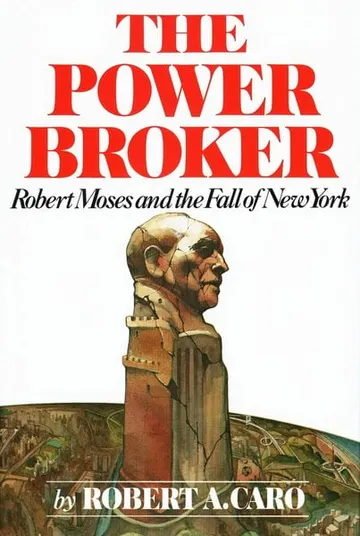
The Power Broker (opens Bookshop.org)
Robert A. Caro · 1974
Robert Moses built the parkways, bridges and housing projects that reshaped the city without ever winning an election. Caro's biography shows how, and who was displaced along the way. It won the Pulitzer Prize for Biography.
-
The history
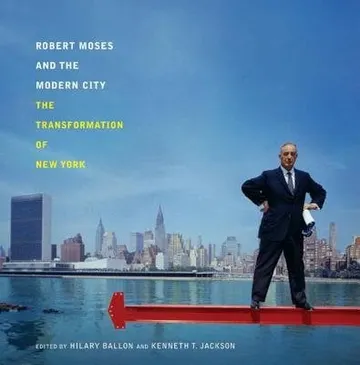
Robert Moses and the Modern City (opens Bookshop.org)
Hilary Ballon and Kenneth T. Jackson · 2007
Essays and photographs from a 2007 exhibition reassess Moses's parks, highways and housing projects, some more favorably than Caro did.
-
The history
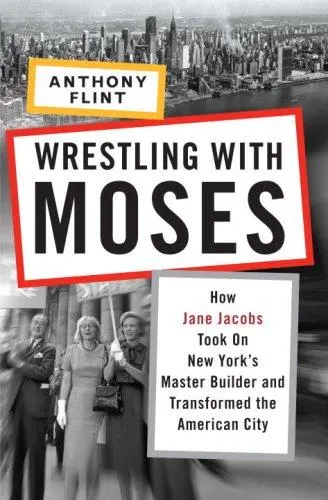
Wrestling with Moses (opens Bookshop.org)
Anthony Flint · 2009
Flint recounts the fights between Jane Jacobs and Robert Moses over Washington Square Park, the West Village and the Lower Manhattan Expressway.
The city is still writing this.
Four centuries end at this morning’s news. The daily brief picks up where the history leaves off: what changed in New York today and what it means, explained by breakfast.
Free. One email each morning. One-click unsubscribe. Never sold.