
Crisis & Reinvention · 1931 to today
The Five Families
How the New York Mafia organized itself into five families and a national board, ran the city’s rackets for decades, and was finally broken by an upstate traffic stop, a Senate witness, and the RICO law.
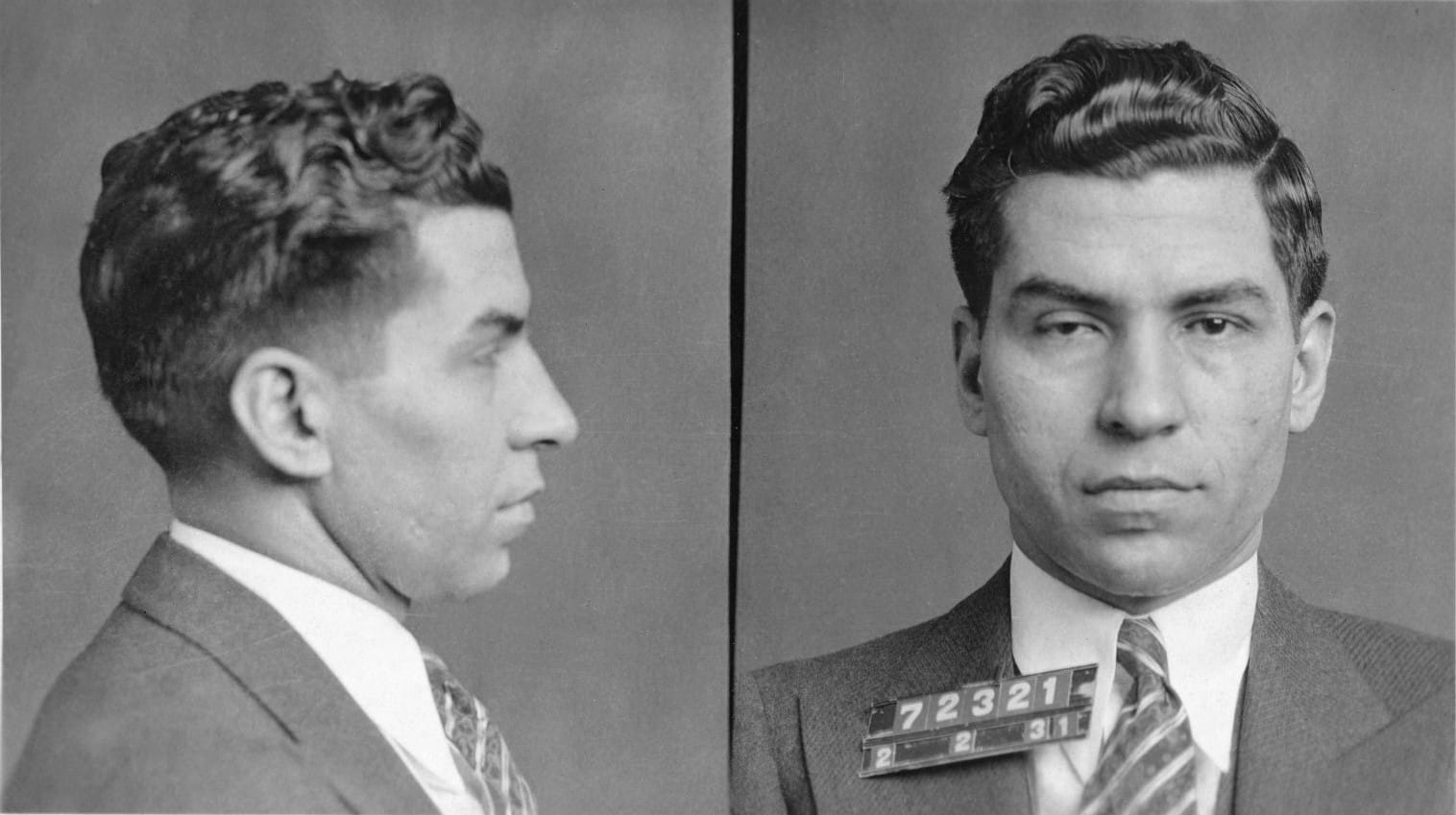
The facts
- The founding
- After the 1930-31 Castellammarese War, Lucky Luciano set up five families and a national board, the Commission, in 1931
- The five
- Bonanno, Colombo, Gambino, Genovese, and Lucchese
- The code
- Omerta, the oath of silence
- The exposure
- A 1957 mob summit raided in Apalachin, New York, forced the FBI to admit the syndicate existed
- The insider
- Joseph Valachi told the Senate about "Cosa Nostra" in 1963, the first made member to break the silence
- The fall
- The 1985-86 Mafia Commission Trial, where Rudolph Giuliani used the RICO law to convict the bosses
For most of the 20th century the New York Mafia ran on a structure invented in a single year. After the bloody Castellammarese War of 1930-31, Lucky Luciano divided the city among five families, Bonanno, Colombo, Gambino, Genovese, and Lucchese, and set a national board, the Commission, over them to settle disputes without another war. Bound by the oath of silence called omerta, the families bled the city for decades: the docks, the Fulton Fish Market, garbage hauling, the construction unions, a tax on every load. What broke them was not a shootout but paperwork and witnesses. A 1957 mob summit blundered into a state-police roadblock in Apalachin, forcing J. Edgar Hoover’s FBI to admit the syndicate was real. In 1963 Joseph Valachi described it to the Senate on television. And in 1985, a federal prosecutor named Rudolph Giuliani used the racketeering law called RICO to put the whole Commission on trial at once. None of this is the romance of the movies. It was an extortion business, and it ran on fear.
In their words
The event in the voices and documents of the people who were there. Every source links out so you can check it.
-
Testimony
Valachi was the first made member to describe the organization in public, on television, naming its hierarchy and the term insiders used for it.
Cosa Nostra, meaning our thing and our family.
Joseph Valachi, Genovese soldier, testifying to a U.S. Senate committee, October 1963
He popularized "Cosa Nostra," he did not coin it. It was already the insiders’ phrase, "this thing of ours."
Source: The Valachi hearings (records collected) -
Document
The sight of the nation’s crime bosses fleeing through an upstate farm made the syndicate impossible to deny. Within days the FBI launched its Top Hoodlum Program.
On November 14, 1957, State Police sergeant Edgar Croswell, suspicious of the luxury cars converging on a mobster’s estate in Apalachin, New York, set up roadblocks. Roughly 60 Mafia figures were detained, including Vito Genovese and Carlo Gambino, and others fled into the woods.
The Apalachin Meeting raid, November 14, 1957
The obstruction convictions of the men caught there were overturned on appeal in 1960. The raid’s lasting effect was forcing the FBI to act, not the prosecutions.
Source: Smithsonian Magazine -
Document
This is the unromantic core of the business: not honor, but a tax on every box of fish, every construction pour, every garbage pickup, paid by ordinary workers and merchants.
For roughly 60 years, from the 1930s into the 1990s, the Genovese family controlled Manhattan’s Fulton Fish Market, extorting wholesalers and retailers over parking, loading, and unloading. The waterfront ran through the longshoremen’s union.
The Mafia’s New York rackets
Source: TIME; New York anti-racketeering records -
Document
The indictment charged the bosses of all five families as a single criminal enterprise, the Commission itself, under the RICO law.
It is a great day for law enforcement. Probably the worst day for the Mafia.
U.S. Attorney Rudolph Giuliani, announcing the Mafia Commission indictment, February 1985
Source: The Mob Museum -
Testimony
The "Dapper Don" in his own voice, caught on a bug the FBI planted over Thanksgiving 1989. He was convicted within two years.
This is gonna be a Cosa Nostra till I die.
Gambino boss John Gotti, recorded by an FBI bug above the Ravenite Social Club, around 1989
Source: Trial evidence in United States v. Gotti -
Testimony
Gravano, who admitted to 19 murders, became the highest-ranking member ever to turn government witness. He demolished Gotti from inside the administration.
That if I divulge any of the secrets of this secret society, that my soul should burn like this saint.
Gambino underboss Salvatore "Sammy the Bull" Gravano, describing the Mafia oath at John Gotti’s trial, 1992
The state bought its case from a multiple murderer who served a reduced sentence. That bargain is part of the reckoning.
Source: Trial testimony, United States v. Gotti
What people get wrong
-
The myth The Godfather got it right: a tragic family bound by honor.
What’s true The record is a brutal extortion racket. Gravano’s sworn account of a soul-burning oath and 19 murders, and the decades-long shakedown of the Fulton Fish Market, are the reality. Omerta protected the business, not any code of honor.
-
The myth RICO destroyed the Mafia.
What’s true It severely weakened the families, but they still exist and still turn up in federal cases. A 2023 prosecution charged dozens of Cosa Nostra members across several families.
-
The myth The Apalachin raid put the bosses in prison.
What’s true The convictions of the men caught there were thrown out on appeal. What mattered was political: it ended the FBI’s long pretense that no national syndicate existed.
What it changed
- The 1957 Apalachin raid pushed Hoover’s FBI to launch its Top Hoodlum Program, reversing years of official denial that the Mafia existed.
- The 1985-86 Commission Trial proved bosses could be convicted under RICO for crimes committed by the enterprise they ran, the template for dismantling the families.
- Luciano’s 1931 design, five families under a shared board, replaced the single "boss of bosses" and defined the American Mafia for the rest of the century.
- Sammy Gravano’s defection showed the government could turn insiders, and the witness-cooperation model reshaped organized-crime prosecutions.
The New York Shelf
Read the whole story
Paid links. If you buy a book through these links, Bookshop.org pays us a small commission and sends a share of the sale to independent bookstores.
-
Reporting
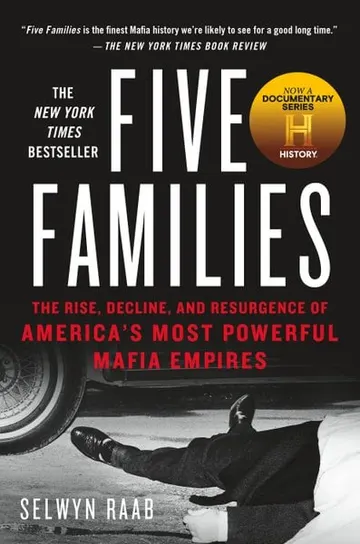
The Five Families (opens Bookshop.org)
Selwyn Raab · 2005
Raab, a longtime New York Times crime reporter, writes about the Genovese, Gambino, Lucchese, Bonanno and Colombo families from Prohibition to the 2000s.
-
Reporting
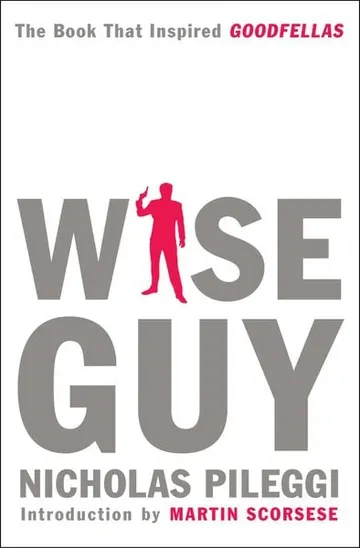
Wiseguy (opens Bookshop.org)
Nicholas Pileggi · 1985
Henry Hill's life inside the Lucchese crime family in Brooklyn, told by Pileggi largely in Hill's voice. It is the source for the film Goodfellas.
The city is still writing this.
Four centuries end at this morning’s news. The daily brief picks up where the history leaves off: what changed in New York today and what it means, explained by breakfast.
Free. One email each morning. One-click unsubscribe. Never sold.