
Crisis & Reinvention · 1975
The 1975 Fiscal Crisis
The richest city in the country nearly went bankrupt, a teachers’ pension fund saved it by a couple of hours, and a tabloid put four words on the President that he never actually said.

The facts
- The hole
- About $14 billion in debt, roughly $6 billion of it short-term notes the city could no longer roll over
- Why
- A shrinking tax base (about 600,000 jobs lost from 1969 to 1976), years of borrowing to cover deficits, and the 1973–75 recession
- The rescue
- Big MAC bonds, a state control board, a teachers’ pension purchase, and eventually federal loans, plus deep austerity
- October 17, 1975
- With a bankruptcy filing already drafted, the teachers’ pension fund bought $150 million in bonds with hours to spare
- Resolved
- Short-term debt eliminated by 1977–78; the city under state financial control for years
In 1975 New York City, the biggest and richest city in the country, nearly went bankrupt. It had papered over years of deficits with short-term debt, and when the banks stopped lending, the bill came due all at once. A teachers’ union pension fund bought the bonds that kept the city out of default by a couple of hours. When the city asked Washington for help, President Ford gave a speech refusing, and the Daily News compressed it into four words that defined the decade: FORD TO CITY: DROP DEAD. He never said it. And six weeks later he signed the loans anyway. What followed was a decade of austerity, the first tuition CUNY ever charged, and a subway falling apart under the city’s feet.
In their words
The event in the voices and documents of the people who were there. Every source links out so you can check it.
-
Speech
The speech that triggered the famous headline. These are Ford’s actual words, verified against the transcript.
I can tell you, and tell you now, that I am prepared to veto any bill that has as its purpose a Federal bailout of New York City to prevent a default.
President Gerald Ford, Address at the National Press Club, October 29, 1975
The phrase "drop dead" appears nowhere in the speech. It was the Daily News’s paraphrase.
Source: The American Presidency Project -
Newspaper
One of the most famous headlines in American journalism, and a symbol of federal abandonment.
FORD TO CITY: DROP DEAD
New York Daily News front page, October 30, 1975; the headline was proposed by editor William Brink
The front page itself is copyrighted, so it is cited here as an artifact, not reproduced. Ford came to believe it cost him New York, and the presidency, in 1976.
Source: Ford to City: Drop Dead (history) -
Speech
The actual argument the four-word headline flattened: Ford’s case that the city had brought it on itself.
The consequences have been a steady stream of unbalanced budgets, massive growth in the city’s debt, extraordinary increases in public employee contracts, and total disregard of independent experts who warned again and again that the city was courting disaster.
President Gerald Ford, National Press Club, October 29, 1975
Whatever the politics, the underlying diagnosis of years of unbalanced budgets and short-term borrowing was largely accurate.
Source: The American Presidency Project -
Document
The federal hard line, in the words of the official who designed the terms.
The loan terms should be so punitive, the overall experience so painful, that no city, no political subdivision would ever be tempted to go down the same road again.
Treasury Secretary William E. Simon, in his 1978 memoir "A Time for Truth"
It states the intent plainly: New York was to be made an example so that no other city would ask.
Source: New Labor Forum (CUNY) -
Document
The single act that averted default, with hours to spare.
On October 17, 1975, with the mayor’s bankruptcy announcement already drafted, UFT president Albert Shanker directed the teachers’ pension fund to buy $150 million in Municipal Assistance Corporation bonds, the purchase that stopped the city from defaulting that afternoon.
Albert Shanker and the Teachers’ Retirement System, October 17, 1975
The same union that had just been forced into thousands of layoffs put its members’ retirement money on the line to save the city.
Source: Albert Shanker (biographical record) -
Report
The concrete, checkable cost of austerity: a transit system left to rot.
Subway trains derailed on the average of one every 18 days, and in 400 places in the system, track conditions were so bad that train speeds had to be reduced 75%.
New York City Transit Authority conditions, late 1970s
Deferred maintenance turned the subway into the national symbol of urban collapse, graffiti and all.
Source: nycsubway.org
What people get wrong
-
The myth Ford told New York to "drop dead."
What’s true He never said those words. They were the Daily News’s compression of his veto threat. His actual line was "I am prepared to veto any bill" for a bailout.
-
The myth Ford refused, and Washington never helped.
What’s true Six weeks after the veto threat, on December 9, 1975, Ford signed the New York City Seasonal Financing Act, up to $2.3 billion a year in federal loans. The aid was structured as secured loans, not a grant, which is how he squared it with his earlier stance.
-
The myth It was a self-contained New York problem.
What’s true The federal hard line was deliberate national policy. Treasury wanted the experience "so painful" no other city would dare ask, a stance that pushed American urban governance toward austerity for a generation.
What it changed
- A state control board took budget power from City Hall, a model later copied for other distressed cities.
- CUNY charged tuition for the first time in its 129-year history, ending the free-college tradition.
- Roughly 40,000 city jobs were cut; day-care and senior centers, libraries, firehouses, and some hospitals closed.
- Deferred subway maintenance produced derailments, speed restrictions, and total graffiti coverage, the visual shorthand for 1970s and 80s New York.
The New York Shelf
Read the whole story
Paid links. If you buy a book through these links, Bookshop.org pays us a small commission and sends a share of the sale to independent bookstores.
-
The history
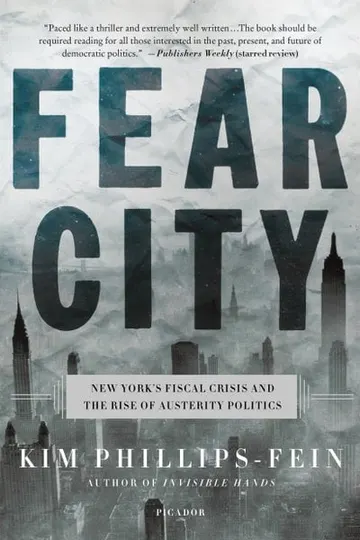
Fear City (opens Bookshop.org)
Kim Phillips-Fein · 2017
The 1975 near-bankruptcy, the bankers, unions and officials who negotiated the rescue, and the austerity that followed, from Phillips-Fein.
-
The history
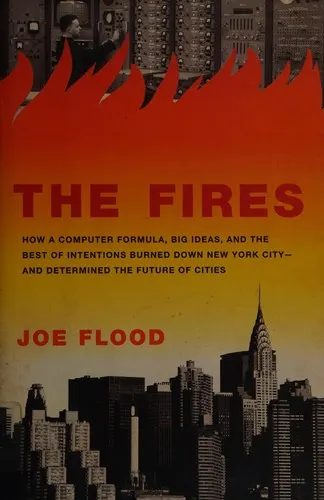
The Fires (opens Bookshop.org)
Joe Flood · 2010
Flood describes how a RAND-designed model led to fire company closures in the Bronx and Brooklyn, and the fires of the 1970s that followed.
-
The history
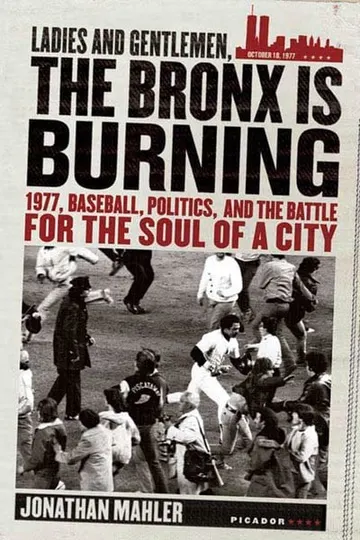
Ladies and Gentlemen, the Bronx Is Burning (opens Bookshop.org)
Jonathan Mahler · 2005
Mahler weaves the Yankees, the mayoral race, the July blackout and the Son of Sam murders into one account of the summer of 1977.
The city is still writing this.
Four centuries end at this morning’s news. The daily brief picks up where the history leaves off: what changed in New York today and what it means, explained by breakfast.
Free. One email each morning. One-click unsubscribe. Never sold.