
1898–1945
The Modern Metropolis
The subway, the skyscraper, and a factory fire that changed how America treats its workers. Five boroughs became one machine, women won the vote, Harlem became the capital of Black culture, and a mayor read the funnies on the radio so kids wouldn’t miss them.
- 1904
October 27, 1904
The Mayor Drives the Subway
When the subway opened, the mayor took the controls of the inaugural train and, against the plan, drove it himself uptown.
No, Sir! I’m running this train!
Mayor George B. McClellan Jr., refusing to give up the controls of the first IRT subway train, as reported by The New York TimesHe was supposed to hand off after a ceremonial start. The papers nicknamed him the "Mayor-Motorman." The subway has been the city’s lifeline ever since.
Source: nycsubway.org (NYT, 1904) Read the full story - 1904
June 15, 1904
The General Slocum Fire
It was the deadliest day in New York City before September 11, 2001.
A church-picnic steamboat, the General Slocum, caught fire in the East River with rotted life preservers and unusable lifeboats; roughly 1,021 people died, most of them women and children from the Lower East Side’s "Little Germany."
Documented in the coroner’s inquest and the trial of Capt. Van Schaick, 1904–1906
The disaster gutted Little Germany, whose survivors scattered, and forced real steamboat-safety law. The owner had falsified the safety paperwork.
Source: Encyclopedia.com (Van Schaick trial) Read the full story - 1911
April 2, 1911
I Would Be a Traitor
A fire at the Triangle factory killed 146 garment workers, mostly young immigrant women, who were trapped behind doors locked to prevent theft.
I would be a traitor to these poor burned bodies if I came here to talk good fellowship. We have tried you good people of the public and we have found you wanting.
Rose Schneiderman, to a wealthy memorial audience after the Triangle Shirtwaist Factory fire, April 2, 1911The labor organizer told a room of sympathetic rich New Yorkers that their sympathy was worthless without action. The disaster rewrote the state’s labor and fire laws.
Source: Cornell ILR, The Triangle Factory Fire Read the full story - 1911
Recalled 1964
As If We Did Something Wrong
Perkins watched the fire from the street and carried it into a career that built much of the New Deal’s labor protection.
It was as though we had all done something wrong.
Frances Perkins, who witnessed the Triangle fire and later became FDR’s Secretary of Labor, in a 1964 lecture at CornellThe line everyone quotes, "The New Deal began on March 25, 1911," isn’t actually in her lecture. What she really said was quieter, and somehow truer.
Source: Cornell ILR (Perkins lecture, 1964) - 1913
February 2, 1913
The Greatest Station on Earth
Built after a deadly 1902 tunnel crash forced the trains underground and electric, the new terminal opened to 150,000 visitors in a single day.
It is not only the greatest station in the United States, but the greatest station, of any type, in the world.
The New York Times editorial on the opening of Grand Central Terminal, February 2, 1913Sixty years later it was nearly demolished for an office tower. A 1978 Supreme Court ruling, and Jacqueline Onassis, saved it.
Source: The New York Times, via PBS American Experience Read the full story - 1917
November 6, 1917
New York Women Win the Vote
New York became the first major eastern state to grant women the vote by popular referendum.
I regard the New York victory as the very greatest victory this movement has ever had in any country.
Carrie Chapman Catt, on New York State granting women the vote by referendum, 1917New York’s win cracked the dam. The federal 19th Amendment followed two years later.
Source: New York State Museum - 1919
July 1919
If We Must Die
McKay, a Jamaican-born Harlem poet, wrote this defiant sonnet during the "Red Summer" of 1919, when white mobs attacked Black communities across the country.
If we must die, let it not be like hogs
Hunted and penned in an inglorious spot,
While round us bark the mad and hungry dogs,
Making their mock at our accursed lot.
Claude McKay, sonnet "If We Must Die," published in the Liberator, July 1919It became a foundational text of the Harlem Renaissance, the era that made Harlem the capital of Black art and letters.
Source: BlackPast - 1925
The Prohibition years
Hello, Sucker
New York was the wettest city in dry America, with tens of thousands of speakeasies and a law it openly mocked.
Hello, sucker!
Texas Guinan, the speakeasy nightclub queen, greeting her patrons in Prohibition-era New YorkIn 1923 the state repealed its own enforcement law. The deeper legacy of Prohibition was the organized crime it funded.
Source: Texas Guinan (documented) Read the full story - 1926
1926
I, Too, Am America
Hughes answered Walt Whitman’s "I Hear America Singing" by writing Black America into the national "we."
I am the darker brother.
They send me to eat in the kitchen
When company comes,
But I laugh,
And eat well,
And grow strong.
Langston Hughes, "I, Too," collected in "The Weary Blues," 1926The poem ends "I, too, am America." From a Harlem walk-up, Hughes claimed the whole country.
Source: Academy of American Poets Read the full story - 1929
October 1929
A Little Distress Selling
The market lost nearly a third of its value in days. The famous wave of brokers leaping from windows, though, is mostly a myth.
There has been a little distress selling on the Stock Exchange.
Thomas Lamont of J.P. Morgan, during the Black Thursday panic, October 1929The crash did not single-handedly cause the Depression, but by 1932 a third of the city was out of work and a shantytown stood in Central Park.
Source: Britannica Read the full story - 1931
May 1, 1931
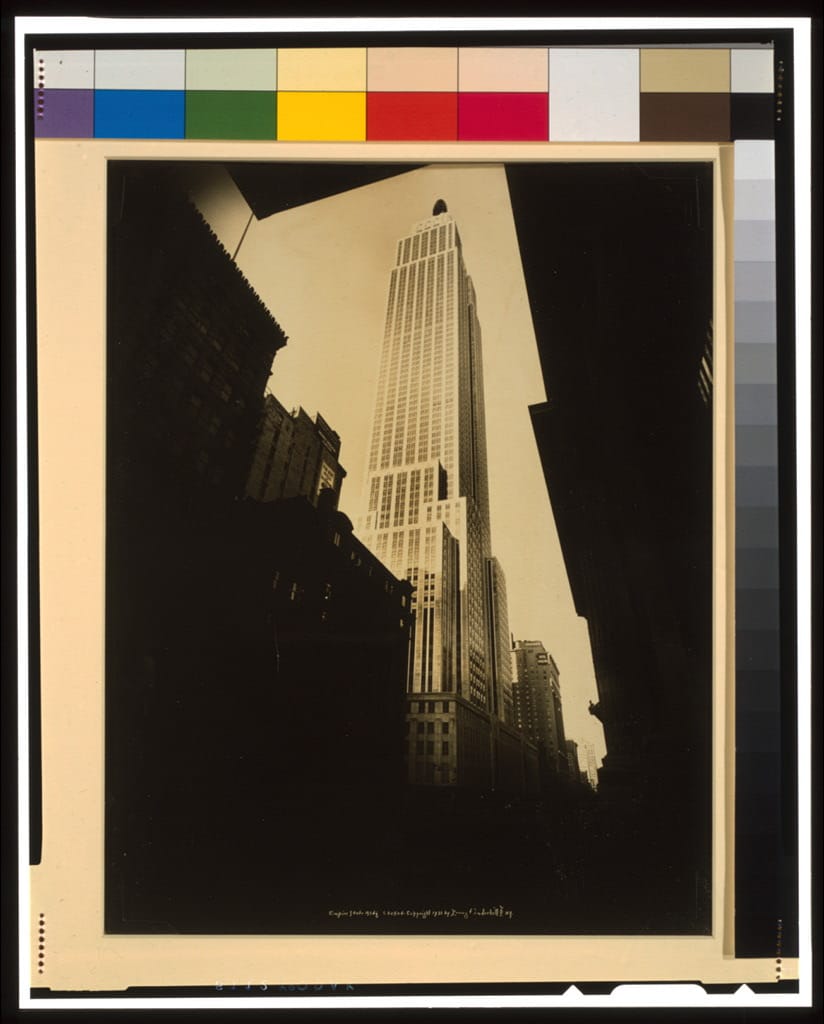
The Tallest Building on Earth
The world’s tallest building opened in the depths of the Depression, switched on by Hoover from Washington by telegraph key.
This achievement justifies pride of accomplishment in everyone who has had any part in its conception and construction and it must long remain one of the outstanding glories of a great city.
President Herbert Hoover, message on the opening of the Empire State Building, May 1, 1931It went up in 410 days. For its first years it was so empty New Yorkers called it the "Empty State Building."
Source: The American Presidency Project Read the full story - 1945
July 8, 1945
The Mayor Reads the Comics
During a strike that kept papers off doorsteps, La Guardia read the comics over the city’s own radio station so children wouldn’t miss them.
Say children, what does it all mean? It means that dirty money never brings any luck!
Mayor Fiorello La Guardia, reading the Sunday funnies aloud on WNYC during a newspaper deliverers’ strike, July 8, 1945The other famous La Guardia line, "There is no Republican or Democratic way to clean the streets," is almost certainly something he never said. This one is on tape.
Source: Library of Congress, National Recording Preservation Board - 1901
April 25, 1901
A Window for Every Room
For the first time, New York's tenement law came with real enforcement behind it: a new department empowered to inspect, license and condemn.
A tenement house is any house or building, or portion thereof, which is rented, leased, let or hired out, to be occupied, or is occupied as the home or residence of three families or more living independently of each other, and doing their cooking upon the premises, or by more than two families upon any floor, so living and cooking, but having a common right in the halls, stairways, yards, water-closets or privies, or some of them.
The Tenement House Act, Chapter 334, Laws of 1901, Section 2(1), became a law April 25, 1901
The law followed eleven years after Jacob Riis's "How the Other Half Lives" (1890) documented the crowding the Act targeted.
Source: The Tenement House Law of the City of New York, compiled by William J. Fryer (1901) Read the full story
The New York Shelf
The book on this era
Paid links. If you buy a book through these links, Bookshop.org pays us a small commission and sends a share of the sale to independent bookstores.
-
The history
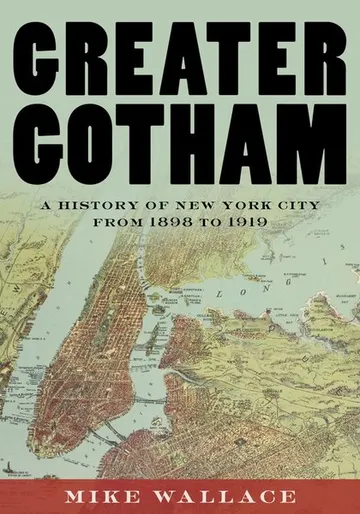
Greater Gotham (opens Bookshop.org)
Mike Wallace · 2017
Wallace picks up at consolidation and runs through the First World War, covering the subways, skyscrapers, immigration, labor fights and the birth of modern city politics.
-
The history
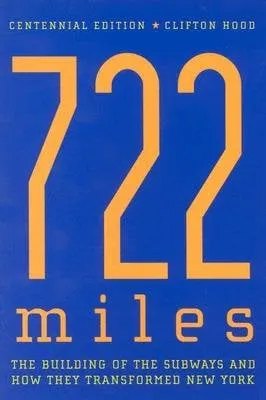
722 Miles (opens Bookshop.org)
Clifton Hood · 1993
The subway from its 1904 opening through the unification of the lines in 1940, with the politics of financing them and their effect on neighborhoods.
-
The history
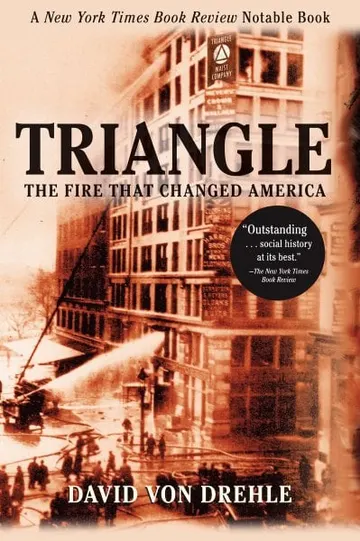
Triangle (opens Bookshop.org)
David Von Drehle · 2003
Von Drehle reconstructs the March 1911 factory fire that killed 146 garment workers, the manslaughter trial that followed and the labor laws that came after.
-
The history
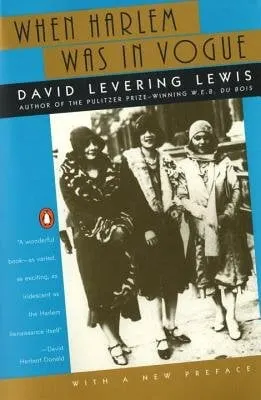
When Harlem Was in Vogue (opens Bookshop.org)
David Levering Lewis · 1981
The writers, artists and patrons of 1920s Harlem and the political aims behind the movement, in Lewis's account.
The city is still writing this.
Four centuries end at this morning’s news. The daily brief picks up where the history leaves off: what changed in New York today and what it means, explained by breakfast.
Free. One email each morning. One-click unsubscribe. Never sold.