
1860–1898
War, Machine & Bridge
War came home in the deadliest riot in American history, a political machine ran the city for its own profit, and a bridge redrew the skyline. The age that raised the Statue of Liberty also perfected the tenement, and the cartoon that brought down a boss.
- 1863
July 13–16, 1863
The Colored Orphan Asylum Burns
During the Civil War draft riots, the deadliest urban riot in U.S. history, a mob sacked and burned the Colored Orphan Asylum on Fifth Avenue.
About four hundred entered the house and immediately proceeded to pitch out beds, chairs, tables, and every species of furniture... when all was taken, the house was then set on fire. While the rioters were clamoring at the front door, the Matron and Superintendent were quietly conducting the children out the back yard.
Report of the Committee of Merchants for the Relief of Colored People, 1863
Every one of the 233 children got out the back and survived. The riots, set off by a draft the rich could buy their way out of, turned into days of racist murder.
Source: Library of Congress Read the full story - 1871
October 1871
As Long As I Count the Votes
Nast’s cartoons in Harper’s Weekly helped topple William "Boss" Tweed and the Tammany Hall ring that looted tens of millions from the city.
As long as I count the votes, what are you going to do about it?
Caption Thomas Nast put in Boss Tweed’s mouth, Harper’s Weekly, October 7, 1871Tweed never actually said it. The taunt came from a reform lawyer, and Nast put it in the boss’s mouth. The most famous Tweed quote is a cartoonist’s invention.
Source: Library of Congress Prints & Photographs Read the full story - 1871
1871
Them Damned Pictures
Tweed’s reported complaint explains why Nast’s pictures were more dangerous to a machine built on immigrant votes than any editorial.
I don’t care a straw for your newspaper articles; my constituents don’t know how to read, but they can’t help seeing them damned pictures.
Boss Tweed, as reported by Charles F. Wingate in the North American Review (1875)This one is secondhand too, reported four years later. Treat it as "reportedly said." But it is the truest thing the era teaches about pictures and power.
Source: Wikiquote (Wingate, 1875) - 1883
May 24, 1883
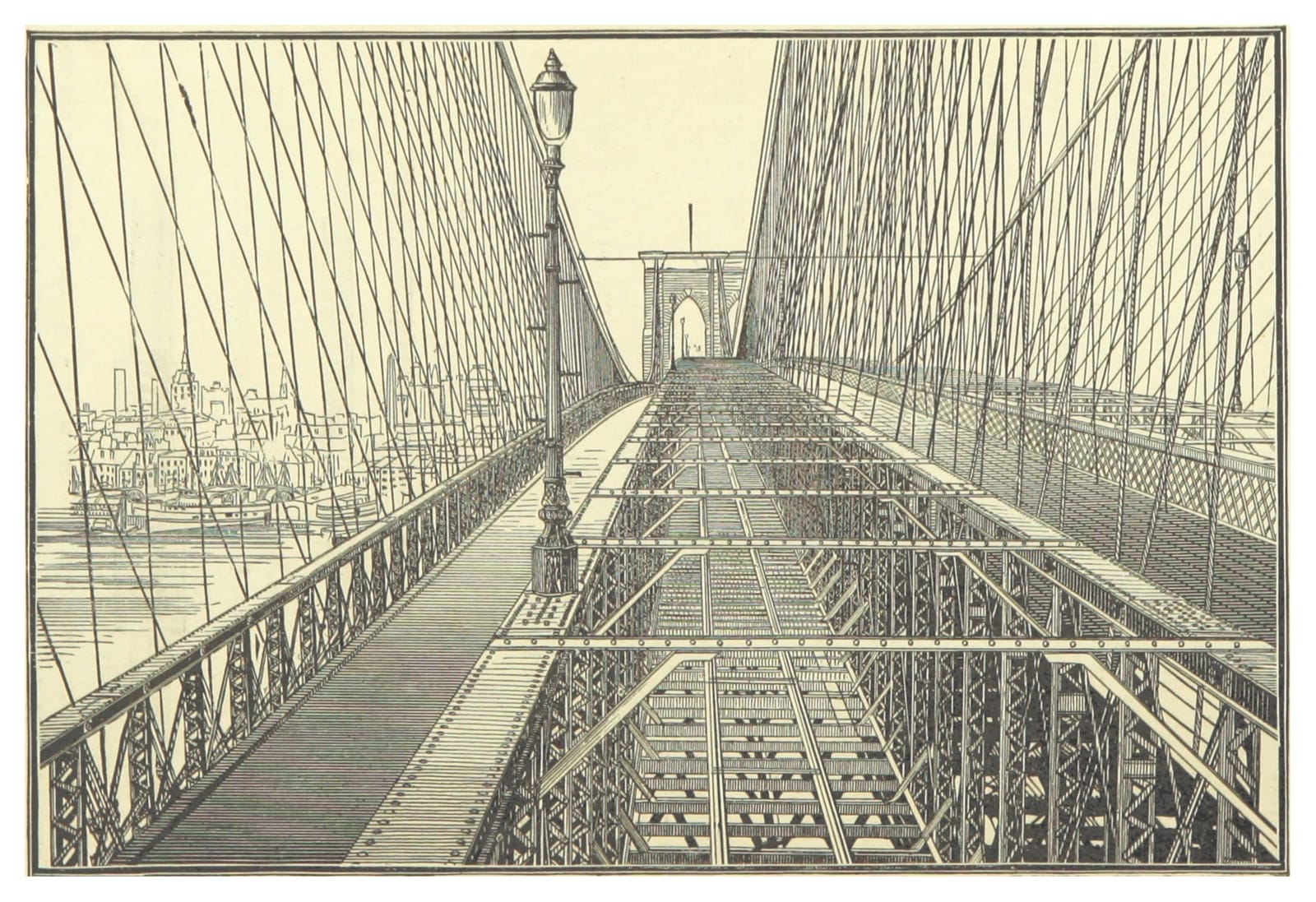
A Monument to a Woman
When chief engineer Washington Roebling was crippled by caisson disease, his wife Emily ran the Brooklyn Bridge’s construction for over a decade and saw it finished.
It is thus an everlasting monument to the self-sacrificing devotion of woman, and of her capacity for that higher education from which she has been too long debarred. The name of Mrs. Emily Warren Roebling will thus be inseparably associated with all that is wonderful in the constructive world of art.
Abram S. Hewitt, opening-day oration for the Brooklyn Bridge, May 24, 1883The bridge took fourteen years and roughly 27 lives, starting with its designer, John Roebling. Emily Roebling was the first person to cross it.
Source: Gotham Oratory Archive Read the full story - 1883
November 1883
Give Me Your Tired
Lazarus recast the statue as the "Mother of Exiles," welcoming immigrants arriving in New York Harbor.
Give me your tired, your poor,
Your huddled masses yearning to breathe free,
The wretched refuse of your teeming shore.
Send these, the homeless, tempest-tost to me,
I lift my lamp beside the golden door!
Emma Lazarus, "The New Colossus," written 1883 to raise money for the Statue of Liberty’s pedestalThe poem wasn’t on the statue when it opened in 1886. It was nearly forgotten, then mounted on a bronze plaque inside the pedestal in 1903, sixteen years after Lazarus died.
Source: Academy of American Poets Read the full story - 1888
March 12, 1888
The Blizzard Stops Everything
About 21 inches of snow on gusts reported near 80 mph froze the elevated trains with riders trapped between stations, tore down the wires, and killed some 200 New Yorkers.
Before the day had well advanced, every horse-car and elevated railroad train in the city had stopped running.
The New York Times on the Great Blizzard, March 1888The storm settled the argument for burying the wires and putting the trains underground. The first subway train ran sixteen years later.
Source: nycsubway.org (NYT, 1888) Read the full story - 1890
1890
How the Other Half Lives
Riis’s photo-illustrated exposé of Lower East Side tenements shocked middle-class readers and helped launch housing reform.
Long ago it was said that "one half of the world does not know how the other half lives." That was true then. It did not know because it did not care.
Jacob A. Riis, "How the Other Half Lives," 1890
Riis’s flash photography put the tenement on the page for the first time. His sympathy was real; his views on the immigrants he photographed were, by our standards, not.
Source: Project Gutenberg - 1898
January 1, 1898
Greater New York Is Born
At midnight, Manhattan, Brooklyn, Queens, the Bronx, and Staten Island merged into one five-borough city, second in the world only to London.
At midnight the flag of Greater New York was unfurled over City Hall, the second city of the world came into existence, steam whistles sounded, and the bands played.
The New York Times, "The New City Ushered In," January 1, 1898
Brooklyn was its own great city, the fourth-largest in the country, and voted for consolidation by a sliver. Some Brooklynites have called it "the Great Mistake" ever since.
Source: The New York Times Archive Read the full story
The New York Shelf
The book on this era
Paid links. If you buy a book through these links, Bookshop.org pays us a small commission and sends a share of the sale to independent bookstores.
-
The history
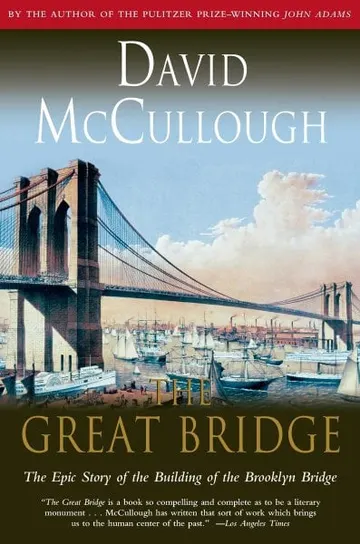
The Great Bridge (opens Bookshop.org)
David McCullough · 1972
John Roebling, Washington Roebling and Emily Roebling built the Brooklyn Bridge between 1869 and 1883. McCullough tells it, including the caisson disease that disabled Washington.
-
Reporting
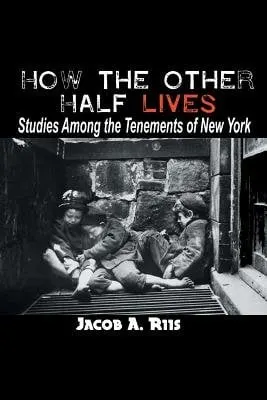
How the Other Half Lives (opens Bookshop.org)
Jacob A. Riis · 1890
Riis, a police reporter, described Lower East Side tenements in text and photographs, and the book pushed the city toward tenement housing reform.
The city is still writing this.
Four centuries end at this morning’s news. The daily brief picks up where the history leaves off: what changed in New York today and what it means, explained by breakfast.
Free. One email each morning. One-click unsubscribe. Never sold.