
War, Machine & Bridge · July 13–16, 1863
The Draft Riots
A protest against a draft the rich could buy out of became four days of racist terror, and the deadliest riot in American history. These are the names the relief committee wrote down.

The facts
- Dates
- July 13 to 16, 1863, Monday through Thursday
- The spark
- A federal draft that let a man pay $300, about a year’s wages, to escape that call. "A rich man’s war and a poor man’s fight"
- Death toll
- About 105 to 119 documented dead; the modern scholarly count is roughly 105
- The toll myth
- Later writing claimed 1,000 or even 2,000 dead. No documentary basis supports anything near that
- The orphanage
- The mob burned the Colored Orphan Asylum on Fifth Avenue; all 233 children were led out the back and survived
- The end
- Union regiments rushed from Gettysburg, and 4,000-plus federal troops, restored order by July 16
In the third July of the Civil War, New York turned on itself. The spark was a draft that let any man buy his way out for $300, about a year’s wages for a laborer, so the war fell on the men who could not pay. The protest became a pogrom. For four days a largely Irish working-class mob hunted Black New Yorkers through the streets, burned the Colored Orphan Asylum on Fifth Avenue, and lynched men from lampposts. The orphanage’s 233 children all escaped out the back. Union regiments, fresh from Gettysburg, finally put it down. It is still the deadliest riot in American history, and it drove much of the city’s Black population out for good. The clearest record of what happened to them is the report of the merchants who organized relief afterward.
In their words
The event in the voices and documents of the people who were there. Every source links out so you can check it.
-
Testimony
Wall Street merchants formed a committee days after the riot to aid Black victims and record what had been done to them.
This young man who was murdered by the mob on the corner of Twenty-seventh St., and Seventh avenue, was a quiet, inoffensive man, 23 years of age, of unexceptionable character... Although a cripple, he earned a living for himself and his mother by serving a gentleman in the capacity of coachman. Scarcely had the supplicant risen from his knees, when the mob broke down the door, seized him, beat him over the head and face with fists and clubs, and then hanged him in the presence of his mother.
Report of the Committee of Merchants for the Relief of Colored People, on the murder of Abraham Franklin, 1863
The report adds that soldiers cut Franklin down alive, and the mob returned to hang and mutilate his body again.
Source: Library of Congress (the 1863 Merchants’ Committee report) -
Testimony
Jones, a cartman, was killed walking home from a bakery, simply for being a Black man on the street.
They instantly set upon and beat him and after nearly killing him, hanged him to a lamp-post. His body was left suspended for several hours and was much mutilated... The principal evidence which the widow, Mary Jones, has to identify the murdered man as her husband is the fact of his having a loaf of bread under his arm.
Merchants’ Committee report, on the murder of William Jones, 1863
His widow could identify the body only by the loaf of bread still under his arm.
Source: Library of Congress -
Testimony
Heuston, a Mexican War veteran, was a Mohawk man killed because the mob took his dark skin for Black skin.
Peter Heuston, sixty-three years of age, a Mohawk Indian... was brutally attacked on the 13th of July by a gang of ruffians who evidently thought him to be of the African race because of his dark complexion. He died within four days at Bellevue Hospital.
Merchants’ Committee report, on the death of Peter Heuston, 1863
It is primary-source proof the violence was racial targeting, not random chaos.
Source: Library of Congress -
Diary
Strong, a wealthy Republican lawyer, watched from the propertied class as the city slipped from any authority.
The mob was in no hurry; they had no need to be; there was no one to molest them or make them afraid. The beastly ruffians were masters of the situation and of the city.
George Templeton Strong, diary, July 13, 1863
Strong was openly contemptuous of the Irish, so his account carries the class and ethnic bias of his world.
Source: The Diary of George Templeton Strong (via Civil War Bummer) -
Testimony
The report includes the targeted community’s own published response, dignified, scriptural, and unflinching.
When in the pursuit of our peaceful and humble occupations we had fallen among thieves, who stripped us of our raiment and had wounded us, leaving many of us half dead, you had compassion on us... this generation of our people will not, cannot forget the dreadful scenes to which we allude.
Address from the Black citizens of New York, printed in the Merchants’ Committee report, 1863
It is the rare primary source in which the people hunted in the riot speak in their own collected voice.
Source: Library of Congress
What people get wrong
-
The myth A thousand or more people died.
What’s true Documented deaths are about 105 to 119. The "1,000" and "2,000" figures come from contemporary rumor and a 1928 popular history with no documentary basis.
-
The myth The orphanage children died in the fire.
What’s true All 233 children of the Colored Orphan Asylum escaped. Superintendent William E. Davis led them out the back before the mob torched the building.
-
The myth It was simply an anti-draft protest, or simply "the Irish."
What’s true It began against the draft and turned within hours into racial terror, with lynchings and the hunting of Black New Yorkers. The crowd was largely, not only, Irish, and many Irish police, soldiers, and priests helped put it down.
What it changed
- The city’s Black population collapsed; many fled to Brooklyn and New Jersey, and by 1865 it had fallen to its lowest level since 1820. About 3,000 Black New Yorkers were left homeless.
- The backlash against "rich man’s war, poor man’s fight" helped push Congress to repeal the $300 commutation in 1864.
- With 4,000-plus troops in the city, the draft resumed in August 1863 without further mass violence; Washington had shown it would enforce conscription by force.
- It remains the deadliest riot in U.S. history, the yardstick against which later civil disorder is measured.
The New York Shelf
Read the whole story
Paid links. If you buy a book through these links, Bookshop.org pays us a small commission and sends a share of the sale to independent bookstores.
-
The history
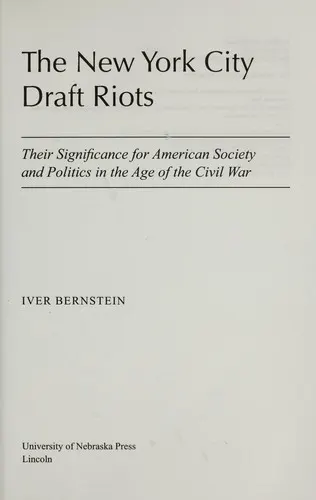
The New York City Draft Riots (opens Bookshop.org)
Iver Bernstein · 1990
Bernstein places the July 1863 riots in the city's class, race and party politics, and traces what the violence meant for the years after.
-
The history
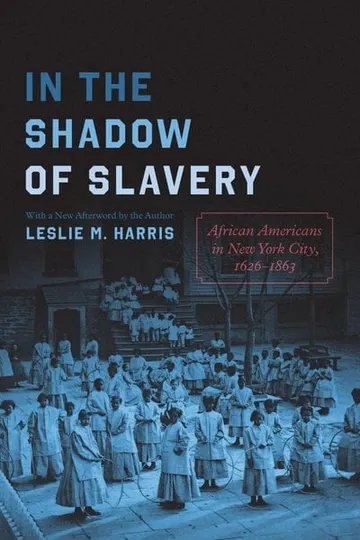
In the Shadow of Slavery (opens Bookshop.org)
Leslie M. Harris · 2003
Harris traces Black New Yorkers from the Dutch period to the Draft Riots, through enslavement, gradual emancipation, and the churches and neighborhoods they built.
-
The history
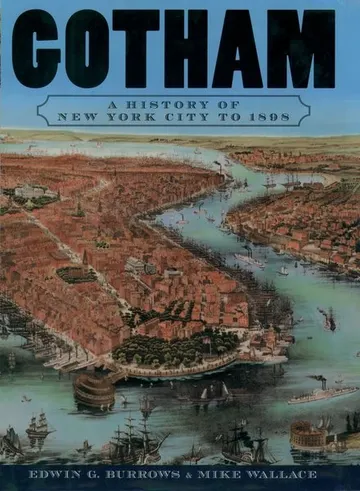
Gotham (opens Bookshop.org)
Edwin G. Burrows and Mike Wallace · 1999
Burrows and Wallace cover New York from its earliest settlement to consolidation in 1898, in a single volume of more than a thousand pages. It won the Pulitzer Prize for History.
The city is still writing this.
Four centuries end at this morning’s news. The daily brief picks up where the history leaves off: what changed in New York today and what it means, explained by breakfast.
Free. One email each morning. One-click unsubscribe. Never sold.