
War, Machine & Bridge · 1871
Boss Tweed and the Tammany Ring
William Tweed and his ring stole tens of millions from New York, until a dead man’s ledgers, a relentless newspaper, and a cartoonist’s pencil brought him down.

The facts
- Who
- William M. Tweed (1823-1878), "Boss" of Tammany Hall
- The ring
- Tweed, Comptroller "Slippery Dick" Connolly, "Brains" Sweeny, and Mayor A. Oakey Hall
- The theft
- An 1877 committee estimated $25 to $45 million; popular figures ran as high as $200 million. The true number is genuinely disputed
- The signature graft
- The county courthouse off City Hall, budgeted low and billed at about $13 million, most of it stolen
- The fall
- A bookkeeper’s death leaked the secret ledgers to the New York Times in July 1871; Tammany lost that November
- The end
- Tweed died in the Ludlow Street Jail in 1878
For a few years around 1870, William Tweed simply was New York. Grand Sachem of Tammany Hall, he and three confederates ran the city’s money as their own, skimming a cut of nearly every contract. The county courthouse near City Hall, still standing, became the monument to it: a plasterer billed $133,187 for about two days’ work. What broke the ring was almost an accident. The county bookkeeper died in a sleigh accident in early 1871, his secret ledgers leaked to the New York Times, and the paper printed the numbers that July. Thomas Nast drew Tweed week after week in Harper’s Weekly until the caricature was more famous than the man. The two most famous "Tweed quotes" are the catch. He almost certainly said neither one.
In their words
The event in the voices and documents of the people who were there. Every source links out so you can check it.
-
Cartoon
This caption, not anything Tweed is recorded saying, is the origin of the line everyone "remembers."
As long as I count the Votes, what are you going to do about it? say?
Thomas Nast, "That’s What’s the Matter," Harper’s Weekly, October 7, 1871 (words Nast put in Tweed’s mouth)
The words are Nast’s satire. There is no record of Tweed actually saying them.
Source: Massachusetts Historical Society -
Speech
The reformer Evarts used the taunt six months before Nast’s cartoon, throwing the ring’s own arrogance back at it.
They say, "What are you going to do about it?" I think they will find out what we are going to do about it.
William M. Evarts, reform speech at Cooper Institute, April 6, 1871
Evarts put the boast in the ring’s mouth. Nast later pinned it on Tweed himself, where it stuck.
Source: Arguments and Speeches of William Maxwell Evarts, Vol. III (Library of Congress) -
Newspaper
The earliest published form of Tweed’s complaint about Nast, printed within his lifetime by a hostile reformer.
I don’t care a straw for your newspaper articles; my constituents don’t know how to read, but they can’t help seeing them damned pictures.
William Tweed, as reported by reform writer Charles F. Wingate, North American Review, July 1875
The popular "stop them damned pictures" is a later rewording. Even this version is a reported paraphrase, not a transcript.
Source: Charles F. Wingate, "An Episode in Municipal Government" -
Newspaper
The numbers came from the dead bookkeeper’s ledgers, handed to the Times by a vengeful ex-sheriff. The ring offered the paper’s publisher a fortune to bury them.
In July 1871 the New York Times printed the county’s secret accounts under the headline "The Secret Accounts," building to a four-page supplement, "Gigantic Frauds of the Ring Exposed."
The New York Times, July 1871, edited by Louis J. Jennings, published by George Jones
Source: The New York Times exposé of the Tweed Ring -
Newspaper
Jones refused and left the room. The Times kept printing.
You can have anything you want. If five millions are needed, you shall have it in five minutes.
The bribe offered to Times publisher George Jones to kill the story, reported by Charles F. Wingate, 1875
Source: North American Review, July 1875 -
Testimony
Broke and jailed, Tweed gave confessional testimony to a Board of Aldermen committee in 1877. This is the best-attested line genuinely his.
The way to have power is to take it.
William Tweed, attributed in the North American Review, 1878
Source: North American Review, 1878 / Wikiquote
What people get wrong
-
The myth Tweed sneered, "As long as I count the votes, what are you going to do about it?"
What’s true He is not recorded saying it. Thomas Nast wrote the line into a cartoon in 1871. The taunt itself was coined by the reformer William Evarts months earlier, describing the ring.
-
The myth Tweed stole $200 million.
What’s true That figure is the dramatic one and the least documented. An 1877 committee put the theft at $25 to $45 million. The true number is unknown, somewhere in the tens of millions.
-
The myth A heroic press took the ring down on its own.
What’s true It took a lucky leak too. The county bookkeeper died in a sleigh accident, and his ledgers, passed on by a vengeful ex-sheriff, gave the Times the proof Nast’s cartoons had only implied.
What it changed
- The county courthouse near City Hall is still called the Tweed Courthouse, named for the scandal that built it.
- Thomas Nast made the political cartoon a weapon and popularized the Tammany tiger. He is also credited with the modern image of Santa Claus.
- George Jones’s refusal of a $5 million bribe became a founding story of the New York Times’s independence.
- Prosecuting the ring carried the reformer Samuel Tilden to the governorship and, in 1876, a presidential nomination.
- "Tammany Hall" and "Boss Tweed" are still American shorthand for machine politics and municipal graft.
The New York Shelf
Read the whole story
Paid links. If you buy a book through these links, Bookshop.org pays us a small commission and sends a share of the sale to independent bookstores.
-
The history
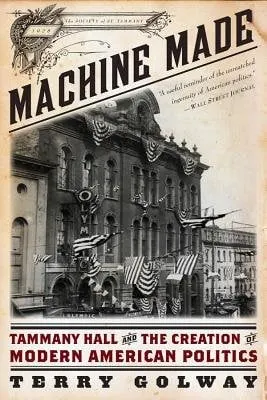
Machine Made (opens Bookshop.org)
Terry Golway · 2014
Golway argues that Tammany's ward organization served immigrant New Yorkers and helped shape the Democratic Party's later social policy.
-
The history
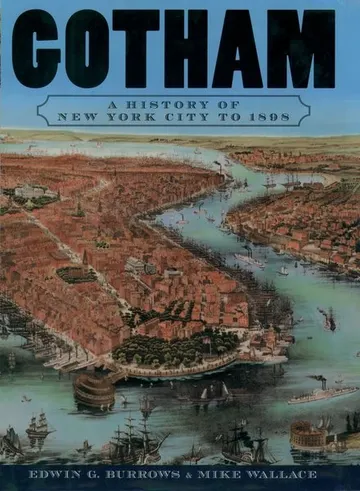
Gotham (opens Bookshop.org)
Edwin G. Burrows and Mike Wallace · 1999
Burrows and Wallace cover New York from its earliest settlement to consolidation in 1898, in a single volume of more than a thousand pages. It won the Pulitzer Prize for History.
The city is still writing this.
Four centuries end at this morning’s news. The daily brief picks up where the history leaves off: what changed in New York today and what it means, explained by breakfast.
Free. One email each morning. One-click unsubscribe. Never sold.