
War, Machine & Bridge · January 1, 1898
The Birth of Greater New York
At midnight, five separate places became one city of 3.4 million. Brooklyn, then the fourth-largest city in America, approved the merger by 277 votes.

The facts
- When
- Midnight, January 1, 1898
- What merged
- Manhattan and the Bronx, the City of Brooklyn, western Queens, and Staten Island
- The scale
- About 3.4 million people, the second-largest city in the world after London
- The champion
- Andrew Haswell Green, who first proposed it in 1868
- The vote
- Brooklyn approved the 1894 referendum by 64,744 to 64,467, a margin of 277
- The first mayor
- Robert Van Wyck, Tammany’s pick
For most of the 19th century, "New York" meant Manhattan, and Brooklyn across the river was its own city, the fourth-largest in the country. The man who spent thirty years arguing they should be one was Andrew Haswell Green, who floated the idea in an 1868 park report and lived to see it happen. It was not popular in Brooklyn. The 1894 referendum there passed by 277 votes out of about 129,000, and opponents warned that proud Brooklyn would become "a Tammany suburb, to be kicked, looted and bossed." At the stroke of midnight on January 1, 1898, the mayor of San Francisco pressed a telegraph key 3,000 miles away, the new city’s flag rose over City Hall, and a place of 3.4 million people, second in the world only to London, came into being. Some Brooklynites have called it the Great Mistake ever since.
In their words
The event in the voices and documents of the people who were there. Every source links out so you can check it.
-
Newspaper
The Times’ front-page account of the midnight ceremony at City Hall, fireworks and bands and a flag raised by long-distance signal.
The flag of Greater New York was officially unfurled over the New York City Hall at midnight by a touch of a button by the mayor of San Francisco, 3,700 miles away, and the second city of the world came into existence.
The New York Times, "The New City Ushered In," January 1, 1898
Reproduced through historical sources rather than the paper’s own 1898 archive page; the event and wording are well attested.
Source: The New York Times, January 1, 1898 -
Newspaper
The Brooklyn campaign against the merger played on the fear of Tammany Hall’s machine.
Brooklyn is a City of Homes and Churches. New York is a city of Tammany Hall and Crime government.
Anti-consolidation advertisement, Brooklyn Daily Eagle, October 1894
Source: Brooklyn Daily Eagle (the League of Loyal Citizens campaign) -
Newspaper
The core Brooklyn fear: losing its identity and being run by Manhattan’s machine.
If tied to New York, Brooklyn would be a Tammany suburb, to be kicked, looted and bossed as such.
Anti-consolidation advertisement, Brooklyn Daily Eagle, October 1894
Source: Brooklyn Daily Eagle -
Document
Green was, as the Museum of the City of New York puts it, the sole voice championing consolidation as early as 1868.
Andrew Haswell Green first proposed uniting New York, Brooklyn, and the surrounding counties in the closing pages of the Central Park Commissioners’ annual report of 1868, thirty years before it happened.
Andrew Haswell Green, Twelfth Annual Report of the Board of Commissioners of the Central Park, 1868
Source: Museum of the City of New York; the 1868 report -
Document
Manhattan and the other areas approved comfortably. Brooklyn nearly killed the whole thing.
In the November 6, 1894 referendum, Brooklyn (Kings County) approved consolidation by 64,744 to 64,467, a margin of just 277 votes out of about 129,000.
The 1894 consolidation referendum, Kings County official results
Source: Canvassed returns, Kings County -
Document
Tammany boss Richard Croker chose Van Wyck as a reliable machine mayor. His term collapsed in the 1900 Ice Trust scandal.
Robert Anderson Van Wyck was the first mayor of New York City after the consolidation of the five boroughs into the City of Greater New York in 1898.
Robert Van Wyck, first mayor of Greater New York, 1898 to 1901
Source: Historical record
What people get wrong
-
The myth Consolidation was inevitable and widely welcomed.
What’s true It was fought for decades and nearly failed in Brooklyn. The 1894 vote was only advisory, and the merger passed the legislature only after the state Republican boss threw his weight behind it.
-
The myth Brooklyn voted for it comfortably.
What’s true Brooklyn approved by 277 votes, 50.11 percent to 49.89. Brooklyn proper, before the towns annexed that same year, actually leaned against.
-
The myth "Greater New York" is the city’s real name.
What’s true It was always a popular nickname. The 1898 charter and every charter since use the legal name, the City of New York.
What it changed
- The 1898 merger created the five-borough city New York still is: Manhattan, Brooklyn, Queens, the Bronx, and Staten Island.
- It made New York the second-largest city in the world overnight, behind only London.
- The Bronx became a separate county in 1914, completing the five-counties, five-boroughs map.
- The phrase "the Great Mistake of 1898" survives as living Brooklyn shorthand for the identity it gave up.
The New York Shelf
Read the whole story
Paid links. If you buy a book through these links, Bookshop.org pays us a small commission and sends a share of the sale to independent bookstores.
-
The history
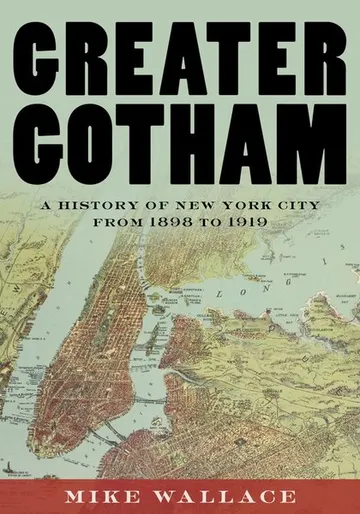
Greater Gotham (opens Bookshop.org)
Mike Wallace · 2017
Wallace picks up at consolidation and runs through the First World War, covering the subways, skyscrapers, immigration, labor fights and the birth of modern city politics.
-
The history
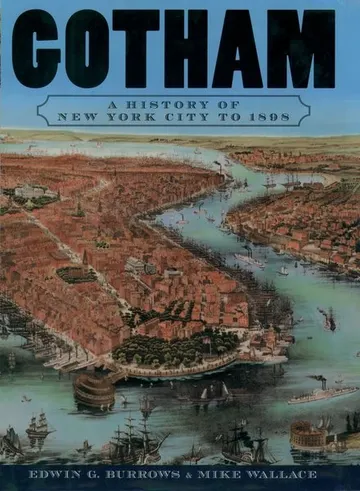
Gotham (opens Bookshop.org)
Edwin G. Burrows and Mike Wallace · 1999
Burrows and Wallace cover New York from its earliest settlement to consolidation in 1898, in a single volume of more than a thousand pages. It won the Pulitzer Prize for History.
The city is still writing this.
Four centuries end at this morning’s news. The daily brief picks up where the history leaves off: what changed in New York today and what it means, explained by breakfast.
Free. One email each morning. One-click unsubscribe. Never sold.