
1783–1860
The Empire City Rises
Capital, canal, and grid. In two generations New York wired itself to a continent, inaugurated the first president, freed the last enslaved people in the state, and built the water main and the park that made the modern city livable. It also built the slum that became a byword for poverty.

- 1789
April 30, 1789
Washington’s First Oath
Washington took the first presidential oath on a Wall Street balcony and gave the country’s first inaugural address.
The preservation of the sacred fire of liberty, and the destiny of the Republican model of Government, are justly considered as deeply, perhaps as finally staked, on the experiment entrusted to the hands of the American people.
George Washington, First Inaugural Address, Federal Hall, Wall Street, April 30, 1789It happened in New York, the first national capital, not in Washington, D.C., which didn’t exist yet.
Source: U.S. National Archives Read the full story - 1811
March 1811
The Grid Is Drawn
The 1811 plan stamped a rectangular street grid onto Manhattan above Houston Street, choosing buildable, sellable lots over the circles and diagonals of Washington or Paris.
The Commissioners weighed "those supposed improvements by circles, ovals, and stars" and rejected them, concluding that "strait sided and right angled houses are the most cheap to build, and the most convenient to live in."
Remarks of the Commissioners (Gouverneur Morris, Simeon De Witt, John Rutherfurd) accompanying the 1811 grid plan for Manhattan
Money, not beauty, drew the grid. Right angles were cheaper to build and easier to sell. It is why Manhattan is a checkerboard and Broadway, an old road, cuts across it at an angle.
Source: Museum of the City of New York, The Greatest Grid Read the full story - 1825
November 4, 1825
The Wedding of the Waters
After the first boats traveled from Buffalo to the harbor, Clinton "wedded" the Great Lakes to the Atlantic, making New York the gateway to the continent.
This solemnity... is intended to indicate and commemorate the navigable communication which has been accomplished between our Mediterranean Seas and the Atlantic Ocean... by the wisdom, public spirit, and energy of the State of New York.
Gov. DeWitt Clinton, pouring a keg of Lake Erie water into New York Harbor at the opening of the Erie CanalCritics had called the canal "Clinton’s Ditch." It paid for itself in under a decade and made New York the Empire State.
Source: Erie Canal Museum Read the full story - 1827
March 16, 1827
We Wish to Plead Our Own Cause
Published in New York, Freedom’s Journal was the first Black-owned and Black-edited newspaper in the United States.
We wish to plead our own cause. Too long have others spoken for us. Too long has the publick been deceived by misrepresentations, in things which concern us dearly.
Samuel Cornish and John Russwurm, opening editorial of Freedom’s Journal, New York, March 16, 1827Its first sentence is still the mission of every outlet that refuses to be spoken for.
Source: Gilder Lehrman / Columbia MAAP - 1827
July 4, 1827
New York Slavery Ends
New York’s gradual-emancipation law freed the state’s last enslaved people on July 4, 1827.
We look forward with pleasing anticipation to that period, when it shall no longer be said that in a land of freemen there are men in bondage, but when this foul stain will be entirely erased.
Rev. Nathaniel Paul, address on the abolition of slavery in New York State, 1827Black New Yorkers, fearing racist violence on Independence Day, celebrated on the fifth of July instead. The "Fifth of July" became its own tradition.
Source: BlackPast / Black History Heroes - 1842
October 14, 1842
Clean Water Comes to the City
The Croton Aqueduct piped clean fresh water from Westchester into the city, ending the foul wells that had spread cholera and fed fires.
Water leaps as if delighted,
While her conquered foes retire!
Pale Contagion flies affrighted
With the baffled demon Fire!
George Pope Morris, "The Croton Ode," sung at the Croton Aqueduct celebration, 1842Clean water did more to save New York lives than any doctor of the age. The ode names the two enemies it beat: contagion and fire.
Source: Project Gutenberg Read the full story - 1842
1842
Dickens Sees the Five Points
Led by police through the immigrant Five Points in Lower Manhattan, Dickens wrote the most famous outside account of antebellum New York poverty.
This is the place; these narrow ways, diverging to the right and left, and reeking everywhere with dirt and filth... all that is loathsome, drooping, and decayed is here.
Charles Dickens, "American Notes," 1842, on the Five Points slum
The same blocks that horrified Dickens were a living, mostly Irish and Black neighborhood. Outsiders saw only the squalor.
Source: Teach US History Read the full story - 1858
1858
A Park for Everybody
Olmsted and Vaux’s plan won the contest to design Central Park as a landscape open to every class in a fast-stratifying city.
It is of great importance as the first real park made in this country — a democratic development of the highest significance.
Frederick Law Olmsted, on Central Park, soon after the Greensward plan he designed with Calvert Vaux won the 1858 competitionBuilding it meant clearing Seneca Village, a community of mostly Black landowners, by eminent domain. The democratic park has an undemocratic origin.
Source: The Papers of Frederick Law Olmsted (UVA) Read the full story - 1835
December 17, 1835
The City Totals Its Ruins
By the afternoon after the Great Fire, New Yorkers already knew the disaster had ruined every fire insurance company in the city.
A calculation is made in the "Commercial" this afternoon that the number of buildings burned is 570, and that the whole loss is something over $15,000,000. The insurance offices are all, of course, bankrupt, their collective capitals amount to $11,750,000.
Philip Hone, diary entry, December 17, 1835The $11,750,000 figure was the industry's entire combined capital, dwarfed by losses later put at $18 to $20 million.
Source: The Diary of Philip Hone, 1828-1851, ed. Bayard Tuckerman (Dodd, Mead and Company, 1889), p. 181 Read the full story
The New York Shelf
The book on this era
Paid links. If you buy a book through these links, Bookshop.org pays us a small commission and sends a share of the sale to independent bookstores.
-
The history
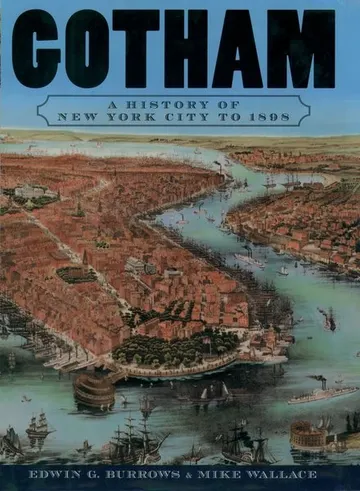
Gotham (opens Bookshop.org)
Edwin G. Burrows and Mike Wallace · 1999
Burrows and Wallace cover New York from its earliest settlement to consolidation in 1898, in a single volume of more than a thousand pages. It won the Pulitzer Prize for History.
-
The history
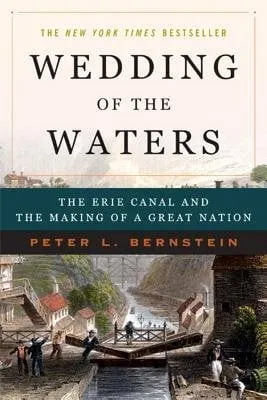
Wedding of the Waters (opens Bookshop.org)
Peter L. Bernstein · 2005
Bernstein explains the politics and engineering behind the Erie Canal, and how it made New York the country's leading port.
-
The history
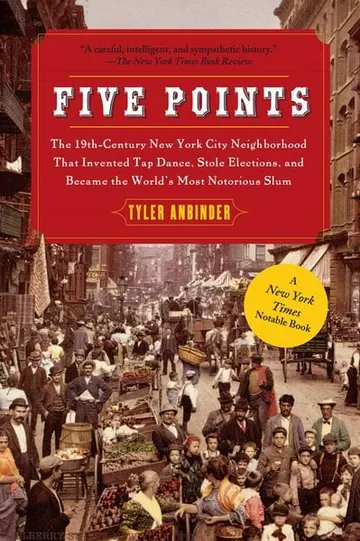
Five Points (opens Bookshop.org)
Tyler Anbinder · 2001
Anbinder reconstructs the Lower Manhattan neighborhood from census, tax and police records, and sorts its documented history from the legends.
-
The history
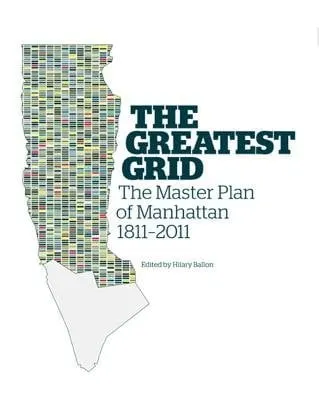
The Greatest Grid (opens Bookshop.org)
Hilary Ballon · 2012
Essays and maps on the 1811 Commissioners' Plan that laid out Manhattan's street grid, and how it shaped building, property and daily life over two centuries.
The city is still writing this.
Four centuries end at this morning’s news. The daily brief picks up where the history leaves off: what changed in New York today and what it means, explained by breakfast.
Free. One email each morning. One-click unsubscribe. Never sold.