
The Empire City Rises · 1825
The Erie Canal
They called it "Clinton’s Folly." Then it cut the cost of reaching the interior by ninety percent and made New York the capital of American commerce.
The facts
- Authorized
- April 15, 1817, by the New York State Legislature
- Opened
- October 26, 1825; the "Wedding of the Waters" ceremony on November 4, 1825
- Scale (the 1825 canal)
- 363 miles, Albany to Buffalo, 83 locks, just 4 feet deep and 40 feet wide, dug largely by hand in 8 years
- Cost
- About $7.1 million; tolls paid the whole debt off by 1836
- The result
- Freight from Buffalo to NYC fell from roughly $100 a ton to about $10, and from three weeks to one
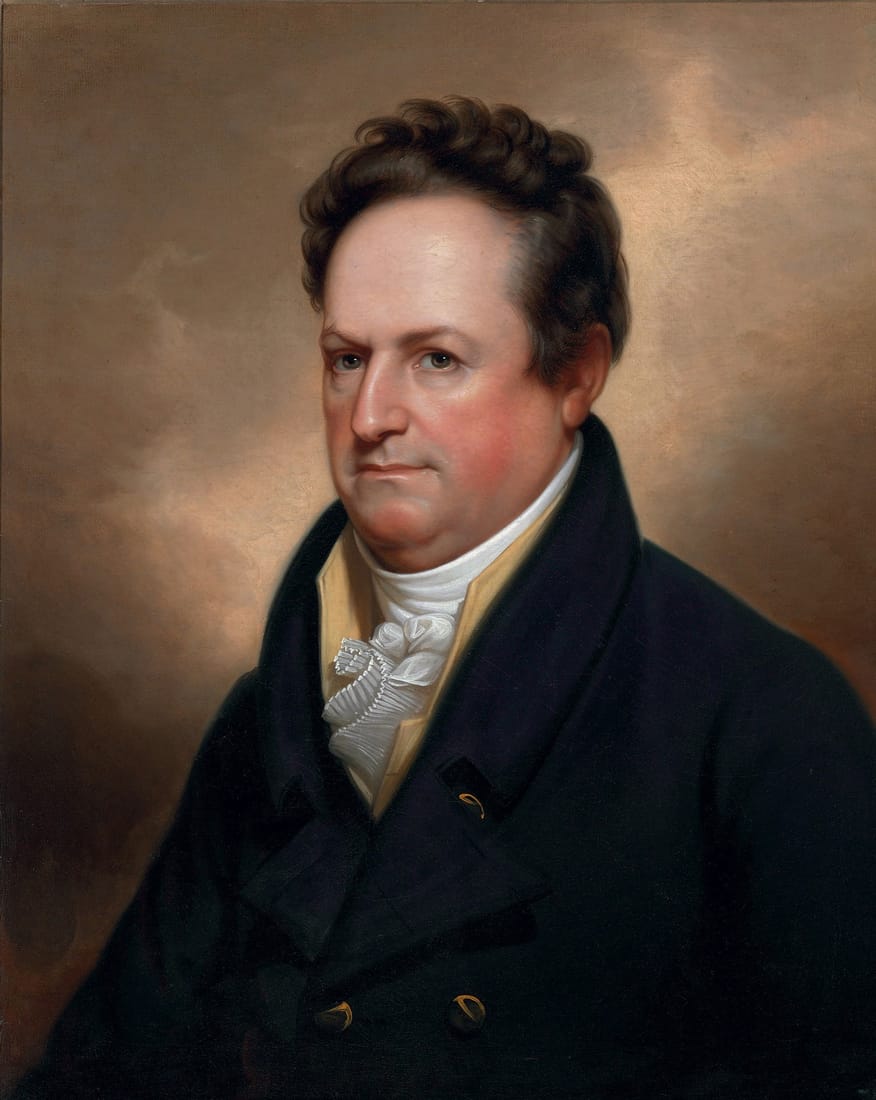
When DeWitt Clinton pushed to dig a 363-mile ditch from the Hudson to Lake Erie, Thomas Jefferson called it "little short of madness," and New Yorkers called it "Clinton’s Folly." They built it anyway, mostly by hand, in eight years. When it opened in 1825, the cost of shipping a ton of freight from Buffalo to New York City fell from about $100 to about $10, and the time from three weeks to one. The canal funneled the trade of the entire interior through a single harbor. That is the moment a middling seaport pulled ahead of Boston, Philadelphia, and New Orleans to become the capital of American commerce, and the tolls paid the whole thing off in under a decade.
In their words
The event in the voices and documents of the people who were there. Every source links out so you can check it.
-
Letter
Jefferson refused federal money, which forced New York to build the canal alone, on state bonds.
You talk of making a canal of 350 miles through the wilderness. It is little short of madness to think of it at this day.
Thomas Jefferson to New York delegates, about 1809, as recalled by Joshua Forman
This is Forman’s recollection set down about nineteen years later, so treat the long version as "as he remembered it." Jefferson himself later said he had no doubt the account was correct.
Source: Thomas Jefferson Encyclopedia (Monticello) -
Speech
The "Wedding of the Waters," Clinton symbolically joining the Great Lakes to the Atlantic.
This solemnity at this place on the first arrival of vessels from Lake Erie, is intended to indicate and commemorate the navigable communication which has been accomplished between our Mediterranean Seas and the Atlantic Ocean, in about eight years, to the extent of more than four hundred and twenty-five miles, by the wisdom, public spirit, and energy of the State of New York.
Gov. DeWitt Clinton, pouring Lake Erie water into New York Harbor, November 4, 1825
Verified against Colden’s 1825 Memoir. The popular opening "The solemnization of the union of the waters" is a later paraphrase; the real text reads "This solemnity at this place."
Source: Cadwallader Colden, official "Memoir" of the celebration (1825) -
Document
The ceremony joined Lake Erie water to the sea; a second act poured in water from the great rivers of the world, the Ganges, the Nile, the Amazon, the Thames.
Here your Committee procured two barrels of the pure waters of Lake Erie, to be commingled with those of the ocean.
Cadwallader Colden, "Memoir" of the Grand Canal Celebration, 1825
A small primary-source puzzle: the same text procures "two barrels" but then calls it "the keg" at the moment of pouring, which is why later accounts disagree.
Source: eriecanal.org (Colden’s Memoir) -
Document
The argument that launched the project came from a bankrupt merchant in a jail cell.
Jesse Hawley, a flour merchant writing from debtors’ prison, laid out the full case for a Hudson-to-Lake-Erie canal in fourteen essays signed "Hercules" in the Genesee Messenger, 1807 to 1808.
Jesse Hawley, under the pen name "Hercules," 1807–1808
Hawley worked out the route and the economics years before Clinton made it his cause.
Source: Internet Archive (reprinted in Hosack’s 1829 memoir of Clinton) -
Report
The canal cost about $7.1 million to build. The tolls had brought in more than that within nine years.
From 1826 to 1834 the aggregate tolls amounted to $8,539,377.70.
Noble E. Whitford, "History of the Canal System of the State of New York," 1906
By July 1836 the surplus had retired the entire canal debt. Few public works in history have paid for themselves so fast.
Source: eriecanal.org (Whitford, 1906)
What people get wrong
-
The myth The Irish dug the whole canal.
What’s true An 1820 commission report found three-quarters of the early workers were locally born. Irish immigrants became a major part of the workforce later, concentrated on the hardest stretches like the Deep Cut and the Montezuma swamp.
-
The myth "Low Bridge, Everybody Down" is an old 1825 canal song.
What’s true It was written in 1905, about the later mule-barge era. The genuine 1825 song was Samuel Woodworth’s "Meeting of the Waters," sung at the opening celebration.
-
The myth The Erie Canal was a big, deep waterway.
What’s true The 1825 canal was tiny: four feet deep, forty feet wide. The "353 miles, 35 locks, 12 feet deep" figures you see online describe the modern Barge Canal, built almost a century later.
What it changed
- Shipping a ton of freight from Buffalo to New York City fell from roughly $100 to about $10, an order-of-magnitude collapse in cost.
- New York passed Boston, Philadelphia, and New Orleans to become the nation’s number-one port; its share of U.S. imports rose from about a third in 1821 to more than two-thirds by 1860.
- New York City’s population quadrupled from about 124,000 in 1820 to over 515,000 in 1850.
- The canal built the interior too: Rochester, Syracuse, and Buffalo boomed, and cheap migration opened Cleveland, Detroit, Chicago, and Milwaukee, all trading through New York.
The New York Shelf
Read the whole story
Paid links. If you buy a book through these links, Bookshop.org pays us a small commission and sends a share of the sale to independent bookstores.
-
The history
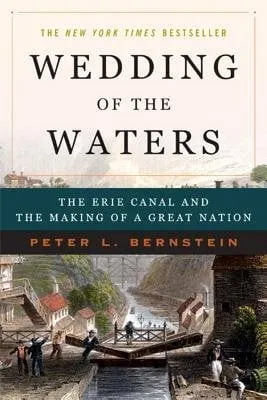
Wedding of the Waters (opens Bookshop.org)
Peter L. Bernstein · 2005
Bernstein explains the politics and engineering behind the Erie Canal, and how it made New York the country's leading port.
-
The history
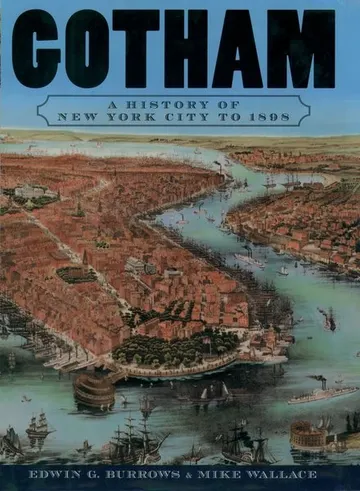
Gotham (opens Bookshop.org)
Edwin G. Burrows and Mike Wallace · 1999
Burrows and Wallace cover New York from its earliest settlement to consolidation in 1898, in a single volume of more than a thousand pages. It won the Pulitzer Prize for History.
The city is still writing this.
Four centuries end at this morning’s news. The daily brief picks up where the history leaves off: what changed in New York today and what it means, explained by breakfast.
Free. One email each morning. One-click unsubscribe. Never sold.