
The Empire City Rises · 1857–1876
Central Park and Seneca Village
America’s first great public park was built as a democratic gift to the city. To make it, New York razed a stable Black community and called it a slum.

The facts
- The park
- 843 acres; the Greensward Plan by Frederick Law Olmsted and Calvert Vaux won the design competition in 1858
- Built
- 1857 to 1876, largely by hand by roughly 20,000 workers, mostly Irish immigrants
- Land cost
- About $5 million, one of the most expensive purchases in the city’s history to that point
- What was there
- Roughly 1,600 people, including Seneca Village, a community of about 225, mostly Black landowners, with three churches and a school
- Cleared
- By eminent domain; the last residents were removed October 1, 1857
- The draw
- By 1860 the park drew about 2.4 million visits a year, more than three times the city’s population
Central Park is the most beloved fake nature in the world. Almost nothing in it is wild: the meadows and hills were designed, the rock was blasted with more gunpowder than was fired at Gettysburg, and the topsoil was shipped in. Olmsted and Vaux meant it as a democratic gift, a piece of the country for the working New Yorkers who could not afford to leave the city in summer. But the land was not empty. About 1,600 people lived on it, including Seneca Village, a settled community of mostly Black property owners, a rare place where Black men owned enough land to vote. The city labeled it a shantytown, cleared it by eminent domain, and built the park on top. For more than a century, Seneca Village was erased from the story.
In their words
The event in the voices and documents of the people who were there. Every source links out so you can check it.
-
Document
Olmsted’s core argument: the park existed to give working-class New Yorkers the nature the rich bought with travel.
It is one great purpose of the Park to supply the hundreds of thousands of tired workers, who have no opportunity to spend their summers in the country, a specimen of God’s handiwork that shall be to them, inexpensively, what a month or two in the White Mountains or the Adirondacks is, at great cost, to those in easier circumstances.
Frederick Law Olmsted, report to the Board of Commissioners of Central Park, 1858
He thought he was building not a garden but a civic institution.
Source: National Endowment for the Humanities -
Document
The documentary proof that this was a rooted community, not a squatter camp.
The 1855 New York State census and property records document Seneca Village as a settlement of about 225 residents, roughly two-thirds African American and the rest Irish and German, with three churches, a school, and cemeteries. Over half of its Black residents owned property, five times the citywide rate.
New York State Census (1855) and city property records, compiled by the Seneca Village Project
New York then let only Black men who owned $250 in property vote. Clearing the village stripped some of the city’s few enfranchised Black men of the land that gave them the ballot.
Source: Central Park Conservancy -
Newspaper
Even a relatively favorable account rendered the area’s residents as livestock fit for fever.
A neat little settlement... if some of the hogs, goats, and other inmates of the shanties in this vicinity do not die of the yellow fever this summer, it will only be because Death himself hesitates to enter such dirty hovels.
New-York Daily Times, July 9, 1856
This is the dehumanizing register, "shanties," "dirty hovels," that justified the clearance.
Source: Reproduced via the Seneca Village Project / NPS -
Newspaper
The eviction was not paperwork. Residents resisted, and police cleared them by force.
The supremacy of the law was upheld by the policeman’s bludgeons.
A contemporary newspaper account of the 1857 removals
The exact original publication is uncertain, so treat this as an attributed press account, not the neutral record.
Source: Columbia University, "Mapping the African American Past" -
Oral history
A 2011 dig recovered thousands of domestic artifacts: a china tea set, a roasting pan, a child’s shoe.
The 2011 dig would help bring the history of middle-class African-Americans into the modern narrative.
Archaeologist Diana diZerega Wall, on the 2011 Seneca Village excavation
The objects were material proof of a settled middle-class home life, refuting the "shanty" myth.
Source: Central Park Conservancy
What people get wrong
-
The myth The land was empty wilderness.
What’s true About 1,600 people lived on it, including Seneca Village’s roughly 225 residents with three churches and a school. It was a neighborhood razed, not nature reclaimed.
-
The myth Seneca Village was a squatters’ shantytown.
What’s true It was a community of legal property owners, founded in 1825 and lasting some thirty years. Over half of its Black residents owned land, five times the citywide rate. The "shanty" label was propaganda to justify the taking; the 2011 archaeology found a tea set and a child’s shoe.
-
The myth The "natural" park is natural.
What’s true Almost none of it is. It was blasted, regraded with millions of cubic feet of moved rock and imported soil, and planted with about 270,000 trees and shrubs. It is an engineered landscape built to look untouched.
What it changed
- It launched the American public-park movement; Olmsted and Vaux went on to design Prospect Park and to shape parks nationwide.
- By 1860 it drew about 2.4 million visits a year, proving the public hunger for shared green space.
- It buried a Black history that the 2011 excavation and the Conservancy’s programming finally restored.
- It set an early template for clearing communities by labeling them slums, a logic that returned in 20th-century urban renewal.
The New York Shelf
Read the whole story
Paid links. If you buy a book through these links, Bookshop.org pays us a small commission and sends a share of the sale to independent bookstores.
-
The history
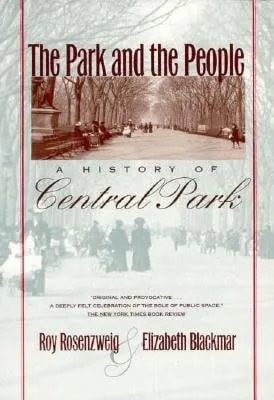
The Park and the People (opens Bookshop.org)
Roy Rosenzweig and Elizabeth Blackmar · 1992
Rosenzweig and Blackmar cover the park from the 1850s land taking through its design and a century and a half of use, and who was displaced and who came.
-
The history
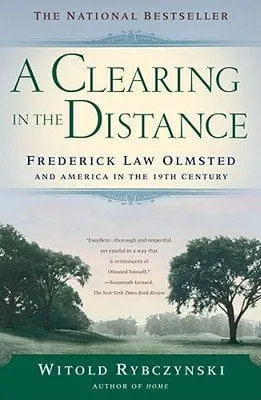
A Clearing in the Distance (opens Bookshop.org)
Witold Rybczynski · 1999
Rybczynski's biography of Olmsted takes in Central Park, Prospect Park and his other work, along with the ideas about public space behind them.
The city is still writing this.
Four centuries end at this morning’s news. The daily brief picks up where the history leaves off: what changed in New York today and what it means, explained by breakfast.
Free. One email each morning. One-click unsubscribe. Never sold.