
The Empire City Rises · April 30, 1789
Washington’s Inauguration at Federal Hall
The first president took the oath on a Wall Street balcony, in the nation’s first capital. He was so nervous he could barely read his speech.
The facts
- When
- April 30, 1789
- Where
- The balcony of Federal Hall, Wall and Nassau Streets, then the nation’s capital
- The oath
- Administered by New York Chancellor Robert R. Livingston, on a Bible borrowed at the last minute from a Masonic lodge
- The address
- Washington’s first inaugural, delivered inside to Congress
- What else happened here
- The First Congress drafted the Bill of Rights in this building, 1789
- The move
- The capital went to Philadelphia in 1790, then to Washington in 1800
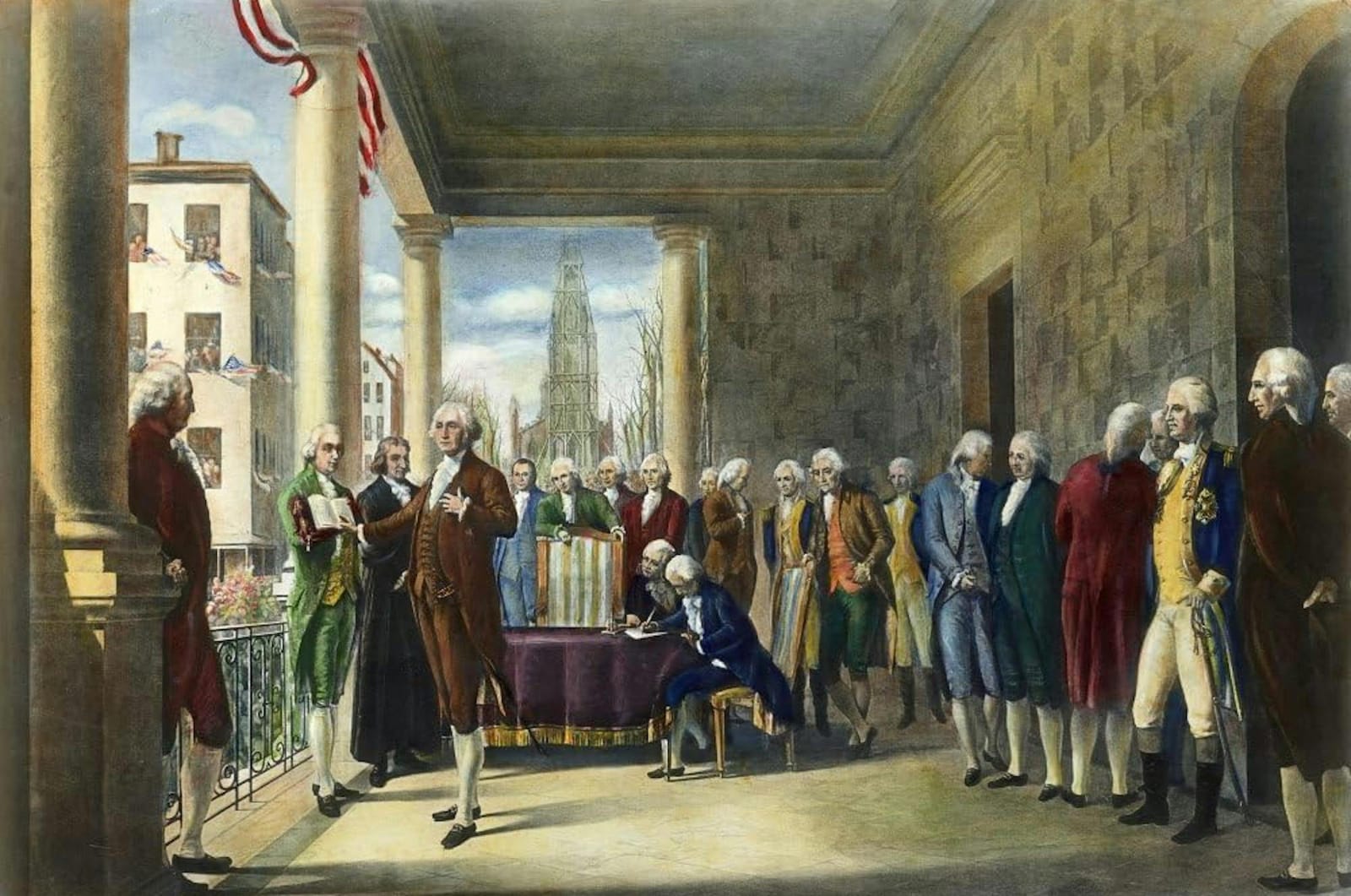
Before there was a Washington, D.C., the United States was run from Wall Street. On April 30, 1789, George Washington stepped onto the balcony of Federal Hall and took the first presidential oath, administered by New York’s chancellor, Robert Livingston, who then turned to the crowd packed into the street and shouted, "Long live George Washington, President of the United States." No one had thought to bring a Bible, so a parade marshal fetched one from his Masonic lodge. Then the famously composed Washington went inside and, by the account of a senator watching him, trembled so badly he could barely read his own address. The building where it happened is gone, demolished in 1812. The First Congress had already used it to draft the Bill of Rights. The capital left for Philadelphia the next year.
In their words
The event in the voices and documents of the people who were there. Every source links out so you can check it.
-
Speech
Washington’s first words to Congress as president, admitting his reluctance to leave Mount Vernon.
Among the vicissitudes incident to life no event could have filled me with greater anxieties than that of which the notification was transmitted by your order, and received on the 14th day of the present month.
George Washington, First Inaugural Address, Federal Hall, April 30, 1789
Source: Founders Online, National Archives -
Diary
Maclay, seated in the Senate Chamber, left the most candid eyewitness account of the day.
This great Man was agitated and embarrassed more than ever he was by the levelled Cannon or pointed Musket. He trembled, and several times could scarce make out to read, though it must be supposed he had often read it before.
Senator William Maclay of Pennsylvania, journal entry, April 30, 1789
The calm founder of legend was, by the closest witness, visibly terrified.
Source: Journal of William Maclay (Internet Archive) -
Speech
The address invokes a non-sectarian Providence. The religious sentiment was in the speech, not added to the oath.
No People can be bound to acknowledge and adore the invisible hand, which conducts the Affairs of men more than the People of the United States.
George Washington, First Inaugural Address, April 30, 1789
Source: National Archives, Milestone Documents -
Document
This is the entire oath. Whether Washington added "so help me God" is a separate, disputed question.
I do solemnly swear (or affirm) that I will faithfully execute the Office of President of the United States, and will to the best of my Ability, preserve, protect and defend the Constitution of the United States.
U.S. Constitution, Article II, Section 1, the 35 words Washington was required to say
Source: National Archives -
Document
The Bible was a last-minute borrow, opened, by lodge tradition, at random.
No Bible had been arranged in advance, so Jacob Morton, master of St. John’s Lodge No. 1, fetched the lodge’s 1767 King James Bible. It has since been used at the inaugurations of Harding, Eisenhower, Carter, and George H. W. Bush.
The George Washington Inaugural Bible, St. John’s Lodge No. 1
Source: George Washington Inaugural Bible Foundation -
Inscription
Livingston, New York’s highest judge, swore Washington in, then cried to the crowd, "Long live George Washington, President of the United States."
The oath of office was administered by Chancellor Livingston of the State of New York, Mr. Otis the Secretary of the Senate holding up the Bible on a crimson cushion.
Caption of the Currier & Ives print of the inauguration
Source: The Metropolitan Museum of Art
What people get wrong
-
The myth Washington was inaugurated in Washington, D.C.
What’s true He was inaugurated at Federal Hall on Wall Street, in New York City, the nation’s first capital. The District of Columbia did not yet exist; the law creating it was signed in 1790, and it became the capital only in 1800.
-
The myth Washington added "so help me God" and started the tradition.
What’s true There is no contemporary evidence he said it. The story first appears in print in 1854, 65 years later, and the oath law passed three days before the ceremony did not include the phrase. Flag it as tradition, not fact.
-
The myth The Federal Hall standing on Wall Street today is where Washington stood.
What’s true No. The building Washington used was demolished in 1812. The current Federal Hall National Memorial is an 1842 Custom House. The Washington statue out front marks the site, not the original building.
What it changed
- Every presidential inauguration since, the public oath, the address, the Bible, descends from the precedents Washington improvised that day.
- The First Federal Congress, meeting in this building, proposed the amendments that became the Bill of Rights in September 1789.
- New York’s run as the national capital was brief: the government left for Philadelphia in 1790.
- The site is now Federal Hall National Memorial, run by the National Park Service, marked by J. Q. A. Ward’s 1883 statue of Washington.
The New York Shelf
Read the whole story
Paid links. If you buy a book through these links, Bookshop.org pays us a small commission and sends a share of the sale to independent bookstores.
-
The history
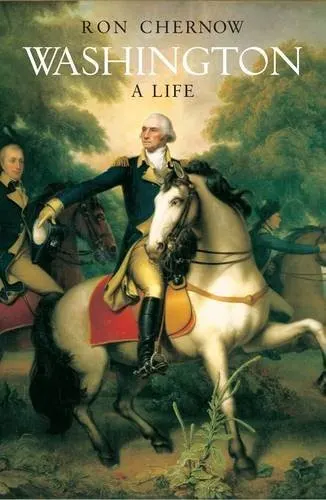
Washington (opens Bookshop.org)
Ron Chernow · 2010
Chernow's life of Washington includes the first presidency in New York and the 1789 inauguration at Federal Hall. It won the Pulitzer Prize for Biography.
-
The history
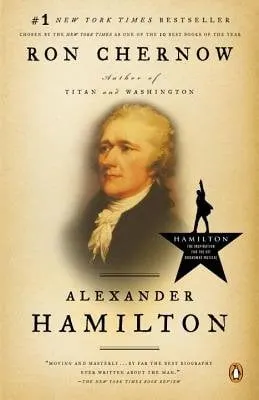
Alexander Hamilton (opens Bookshop.org)
Ron Chernow · 2004
Chernow's biography runs from Hamilton's Caribbean childhood to New York, the Treasury and the duel with Aaron Burr. Lin-Manuel Miranda built the musical on it.
-
The history
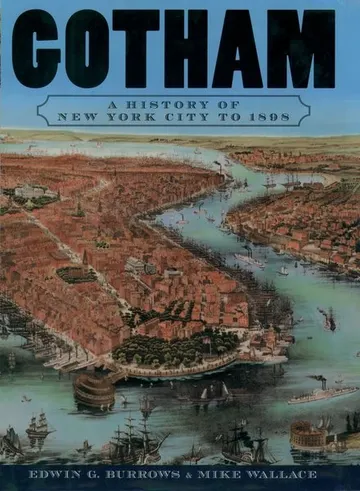
Gotham (opens Bookshop.org)
Edwin G. Burrows and Mike Wallace · 1999
Burrows and Wallace cover New York from its earliest settlement to consolidation in 1898, in a single volume of more than a thousand pages. It won the Pulitzer Prize for History.
The city is still writing this.
Four centuries end at this morning’s news. The daily brief picks up where the history leaves off: what changed in New York today and what it means, explained by breakfast.
Free. One email each morning. One-click unsubscribe. Never sold.