
The Modern Metropolis · Opened May 1, 1931
The Empire State Building
The tallest building on earth, raised in 410 days in the Depression, then so empty they called it the Empty State Building.

The facts
- Built
- Started March 17, 1930; opened May 1, 1931, about 410 days
- Speed
- The steel frame rose about four and a half stories a week
- Height
- 1,250 feet to the roof, 102 floors
- Cost
- $40,948,900, under its budget
- Workers killed
- Five, not the hundreds of legend
- The catch
- It opened about 75 percent empty into the Great Depression
They built it in just over a year, in the teeth of the Depression, and for a while that was the only impressive thing about it. The steel went up four and a half stories a week, riveted by gangs the photographer Lewis Hine called "sky boys," many of them Mohawk ironworkers from Kahnawake near Montreal. Five workers died, not the hundreds that legend later claimed. The tower opened on May 1, 1931, the tallest in the world, and then sat almost empty: above the 41st floor there were barely any tenants, and New Yorkers nicknamed it the Empty State Building. It survived the lean years on $1 observation-deck tickets and on a fame it got from the movies. King Kong climbed it in 1933, when the real building was still mostly dark.
In their words
The event in the voices and documents of the people who were there. Every source links out so you can check it.
-
Document
Hoover ceremonially "lit" the building by telegraph from Washington.
I most cordially congratulate you and your associates upon the completion of the Empire State Building and the opening of its doors to the service of the public. This achievement justifies pride of accomplishment in everyone who has had any part in its conception and construction.
President Herbert Hoover, message read at the opening, May 1, 1931
Source: The American Presidency Project, UC Santa Barbara -
Document
Hine rode out in a basket a thousand feet above Fifth Avenue to photograph the men. The work became his 1932 book, Men at Work.
Lewis Hine called them "sky boys": gangs of Newfoundlanders, Scandinavians, Irish, and Mohawks who erected the steel skeleton of the building, riveting its fifty-seven thousand tons of steel.
Lewis Wickes Hine, official construction photographer, 1930-31
The Mohawk ironworkers came from Kahnawake, near Montreal. The story that they feel no fear of heights is a stereotype; they were simply skilled.
Source: Aperture, "Sky Boys"; New York Public Library -
Document
It captures the whole ambition of the project: build the tallest thing that will stand.
According to one story, Raskob took a jumbo pencil, stood it on end, and asked architect William Lamb, "Bill, how high can you make it so that it won’t fall down?"
John J. Raskob, the financier behind the building, as the legend is told
Every careful source labels this "one story." Treat it as the legend it is, not a documented quote.
Source: Recorded as folklore, not fact -
Document
Smith was the face of the project; the financier John Raskob was the money behind it.
Al Smith, the former governor and the building’s public frontman, presided over the opening. His two grandchildren cut the ribbon at the Fifth Avenue door, and a luncheon ran on the 86th floor for hundreds, among them Governor Franklin Roosevelt and Mayor Jimmy Walker.
The opening ceremony, May 1, 1931
Source: HISTORY, "Empire State Building dedicated" -
Document
It did not turn a real profit until the 1940s.
It opened about 75 percent empty and was losing roughly $1 million a year by 1935. Management kept lights on in vacant floors to fake occupancy, and the building leaned on $1 observation-deck tickets, which by 1938 earned about as much as the rent.
The building’s Depression-era finances
Source: Propmodo; TIME -
Document
The bomber was lost in fog over Manhattan. The building reopened within days.
On July 28, 1945, in heavy fog, a B-25 bomber crashed into the north face between the 78th and 80th floors, killing fourteen. The structure held. An elevator operator, Betty Lou Oliver, survived a 75-story fall in the car, a record.
The 1945 Empire State Building B-25 crash
Source: Contemporary reporting; U.S. Army Air Forces incident record
What people get wrong
-
The myth The Empire State Building was an instant success.
What’s true It opened about three-quarters empty into the Depression, nicknamed the Empty State Building, and survived on observation-deck tickets. It did not turn a real profit for over a decade.
-
The myth Hundreds of men died building it.
What’s true The official toll is five. Remarkably, none of the five died falling off the structural steel. The "hundreds" figure is pure legend.
-
The myth Raskob’s "how high can you make it" pencil line is documented.
What’s true It is consistently labeled a story, not a verified quote. It is a good story. It is not a record.
What it changed
- It was the tallest building in the world for nearly 40 years, until the World Trade Center’s North Tower passed it in 1970.
- The 410-day construction, ahead of schedule and under budget, is still cited as a benchmark of fast building.
- The Depression-era bet on the observation deck made the view itself a core business, still true today.
- Lewis Hine’s "sky boys" photographs became foundational documents of American labor, collected in Men at Work.
The New York Shelf
Read the whole story
Paid links. If you buy a book through these links, Bookshop.org pays us a small commission and sends a share of the sale to independent bookstores.
-
The history
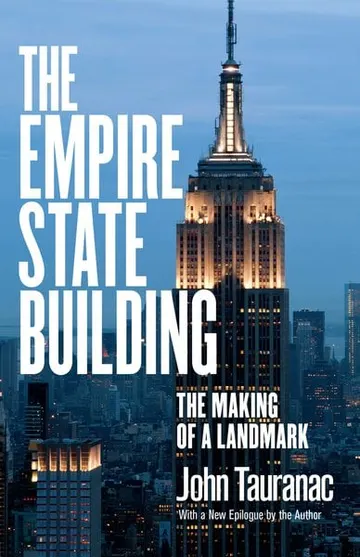
The Empire State Building (opens Bookshop.org)
John Tauranac · 1995
Tauranac describes the building's planning, design and record-fast construction in 1930 and 1931, and its owners' struggle to fill it.
-
The history
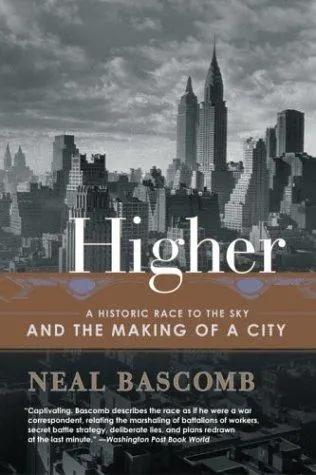
Higher (opens Bookshop.org)
Neal Bascomb · 2003
The race between the Chrysler Building and 40 Wall Street to become the world's tallest, and the architects and builders behind each.
The city is still writing this.
Four centuries end at this morning’s news. The daily brief picks up where the history leaves off: what changed in New York today and what it means, explained by breakfast.
Free. One email each morning. One-click unsubscribe. Never sold.