
The Modern Metropolis · Opened February 2, 1913
Grand Central Terminal
The most platforms of any station on earth, built because a deadly tunnel crash forced the trains underground. Saved from the wrecking ball, decades later, by a Supreme Court case and a former first lady.
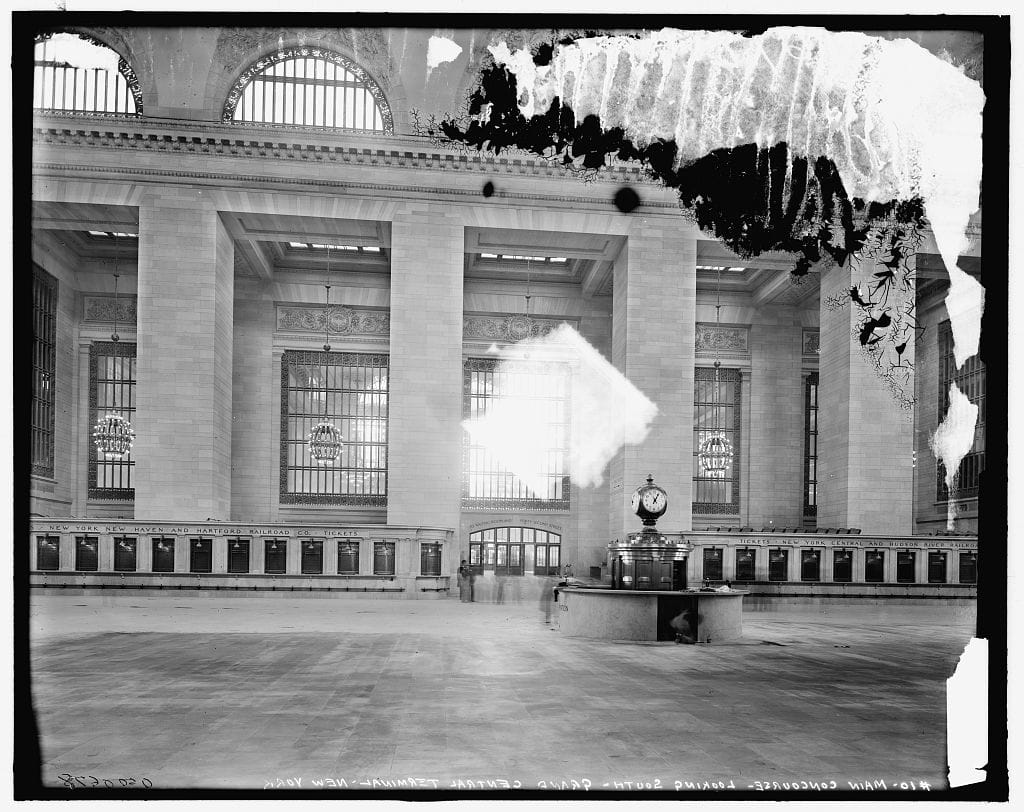
The facts
- Opened
- Just after midnight on February 2, 1913; 150,000 people came through that first day
- The scale
- The most platforms of any railroad station in the world, 44 tracks on two underground levels
- The architects
- Reed & Stem (the plan) and Warren & Wetmore (the Beaux-Arts face)
- The engineer
- William Wilgus, who electrified the trains and sold the "air rights" that built Park Avenue
- The ceiling
- A blue-green sky of 2,500 stars, painted with the zodiac backwards
- The rescue
- The 1978 Supreme Court case Penn Central v. New York City upheld the landmark law that saved it
Grand Central exists because of a disaster. In 1902, a train lost a signal in the smoke of the Park Avenue Tunnel and slammed into a stopped commuter train, killing 15, and the outcry forced the New York Central to electrify and bury its tracks. The engineer William Wilgus turned the problem into a fortune: with the trains underground, the railroad leased the air above them, and that money built both the terminal and Park Avenue. The new Beaux-Arts station opened in 1913 to 150,000 visitors, the largest in the world, its concourse ceiling painted with a blue-green sky that, famously, runs backwards. Sixty years later the railroad wanted to drop a tower on top of it. What saved it was the demolition of the old Penn Station in 1963, a loss so brutal it created the city’s landmark law, and a 1978 Supreme Court ruling that upheld that law, with Jacqueline Kennedy Onassis lending her fame to the fight.
In their words
The event in the voices and documents of the people who were there. Every source links out so you can check it.
-
Newspaper
In 1899 the same paper had called the old depot on the site "a cruel disgrace." The new terminal redefined what a building could be.
The Grand Central Terminal is not only a station, it is a monument, a civic center, or, if one will, a city. ... it is not only the greatest station in the United States, but the greatest station, of any type, in the world.
The New York Times editorial, February 2, 1913
Source: The New York Times, via PBS American Experience -
Document
Electrify the trains, sink them below grade, and lease the space above. That one insight paid for the terminal and created Park Avenue.
Thus from the air would be taken wealth with which to finance obligatory vast changes otherwise nonproductive. Obviously it was the right thing to do.
Chief engineer William Wilgus, recalling his air-rights scheme
Source: Transactions of the American Society of Civil Engineers, via Wikipedia -
Document
The disaster is the reason Grand Central exists in its present form. It forced the electrification that made buried tracks possible.
On January 8, 1902, a New York Central express ran a signal lost in the steam and smoke of the Park Avenue Tunnel and struck a stopped commuter train, killing 15. Within a week the railroad announced it would electrify, and the state soon banned steam locomotives in Manhattan.
The Park Avenue Tunnel collision, January 8, 1902
Source: PBS American Experience -
Document
The better-documented explanation is simpler: the painters copied a sketch laid flat at their feet rather than held up to the sky.
The Main Concourse ceiling, a blue-green sky of more than 2,500 stars, shows the zodiac reversed left to right from the real sky. The railroad’s explanation, offered after a commuter complained in 1913, was that it is the view from God’s vantage point, from outside the heavens looking in.
The celestial ceiling of the Main Concourse, painted 1913
The "God’s eye view" is the family’s after-the-fact gloss. The transcription error is the likelier cause. Either way, the sky really is backwards.
Source: Grand Central Terminal art (sources collected) -
Document
The 1963 destruction of the original Penn Station shocked the city and produced the 1965 landmark law that would later protect Grand Central.
Through it one entered the city like a god. Perhaps it was really too much. One scuttles in now like a rat.
Architectural historian Vincent Scully, on the demolished Pennsylvania Station, 1969
Source: Vincent Scully, American Architecture and Urbanism -
Letter
Onassis lent her fame to the Municipal Art Society’s campaign and gave the legal fight national visibility as it climbed to the Supreme Court.
Is it not cruel to let our city die by degrees, stripped of all her proud monuments, until there is nothing left of all her history and beauty to inspire our children?
Jacqueline Kennedy Onassis, letter to Mayor Abraham Beame, 1975
She was the public face of the fight, not its legal engine. The building was saved by the 1965 landmark law and the 1978 Supreme Court ruling.
Source: Smithsonian Magazine
What people get wrong
-
The myth The building is called Grand Central Station.
What’s true The building is Grand Central Terminal. "Grand Central Station" properly refers to the neighboring post office and the subway stop. Railfans will correct you.
-
The myth The backwards ceiling is a myth, or it was reversed on purpose as a divine view.
What’s true It is genuinely reversed, a left-to-right mirror of the real sky, with Orion the lone exception. The "God’s eye view" explanation came after a commuter complained. The likelier cause is a sketch copied flat.
-
The myth Jackie Onassis saved Grand Central.
What’s true She was the campaign’s public face and gave it priceless visibility. The building was actually saved by New York’s 1965 landmark law and the 1978 Supreme Court ruling that upheld it.
What it changed
- The 1978 ruling, Penn Central v. New York City, set the test still used across the country to decide when a regulation amounts to taking someone’s property.
- Burying the electrified tracks created the air rights that built Park Avenue and the hotels and offices of "Terminal City."
- The loss of Penn Station and the rescue of Grand Central together bracket the birth of the modern American preservation movement.
- A 1990s restoration cleaned decades of tobacco grime from the ceiling and deliberately left one dark patch near the crab of Cancer, to show how filthy it had become.
The New York Shelf
Read the whole story
Paid link. If you buy a book through this link, Bookshop.org pays us a small commission and sends a share of the sale to independent bookstores.
-
The history
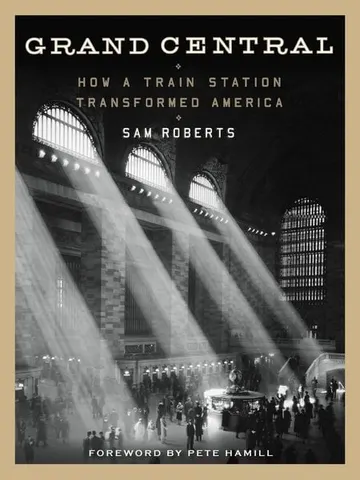
Grand Central (opens Bookshop.org)
Sam Roberts · 2013
Roberts tells the terminal's story from its 1913 opening through the fight to save it from demolition and its restoration.
The city is still writing this.
Four centuries end at this morning’s news. The daily brief picks up where the history leaves off: what changed in New York today and what it means, explained by breakfast.
Free. One email each morning. One-click unsubscribe. Never sold.