
The Modern Metropolis · c. 1918–1935
The Harlem Renaissance
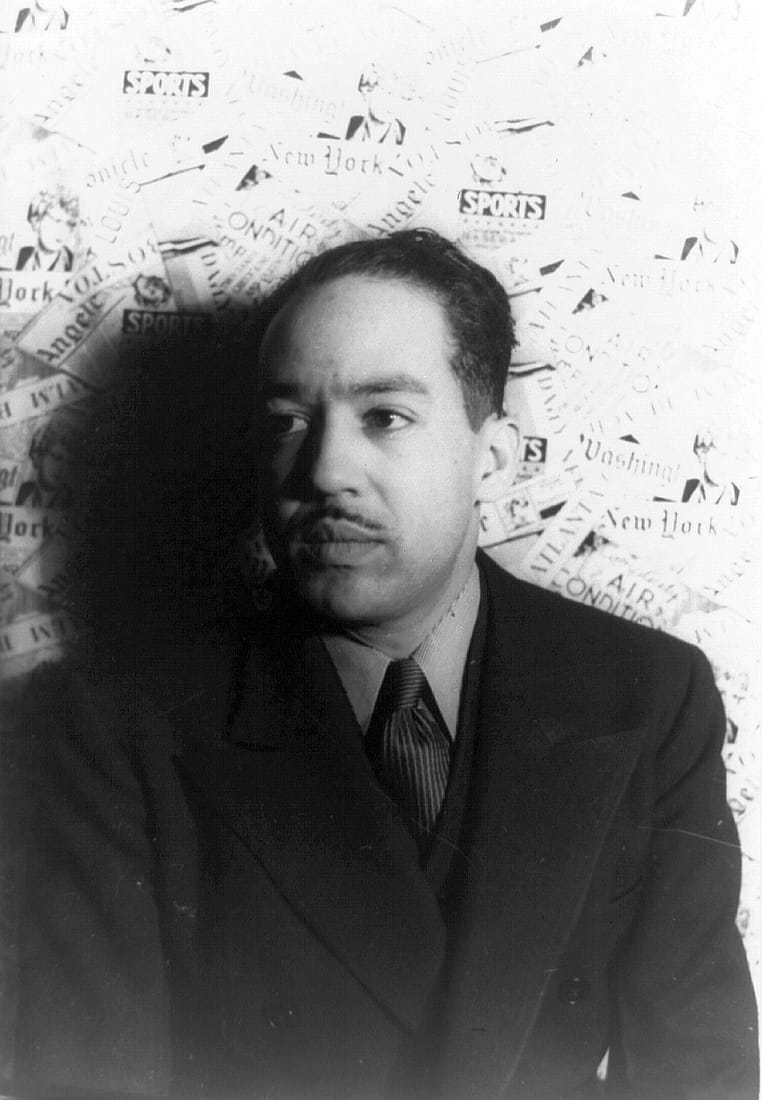
The Great Migration made Harlem the capital of Black America, and a generation of artists there refused, for the first time at that scale, to ask anyone’s permission.
The facts
- When
- Roughly 1918 to the mid-1930s
- Where
- Harlem, Upper Manhattan, the largest Black urban community in the country
- What drove it
- The Great Migration; from 1910 to 1930 New York’s Black population more than doubled, from about 152,000 to 328,000
- The manifesto
- Alain Locke’s anthology "The New Negro" (1925)
- The voices
- Langston Hughes, Zora Neale Hurston, Claude McKay, Countee Cullen, James Weldon Johnson, W. E. B. Du Bois, Duke Ellington
- How it ended
- The Great Depression and the 1935 Harlem riot
When hundreds of thousands of Black Southerners came north in the Great Migration, the largest share of them landed in Harlem, and Harlem became the capital of Black America. What happened there in the 1920s was a generation of writers, artists, and musicians claiming the right, at a scale never seen before, to define themselves on their own terms. Langston Hughes put it plainly in 1926: they would write "without fear or shame." It was not simple or unified. The elders wanted art that uplifted the race; the young wanted art that was free. The famous nightclubs, the Cotton Club above all, sold Black music to whites-only crowds. And much of it ran on the money of white patrons who expected something for it. But the words and the music outlived all of that.
In their words
The event in the voices and documents of the people who were there. Every source links out so you can check it.
-
Document
Locke’s anthology gathered the movement’s writers and gave it its defining text.
Negro life is not only establishing new contacts and founding new centers, it is finding a new soul.
Alain Locke, foreword to "The New Negro" (1925)
It grew out of a March 1925 magazine issue titled "Harlem: Mecca of the New Negro."
Source: Wikisource (full text of "The New Negro") -
Document
Hughes’s reply to a young poet who said he wanted to be "a poet, not a Negro poet."
We younger Negro artists who create now intend to express our individual dark-skinned selves without fear or shame. If white people are pleased we are glad. If they are not, it doesn’t matter. We know we are beautiful... We build our temples for tomorrow, strong as we know how, and we stand on top of the mountain, free within ourselves.
Langston Hughes, "The Negro Artist and the Racial Mountain," The Nation, June 23, 1926
It became the artistic declaration of independence for the younger generation.
Source: Poetry Foundation -
Song
Written during the "Red Summer" of 1919 anti-Black violence; its defiance is often cited as the movement’s opening shot.
If we must die, let it not be like hogs
Hunted and penned in an inglorious spot,
While round us bark the mad and hungry dogs,
Making their mock at our accursèd lot.
Claude McKay, "If We Must Die," The Liberator, July 1919
It predates Locke’s 1925 anthology by six years; the Renaissance built through the late 1910s.
Source: Harlem Shadows (digital edition) -
Document
Hurston’s joyful refusal of victimhood, a counterpoint to "tragic" framings of Black life.
But I am not tragically colored. There is no great sorrow dammed up in my soul, nor lurking behind my eyes.
Zora Neale Hurston, "How It Feels to Be Colored Me," 1928
Neglected at her death in 1960, Hurston was revived into the canon a generation later.
Source: Bill of Rights Institute -
Speech
Du Bois argued Black art must serve racial uplift, the establishment view Hughes pushed against.
Thus all Art is propaganda and ever must be, despite the wailing of the purists.
W. E. B. Du Bois, "Criteria of Negro Art," The Crisis, October 1926
The same year, Hughes insisted on artistic freedom. The movement argued with itself out loud.
Source: The Crisis (reprint) -
Document
The era’s music economy embodied its central tension.
The Cotton Club, run by the bootlegger Owney Madden, presented Black performers, with Duke Ellington’s orchestra as the house band from 1927, to a whites-only audience.
The Cotton Club, Harlem
Black artistry was consumed by, and profited, a segregated white clientele the performers were barred from joining.
Source: Britannica
What people get wrong
-
The myth It was a 1920s phenomenon that started in 1925.
What’s true Its roots run earlier: James Weldon Johnson’s anthology (1922) and McKay’s "If We Must Die" (1919) predate Locke’s 1925 book. The awakening built through the late 1910s.
-
The myth Black artists controlled Harlem’s nightlife.
What’s true The marquee venue, the Cotton Club, was white-owned and whites-only in its audience. Black performers entertained a crowd they were barred from joining.
-
The myth The movement spoke with one voice.
What’s true It was openly split. Du Bois held that "all Art is propaganda"; Hughes insisted on artistic freedom "without fear or shame," the same year.
What it changed
- "The New Negro" (1925) became the movement’s defining text and put Hughes, Hurston, Cullen, and others in print together.
- Hughes’s "racial mountain" essay remains a foundational statement of Black artistic independence, still taught and argued over.
- Duke Ellington’s Cotton Club years made Harlem jazz a national export by radio.
- Hurston, neglected at her death in 1960, was revived into the American canon a generation later.
The New York Shelf
Read the whole story
Paid links. If you buy a book through these links, Bookshop.org pays us a small commission and sends a share of the sale to independent bookstores.
-
The history
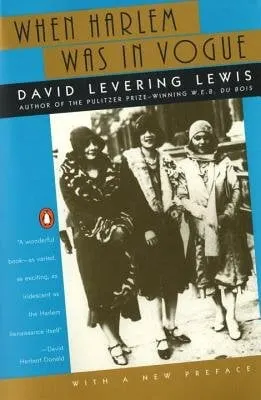
When Harlem Was in Vogue (opens Bookshop.org)
David Levering Lewis · 1981
The writers, artists and patrons of 1920s Harlem and the political aims behind the movement, in Lewis's account.
-
The history
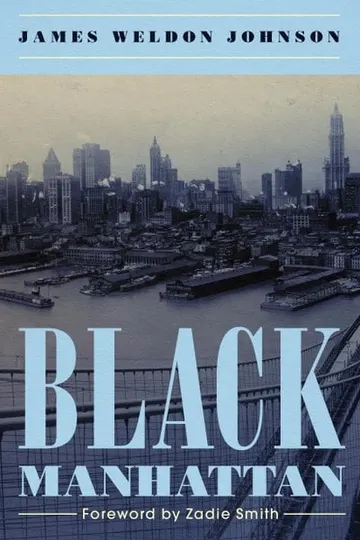
Black Manhattan (opens Bookshop.org)
James Weldon Johnson · 1930
Johnson, a writer and NAACP leader, wrote this history of Black New York from the Dutch period to the Harlem of the 1920s, including its theater and music.
-
The history
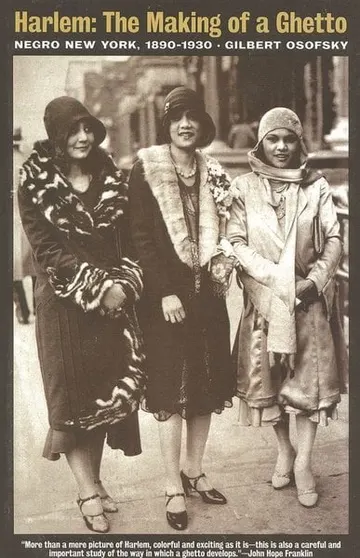
Harlem: The Making of a Ghetto (opens Bookshop.org)
Gilbert Osofsky · 1966
Osofsky traces how Harlem became a majority-Black neighborhood, and how real estate speculation and housing discrimination shaped it.
The city is still writing this.
Four centuries end at this morning’s news. The daily brief picks up where the history leaves off: what changed in New York today and what it means, explained by breakfast.
Free. One email each morning. One-click unsubscribe. Never sold.