
The Modern Metropolis · June 15, 1904
The General Slocum Disaster
A church picnic boat caught fire in the East River with rotted life preservers and lifeboats wired in place. About 1,021 died, most of them women and children, the city’s deadliest day until September 11.
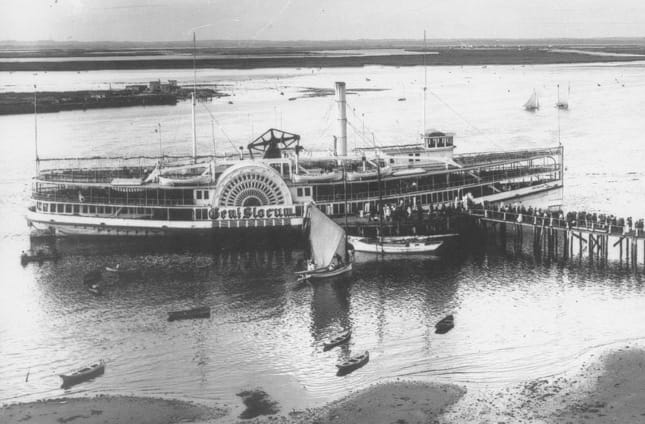
The facts
- When
- The morning of June 15, 1904
- Where
- The East River off Manhattan, ending on the rocks of North Brother Island
- Who
- A St. Mark’s Lutheran church excursion from Little Germany, mostly women and children
- The toll
- About 1,021 dead of roughly 1,342 aboard
- Why so deadly
- Rotted life preservers, some weighted with iron; lifeboats wired in place; an untrained crew
- The reckoning
- Eight people indicted, only Captain William Van Schaick convicted
On a June morning in 1904, more than 1,300 people, almost all of them the women and children of St. Mark’s Lutheran on the Lower East Side, boarded the steamer General Slocum for a church picnic. A fire started forward, near the lamp room, and within minutes the boat was an inferno. Everything meant to save them failed. The life preservers had rotted over thirteen years, and the company that made them had cut the cork with cheap filler and weighted the jackets with iron to hit the legal weight, so they sank children instead of floating them. The lifeboats were wired and painted in place. The captain ran for North Brother Island at full speed, and the headwind fanned the flames. About 1,021 people died. It was the deadliest day in New York until September 11, 2001, and it effectively ended Little Germany, whose grieving families scattered.
In their words
The event in the voices and documents of the people who were there. Every source links out so you can check it.
-
Report
The federal commission, ordered by President Roosevelt, delivered its indictment of Captain Van Schaick four months after the fire.
The evidence before the Commission establishes the fact that the master made no attempt whatsoever to fight the fire, to examine its condition, or to control, assure, direct, or aid the passengers in any way whatever.
Report of the U.S. Commission of Investigation upon the disaster to the steamer General Slocum, October 1904
Source: U.S. Steamboat Inspection Service commission report -
Testimony
A survivor’s account of going into the East River as the boat burned.
I felt myself carried along to the side of the boat. I don’t remember whether I jumped, for I was pretty badly burned, or was pushed overboard. ... I gave up hope, thinking I was going to be drowned ... when somebody grabbed me and pulled me aboard a boat.
Survivor Margaret Maurer, in 1904 newspaper coverage
Source: Period press, via Newspapers.com -
Newspaper
The morning-after front page. "Close to Land and Safety" caught the particular horror: it happened within sight of shore.
1,000 Lives May Be Lost in Burning of the Excursion Boat Gen. Slocum. St. Mark’s Church Excursion Ends in Disaster in East River Close to Land and Safety.
The New York Times, front page, June 16, 1904
Source: The New York Times, June 16, 1904 -
Testimony
A boy who swam to safety, coming home to parents who had feared him dead. The dialect is the original transcription.
I thought I’d come home and git the licking instead of breaking me mudder’s heart. So I’m home, and me mudder only kissed me and me fadder gave me half a dollar for being a good swimmer.
Willie Keppler, an 11-year-old survivor, in period coverage
Source: Smithsonian Magazine -
Inscription
The marble memorial, sculpted by Bruno Louis Zimm, stands in the heart of what was Little Germany, dedicated to the lost children.
They were Earth’s purest children, young and fair.
The Slocum Memorial Fountain, Tompkins Square Park, erected 1906
Source: NYC Parks -
Document
Van Schaick was convicted of criminal negligence in 1906, sentenced to ten years, paroled after about three and a half, and pardoned by President Taft in 1912.
Captain William Van Schaick, the only person convicted for the disaster, died in 1927 at age 90, decades after his pardon, still tied to the fire.
TIME, on the death of Captain Van Schaick, December 1927
Source: TIME archive
What people get wrong
-
The myth The life preservers were deliberately weighted with iron to make them sink.
What’s true The iron was real, but the motive was fraud, not murder. The maker packed cheap cork and slipped iron bars in to hit the legal six-pound weight. Combined with thirteen years of rot, the jackets failed, and many sank.
-
The myth The General Slocum sank and drowned everyone.
What’s true It burned to the waterline and grounded on North Brother Island. Most victims died from the fire or from drowning after they jumped, many in heavy clothing, unable to swim.
-
The myth Captain Van Schaick was simply a reckless villain.
What’s true His judgment is genuinely contested. He ran for North Brother Island fearing the fire would spread to waterfront tanks. The commission still found he did little to fight the fire or help passengers, but many boatmen thought him a scapegoat while the owners walked.
What it changed
- Only Captain Van Schaick was convicted; the steamship company and the inspectors who passed the rotted equipment escaped real punishment.
- Little Germany, then the largest German community in America, dissolved after the fire as grieving families left the Lower East Side, many for Yorkville.
- The disaster forced federal and state reform of life preservers, fire equipment, and crew drills on passenger ships.
- The last survivor, Adella Wotherspoon, six months old on the boat, lived until 2004, closing the disaster’s living memory.
The New York Shelf
Read the whole story
Paid link. If you buy a book through this link, Bookshop.org pays us a small commission and sends a share of the sale to independent bookstores.
-
The history
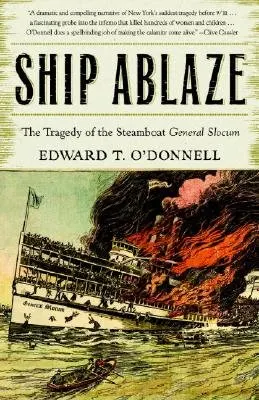
Ship Ablaze (opens Bookshop.org)
Edward T. O'Donnell · 2003
O'Donnell reconstructs the 1904 fire that killed more than 1,000 people, mostly women and children from the German neighborhood of the Lower East Side, and the trial that followed.
The city is still writing this.
Four centuries end at this morning’s news. The daily brief picks up where the history leaves off: what changed in New York today and what it means, explained by breakfast.
Free. One email each morning. One-click unsubscribe. Never sold.