
Comeback & the 21st Century · September 11, 2001
September 11, 2001
The deadliest day in the city’s history. 2,753 New Yorkers were killed, and the firefighters climbed the stairs as everyone else came down.
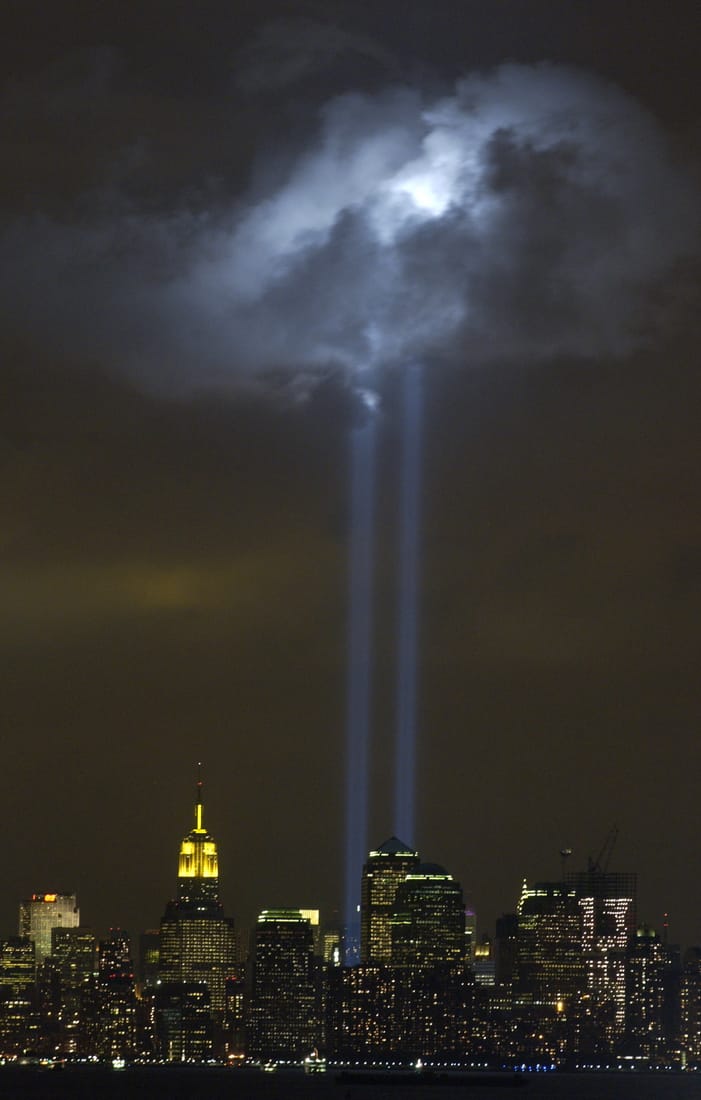
The facts
- When
- Tuesday, September 11, 2001; the South Tower fell at 9:59 a.m., the North Tower at 10:28 a.m.
- Where
- The World Trade Center, Lower Manhattan
- The toll in New York
- 2,753 people killed
- The responders lost
- 343 FDNY firefighters, 23 NYPD officers, and 37 Port Authority police
- The recovery
- Nine months at "the pile"; about two million tons of debris removed; the work ended May 30, 2002
- Still counting
- The toll is not final; the medical examiner is still identifying victims, three more as recently as 2025
It is still the deadliest day in New York’s history. Two hijacked planes struck the Twin Towers, both towers fell, and 2,753 people in the city were killed. The defining fact of that morning is direction: as tens of thousands of people came down the stairs and out, firefighters and police went up. 343 firefighters did not come back. Then came nine months at "the pile," tens of thousands of people clearing two million tons of debris while fires burned below for a hundred days. The city rebuilt the site, raised One World Trade Center to a deliberate 1,776 feet, and set two reflecting pools into the footprints of the towers, edged with every name. The toll is still not final. The medical examiner is still identifying the dead.
In their words
The event in the voices and documents of the people who were there. Every source links out so you can check it.
-
Speech
Said hours after the towers fell, when no count was yet possible.
The number of casualties will be more than any of us can bear, ultimately.
Mayor Rudy Giuliani, his first news conference on September 11, 2001
It is usually shortened and misquoted as "more than we can bear." The verified words include "any of us" and "ultimately."
Source: Contemporary reporting; the line is inscribed at the 9/11 Memorial Museum -
Testimony
Palmer climbed roughly 37 flights carrying about 50 pounds of gear to reach the 78th-floor impact zone. "10-45 Code One" means a fatality.
Battalion Seven... Ladder 15, we’ve got two isolated pockets of fire. We should be able to knock it down with two lines. 78th floor numerous 10-45 Code Ones.
FDNY Battalion Chief Orio Palmer, radio transmission from the South Tower impact zone, September 11, 2001
His team freed civilians from a stalled elevator about a minute before the tower fell. He and his company were killed.
Source: National September 11 Memorial & Museum -
Document
Pfeifer’s battalion had been responding to a reported gas-main odor blocks away when the first plane hit.
FDNY Battalion Chief Joseph Pfeifer, the first chief on the scene, ordered the evacuation of both towers at about 9:02 a.m., minutes before the second plane hit.
B.C. Joseph Pfeifer, FDNY, September 11, 2001
He became the first chief to arrive and establish command.
Source: Timeline for the day of the September 11 attacks -
Document
She was descending Stairwell B of the North Tower when it collapsed around her.
Port Authority employee Genelle Guzman-McMillan was pulled from the rubble of the North Tower about 27 hours after its collapse, the last person extracted alive.
Genelle Guzman-McMillan, survivor
Rescuers reached her the next day. She was the last survivor pulled alive.
Source: TIME -
Document
The nine-month effort at "the pile" formally ended on May 30, 2002.
Tens of thousands of men and women from across the nation and around the world responded and participated in the rescue, recovery, and relief operations, removing two million tons of debris alongside fires that burned for over 100 days.
National September 11 Memorial & Museum, on the rescue and recovery workers
The toxic dust caused chronic illness that has killed responders in the years since.
Source: National September 11 Memorial & Museum -
Inscription
Two pools sit in the footprints of the towers; the architect called the design "absence made visible."
The names of the 2,983 people who were killed in the 2001 and 1993 terrorist attacks are inscribed on bronze parapets.
National September 11 Memorial, "Reflecting Absence" by Michael Arad and Peter Walker
The 2,983 names include all 2001 victims and the six killed in the 1993 WTC bombing, a broader count than the 2,753 New York toll.
Source: National September 11 Memorial & Museum
What people get wrong
-
The myth Giuliani said "more than we can bear."
What’s true The verified words are "The number of casualties will be more than any of us can bear, ultimately." The line is now inscribed at the memorial.
-
The myth There is one simple New York death toll.
What’s true 2,753 people were killed in New York. The figures differ because they count different things: 2,977 across all three sites, and 2,983 names at the memorial (which includes the 1993 bombing). None counts the hijackers.
-
The myth The first responders lost were all firefighters.
What’s true 343 FDNY firefighters, yes, but also 23 NYPD officers and 37 Port Authority police. The latter two are too often left out.
What it changed
- One World Trade Center opened in 2014 at a deliberate 1,776 feet, the tallest building in the Western Hemisphere.
- The National September 11 Memorial, "Reflecting Absence," opened in 2011; two pools sit in the towers’ footprints, edged with 2,983 names.
- The Survivor Tree, a pear tree found alive in the rubble, was nursed back to health and returned to the plaza in 2010.
- The toxic dust caused chronic illness; the Zadroga Act created the World Trade Center Health Program and the Victim Compensation Fund, permanently authorized in 2019.
The New York Shelf
Read the whole story
Paid links. If you buy a book through these links, Bookshop.org pays us a small commission and sends a share of the sale to independent bookstores.
-
Reporting
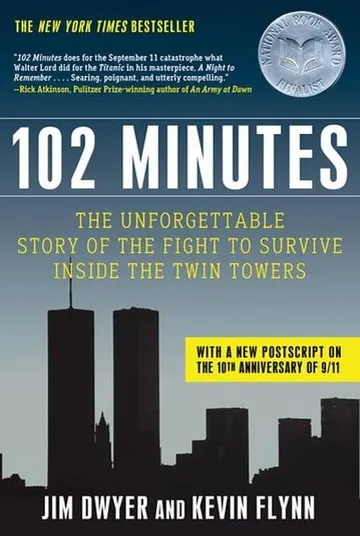
102 Minutes (opens Bookshop.org)
Jim Dwyer and Kevin Flynn · 2005
Two New York Times reporters reconstruct minute by minute what happened inside the towers on September 11, from interviews and phone records.
-
Reporting
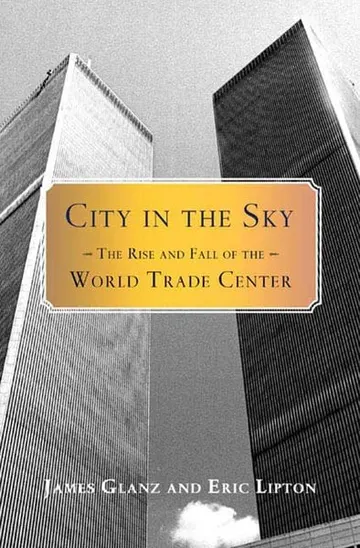
City in the Sky (opens Bookshop.org)
James Glanz and Eric Lipton · 2003
Glanz and Lipton, New York Times reporters, cover the towers' planning, construction and politics, and their destruction.
-
Reporting
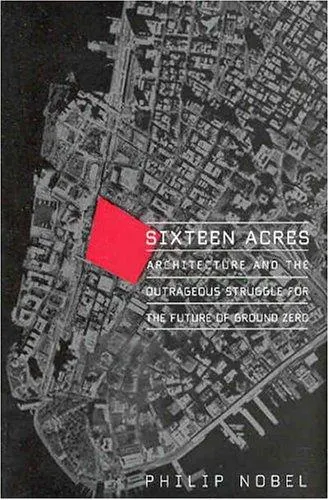
Sixteen Acres (opens Bookshop.org)
Philip Nobel · 2005
Nobel reports on the years of design and political fights over rebuilding the World Trade Center site.
-
Reporting
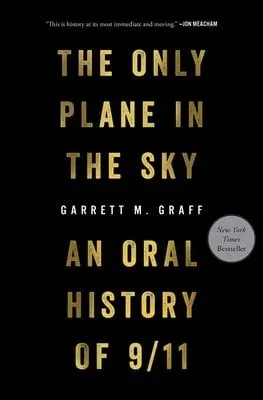
The Only Plane in the Sky (opens Bookshop.org)
Garrett M. Graff · 2019
Graff assembles interviews and recordings from officials, responders and survivors into a running account of September 11.
The city is still writing this.
Four centuries end at this morning’s news. The daily brief picks up where the history leaves off: what changed in New York today and what it means, explained by breakfast.
Free. One email each morning. One-click unsubscribe. Never sold.