
Comeback & the 21st Century · 1990
The Deadliest Year
New York hit a record 2,245 murders in 1990, about six a day. Then crime fell for a generation. Why it fell is still one of the city’s great arguments.
The facts
- The peak
- About 2,245 murders in 1990, the NYPD’s count and the most in the city’s history (state data says 2,262)
- The rate
- Roughly six killings a day, at the height of the crack epidemic
- The fall
- Down to 290 murders by 2017, a drop of about 87 percent
- The programs
- Dinkins’s "Safe Streets, Safe City" added thousands of officers; Giuliani and Bratton brought CompStat and "broken windows"
- The debate
- No single mayor or policy is proven to have caused the drop, and crime fell nationwide
- The cost
- Stop-and-frisk peaked at 685,724 stops in 2011, mostly of Black and Latino New Yorkers, and was ruled unconstitutional in 2013
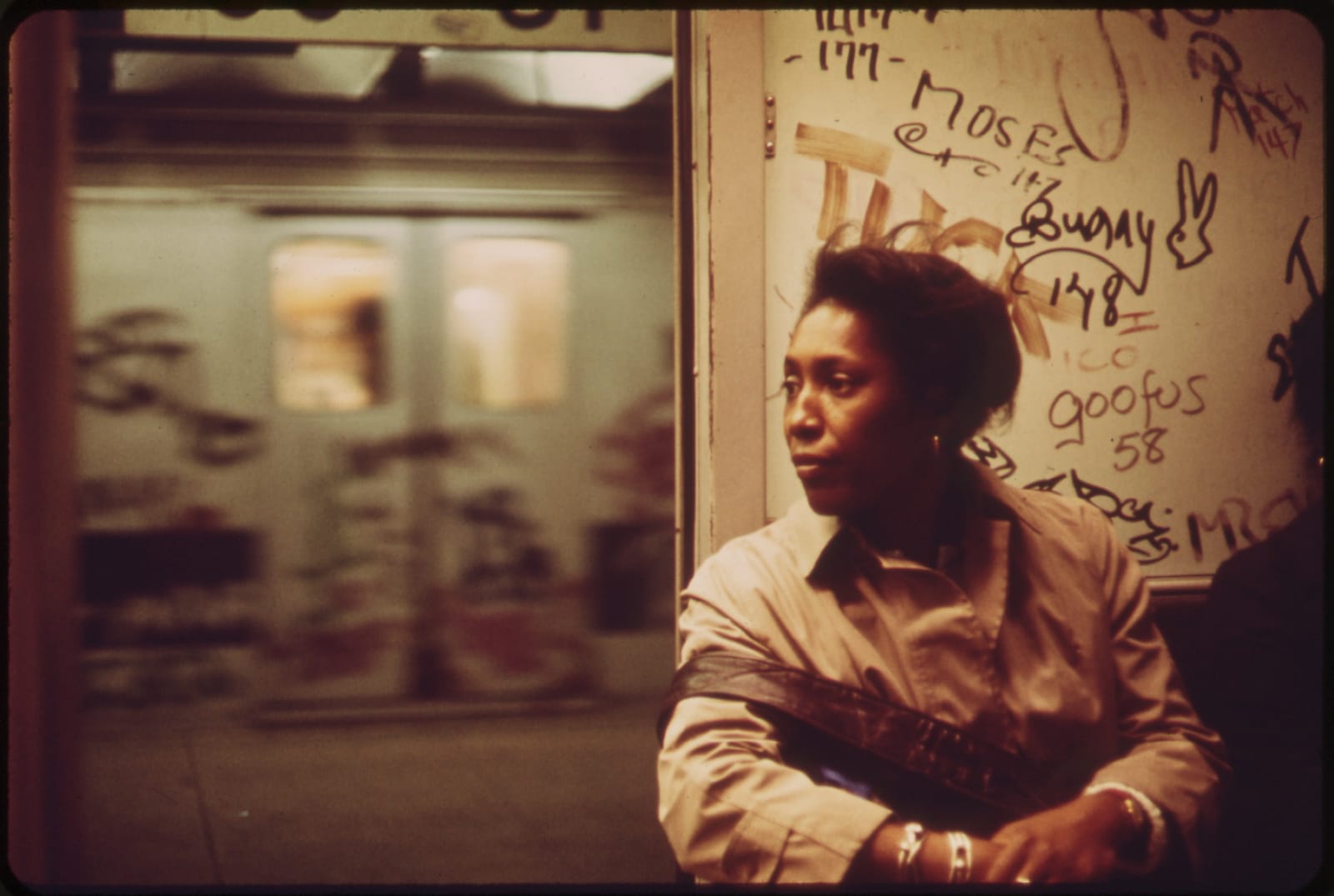
In 1990, New York recorded about 2,245 murders, the most in its history, roughly six killings a day, and much of the country had written the city off. The crack epidemic was at its height. A tourist was stabbed to death defending his family on a subway platform, Time put a rotting apple on its cover, and the city felt ungovernable. Then, for the next twenty-five years, crime fell, and fell, and fell, to under 300 murders a year by the mid-2010s. Why it fell is one of the great unsettled arguments in American urban history. Mayor Dinkins expanded the police force; Mayor Giuliani and Commissioner Bratton brought data-driven CompStat and "broken windows" policing and claimed the credit; but crime also dropped in cities that did none of those things, the crack wave receded, the economy turned, and the lead came out of gasoline. What is not in doubt is the cost of the most aggressive tactics: stop-and-frisk, which peaked at nearly 686,000 stops in a single year, fell overwhelmingly on Black and Latino New Yorkers, and was ruled unconstitutional as applied.
In their words
The event in the voices and documents of the people who were there. Every source links out so you can check it.
-
Document
Dinkins, mayor from 1990 to 1993, funded the police expansion his successors deployed. Murders had already begun falling before Giuliani took office.
You didn’t need to be a genius to see that this was an area that you had to attack. And we did. Largely, by going to Albany and persuading the Legislature that they should give us the resources.
Mayor David Dinkins, recalling his "Safe Streets, Safe City" program, 2019
Source: Gotham Gazette -
Document
Giuliani’s victory lap measured the drop from 1993, his predecessor’s last year. The fight over who deserves the credit has never ended.
Over the past four-and-a-half years, New York City has been transformed from the nation’s crime capital to the safest large city in the United States.
Mayor Rudolph Giuliani, press release, July 1, 1998
Source: City of New York, Office of the Mayor -
Document
Bratton brought "broken windows" to the subway and then the NYPD: police small disorder, the theory ran, and catch serious offenders in the net.
Fare evasion was the biggest broken window in the transit system. We were going to fix that window and see that it didn’t get broken again.
Police Commissioner William Bratton, in his memoir Turnaround, 1998
Source: William Bratton, Turnaround -
Document
Zimring credits New York policing more than most scholars do, and still concedes the cause cannot be cleanly pinned down.
The decline was not easy to tie to specific causes either at the national level or in the city, but the same mix of increased incarceration, higher prosperity, aging population and mysterious cyclical influences probably was responsible in both cases.
Criminologist Franklin Zimring, 2012
Source: Oxford University Press blog -
Document
Peart, a young Black New Yorker stopped at least five times, was a witness in the case against stop-and-frisk.
When I was 14, my mother told me not to panic if a police officer stopped me. And she cautioned me to carry ID and never run away from the police or I could be shot.
Nicholas Peart, op-ed in The New York Times, December 2011
Source: The New York Times -
Testimony
A federal court found the NYPD’s stop-and-frisk program unconstitutional and racially discriminatory, while pointedly declining to end the tactic itself.
In practice, the policy encourages the targeting of young black and Hispanic men based on their prevalence in local crime complaints. This is a form of racial profiling.
Judge Shira Scheindlin, ruling in Floyd v. City of New York, August 12, 2013
Source: Floyd v. City of New York opinion, via FactCheck.org
What people get wrong
-
The myth Giuliani and "broken windows" policing caused the crime drop.
What’s true The decline began in 1990 and 1991, under Dinkins, before Giuliani took office. Crime also fell in cities that never adopted broken-windows policing, and studies have failed to confirm the disorder-causes-crime mechanism in the New York data. It is genuinely debated.
-
The myth It was a uniquely New York achievement.
What’s true Violent crime fell across the whole country in the 1990s. New York’s drop was bigger and lasted longer, so a New York story has to explain the extra, not the whole thing.
-
The myth Stop-and-frisk was a precise tool that caught criminals.
What’s true In 2011, about 88 percent of the nearly 686,000 stops led to no arrest or summons, and about 87 percent of those stopped were Black or Latino. A federal court ruled the program unconstitutional as applied.
What it changed
- Murders fell from about 2,245 in 1990 to 290 in 2017, an almost 90 percent drop over a generation.
- The Floyd ruling put the NYPD under a federal monitor, and the city dropped its appeal in 2014 and accepted the reforms.
- After stop-and-frisk collapsed from its 2011 peak, crime kept falling anyway, central evidence in the argument over what the tactic ever achieved.
- The question of why crime fell remains formally unsettled: the Brennan Center tested fourteen theories and could attribute only modest shares to any one of them.
The New York Shelf
Read the whole story
Paid links. If you buy a book through these links, Bookshop.org pays us a small commission and sends a share of the sale to independent bookstores.
-
The history
The City That Became Safe (opens Bookshop.org)
Franklin E. Zimring · 2012
Zimring, a criminologist, examines the decline in New York's crime rate after 1990 and tests which explanations hold up.
-
Memoir
Turnaround (opens Bookshop.org)
William Bratton and Peter Knobler · 1998
Bratton, NYPD commissioner in the mid-1990s, describes the strategies and internal fights behind the department's crime reduction.
The city is still writing this.
Four centuries end at this morning’s news. The daily brief picks up where the history leaves off: what changed in New York today and what it means, explained by breakfast.
Free. One email each morning. One-click unsubscribe. Never sold.