Comeback & the 21st Century · 1934, reborn 2009
The High Line
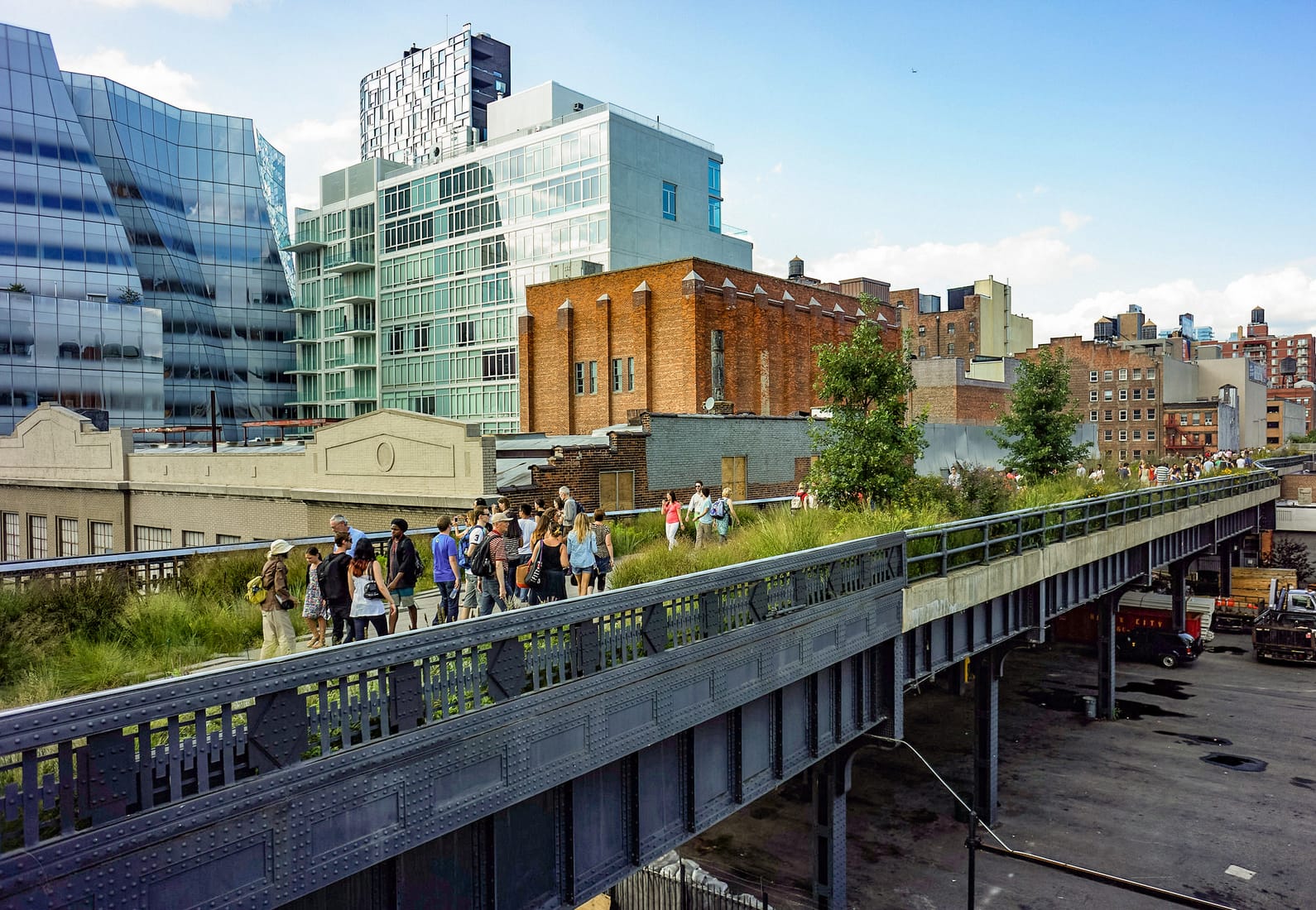
A freight railroad built to lift deadly trains off "Death Avenue," abandoned for decades, then saved from demolition and turned into a park in the sky. Its co-founder later said it failed the neighborhood.
The facts
- The original
- An elevated freight viaduct, finished 1934, to lift trains off Tenth Avenue, nicknamed "Death Avenue"
- The cowboys
- For decades the railroad sent men on horseback ahead of street-level trains to warn pedestrians
- The last train
- 1980, three cars of frozen turkeys
- The rescue
- Friends of the High Line, founded 1999 by Joshua David and Robert Hammond, fought a demolition order
- The park
- Opened in phases from June 2009; about 8 million visitors a year
- The catch
- The park supercharged luxury development, and Hammond himself said it failed existing neighbors
The High Line was built to stop the killing. For decades, freight trains ran at street level on Manhattan’s West Side, down an avenue so deadly the railroad hired "West Side Cowboys" on horseback to ride ahead waving a red flag. The elevated viaduct that finally lifted the trains off the street was finished in 1934. The last train ran in 1980, three cars of frozen turkeys, and then the tracks sat abandoned for a quarter century while a wild meadow seeded itself on top. In 1999 two neighbors, Joshua David and Robert Hammond, met at a community meeting where everyone else wanted it torn down, and founded Friends of the High Line. They beat a demolition order signed by Mayor Giuliani on his way out of office, and in 2009 the first stretch opened as a park in the sky. It became one of the most copied designs in the world. It also helped price out the neighborhood it grew from, which Hammond, years later, admitted plainly.
In their words
The event in the voices and documents of the people who were there. Every source links out so you can check it.
-
Newspaper
Tenth and Eleventh Avenues were called "Death Avenue." A 1910 count blamed street-level trains for hundreds of deaths. The horseback warning system ran for about 90 years.
Last "Cowboy" Rides Over Tenth Ave. Route; Tracks Now Elevated, Horses Get New Job.
The New York Times headline, March 29, 1941
Source: The New York Times, via Livin’ the High Line -
Document
Hammond and Joshua David met at a 1999 community board meeting where everyone else wanted the line torn down.
I saw an article in the New York Times saying that the High Line was going to be demolished, and I wondered if anyone was going to try to save it. ... We were the only people at the meeting who were interested in saving it.
Robert Hammond, co-founder of Friends of the High Line
Source: National Geographic -
Document
The popular memory is backwards: Giuliani tried to tear it down, and Bloomberg’s city saved it.
In late 2001, days before leaving office, Mayor Rudolph Giuliani signed an order for the High Line’s demolition. The incoming Bloomberg administration reversed it and backed the park.
The demolition order, late 2001
Source: National Geographic -
Document
Before there was a park, there was a wild ruin. Sternfeld’s photographs sold the public on saving it.
The photographer Joel Sternfeld, a member of the preservation group, spent a year shooting the abandoned, self-seeded meadow on the tracks. The images conveyed what architectural renderings could not, and became a tool to save the line.
Joel Sternfeld, Walking the High Line, begun 2000
Source: Huxley-Parlour Gallery -
Document
The meadow most visitors think was planted to look wild was, in the original, genuinely wild, grown over 25 years of neglect.
The built park kept the feel of the wild ruin. The design team, James Corner Field Operations with Diller Scofidio + Renfro and the planting designer Piet Oudolf, tapered the paving planks into the planting beds so the line between path and meadow blurs.
The High Line design team
Source: Diller Scofidio + Renfro -
Document
Hammond’s reckoning: the park drew millions and supercharged luxury development, but did little for the lower-income neighbors who were there first.
We were from the community. We wanted to do it for the neighborhood. Ultimately, we failed.
Robert Hammond, co-founder of the High Line, in 2017
Source: CityLab, via DNAinfo
What people get wrong
-
The myth Giuliani saved the High Line and Bloomberg wanted it gone.
What’s true It is the reverse. Giuliani signed a demolition order on his way out in late 2001. The Bloomberg administration backed the park.
-
The myth The designers planted the wild meadow.
What’s true The original meadow was self-seeded over 25 years of abandonment. Piet Oudolf’s plantings evoke that wildness; Joel Sternfeld photographed the real thing before any of it was designed.
-
The myth The High Line was an unqualified win.
What’s true Its own co-founder disagrees. Robert Hammond said the park failed its existing neighbors and fueled the gentrification of West Chelsea, and started a network to help other cities avoid repeating it.
What it changed
- The "High Line effect" became shorthand for a park that supercharges luxury development, and the template cities worldwide have tried to copy.
- It drew about 8 million visitors a year and kept growing, reaching Moynihan Train Hall with a new connector in 2023.
- The rescue, built on railbanking a freight corridor for trail use, is cited as a landmark rails-to-trails conversion.
- Stung by its own critique, Friends of the High Line started the High Line Network to help other reuse projects avoid the displacement it caused.
The New York Shelf
Read the whole story
Paid link. If you buy a book through this link, Bookshop.org pays us a small commission and sends a share of the sale to independent bookstores.
-
The history
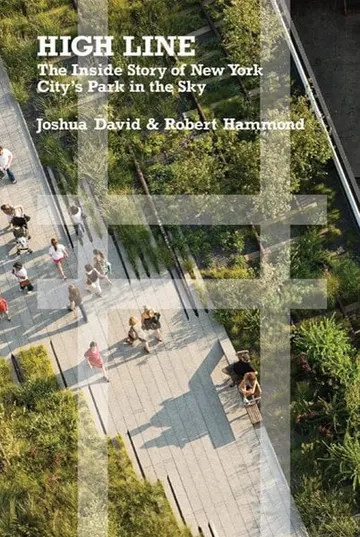
High Line (opens Bookshop.org)
Joshua David and Robert Hammond · 2011
The two founders of Friends of the High Line tell how a neighborhood group saved an abandoned rail viaduct and turned it into a park.
The city is still writing this.
Four centuries end at this morning’s news. The daily brief picks up where the history leaves off: what changed in New York today and what it means, explained by breakfast.
Free. One email each morning. One-click unsubscribe. Never sold.