
Comeback & the 21st Century · March 2020
The COVID Shutdown
In three weeks New York went from its first confirmed case to closed schools, closed businesses, and the quietest streets in its modern history. The virus had been here since January, and the dying had barely begun.
The facts
- First confirmed case
- March 1, 2020: a 39-year-old health care worker in Manhattan who had returned from Iran
- Schools closed
- From March 16: the largest public school district in the country, about 1.1 million students in more than 1,800 schools, went remote on March 23
- The PAUSE
- Signed March 20 with 5,683 confirmed cases in the city; every nonessential business closed at 8 p.m. on March 22
- The spring toll
- 32,107 deaths in the city between March 11 and May 2, which was 24,172 more than past years predicted
- The subway
- Ridership fell more than 90 percent, and on May 6 the system began closing from 1 to 5 a.m. nightly, its first scheduled overnight shutdown
- The workers
- By late August 2020, COVID-19 had killed 131 MTA employees
The first confirmed case reached New York on March 1, 2020, a Manhattan health care worker home from Iran, and for two weeks the city argued with itself about how afraid to be. The virus was not waiting: genomic analyses later showed it had been seeding the city since January, carried mostly from Europe. Then everything closed at once. The schools, the largest district in America with about 1.1 million students, shut on March 16. On March 20, with 5,683 confirmed cases in the city, the state signed the order it called New York on PAUSE, and at 8 p.m. that Sunday every nonessential business closed. What followed was the deadliest spring in the city’s modern history: between March 11 and May 2, 32,107 New Yorkers died, some 24,000 more than a normal spring takes. The subway lost more than nine of every ten riders and, on May 6, gave up its around-the-clock schedule for nightly disinfecting. As The New York Times put it, the subway had "never not run 24 hours a day, seven days a week." That spring, almost nothing in New York ran the way it always had.
In their words
The event in the voices and documents of the people who were there. Every source links out so you can check it.
-
Speech
The order closed every nonessential business in the state from 8 p.m. on March 22 and told everyone who could stay home to stay there.
If someone is unhappy, somebody wants to blame someone, people complain about someone, blame me. There is no one else who is responsible for this decision.
Gov. Andrew Cuomo, announcing the "New York State on PAUSE" order, March 20, 2020
From the same briefing: "When I talk about the most drastic we can take this is the most drastic action we can take." The syntax is rough because it was spoken that way; the rush transcript caught a government moving faster than its grammar.
Source: Governor of New York (rush transcript) -
Document
The honest count of the spring: not the confirmed cases, but everyone who died beyond what a normal spring takes.
Between March 11 and May 2, 2020, there were 32,107 deaths in New York City, 24,172 more than past data would have predicted for those weeks.
CDC excess-mortality analysis of New York City deaths, spring 2020
Excess mortality is the measure that catches what testing missed, and in April 2020 testing missed a great deal. By April 6, nearly a quarter of all U.S. COVID deaths were in this one city.
Source: COVID-19 pandemic in New York City (sources collected) -
Speech
From May 6, the subway closed from 1 to 5 a.m. nightly, with free overnight rides arranged for essential workers.
Closing our system for a limited time overnight will enable us to clean and disinfect every car, every night.
Sarah Feinberg, interim New York City Transit president, announcing the overnight subway shutdown, April 30, 2020
The system had run around the clock since it opened in 1904. As The New York Times put it that week, the subway had "never not run 24 hours a day, seven days a week."
Source: MTA press release (via Mass Transit) -
Document
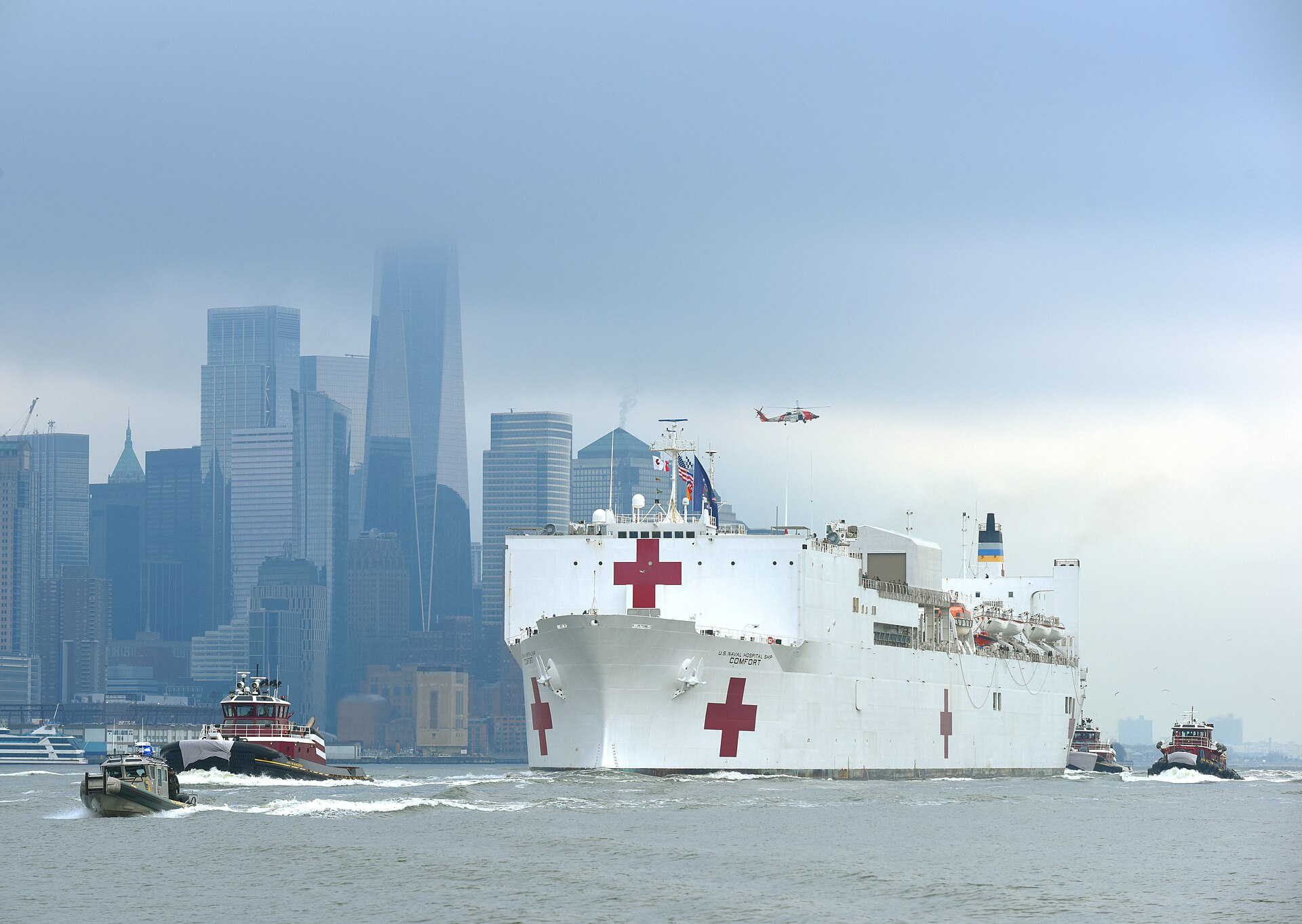
The cavalry image of the spring: a white hospital ship steaming past the Statue of Liberty.
The USNS Comfort, the Navy hospital ship sent to relieve the city’s hospitals, arrived in New York Harbor on March 30, 2020. By April 21 it had treated 179 patients.
The USNS Comfort deployment, spring 2020 (sources collected)
A 2,500-bed field hospital went up at the Javits Center as well. The surge itself was carried overwhelmingly by the city’s own hospitals and the people who worked in them.
Source: COVID-19 pandemic in New York City (sources collected) -
Document
No school on Monday, for about 1.1 million kids, indefinitely.
On March 15, 2020, the city announced that its public school buildings would close the next morning, with remote learning to begin March 23 and a hoped-for reopening on April 20. The buildings stayed closed for the rest of the school year.
The closure of the New York City public schools, March 2020
The April 20 restart never came. In May the state announced schools statewide would stay closed through the academic year.
Source: New York City Council (closure record)
What people get wrong
-
The myth COVID reached New York on March 1, 2020.
What’s true That was the first confirmed case. Genomic analyses suggest the virus had been introduced as early as January, and that most early cases traced to Europe, not Asia. By the time the first test came back positive, the epidemic was already underway.
-
The myth The subway never stopped.
What’s true Storms had forced emergency shutdowns before, but the system had never dropped its 24-hour schedule. From May 6, 2020 it closed nightly from 1 to 5 a.m. for disinfecting, the first scheduled overnight shutdown in its history; the window shrank to 2 to 4 a.m. in February 2021 before full service returned.
-
The myth The Navy ship and the field hospitals carried the surge.
What’s true The Comfort treated 179 patients in three weeks. The surge fell on the city’s own hospitals and the workers who kept the city running: by late August 2020, 131 MTA employees were dead.
What it changed
- The city’s official COVID-19 death count has passed 47,000, roughly seventeen times the toll of September 11.
- Unemployment hit 16.3 percent by August 2020, nearly double the national rate.
- Excess-death counting entered the civic vocabulary: 24,172 more New Yorkers died in under eight weeks than past years predicted, a measure that needs no test results.
- The overnight subway shutdown outlasted the surge that caused it, shrinking to a 2-to-4 a.m. window in February 2021 before around-the-clock service returned.
The New York Shelf
Read the whole story
Paid links. If you buy a book through these links, Bookshop.org pays us a small commission and sends a share of the sale to independent bookstores.
-
Reporting
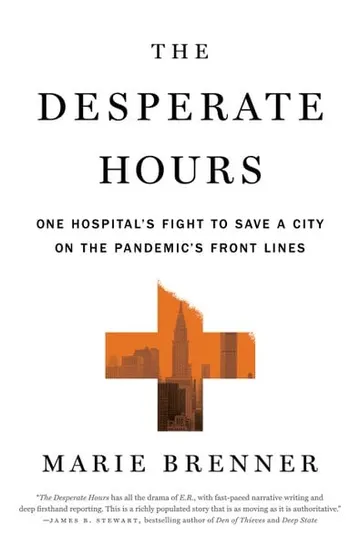
The Desperate Hours (opens Bookshop.org)
Marie Brenner · 2022
Brenner, a Vanity Fair writer, reports on NewYork-Presbyterian's doctors and nurses during the first wave of COVID-19 in 2020.
-
Memoir
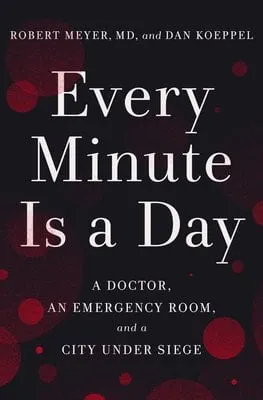
Every Minute Is a Day (opens Bookshop.org)
Robert Meyer and Dan Koeppel · 2021
Meyer, an emergency physician at Montefiore in the Bronx, recounts the first months of the pandemic in his emergency room.
-
Memoir
Riding the Lightning (opens Bookshop.org)
Anthony Almojera · 2022
Almojera, a New York City paramedic and union leader, recounts his work on the streets during the first year of the pandemic.
The city is still writing this.
Four centuries end at this morning’s news. The daily brief picks up where the history leaves off: what changed in New York today and what it means, explained by breakfast.
Free. One email each morning. One-click unsubscribe. Never sold.