
Lenapehoking & New Amsterdam · 1643–1645
Kieft’s War
The Dutch director ordered a midnight attack on Lenape families camped beside the colony for safety. An eyewitness wrote down what he heard, the tribes united, and New Netherland nearly died of its own governor.
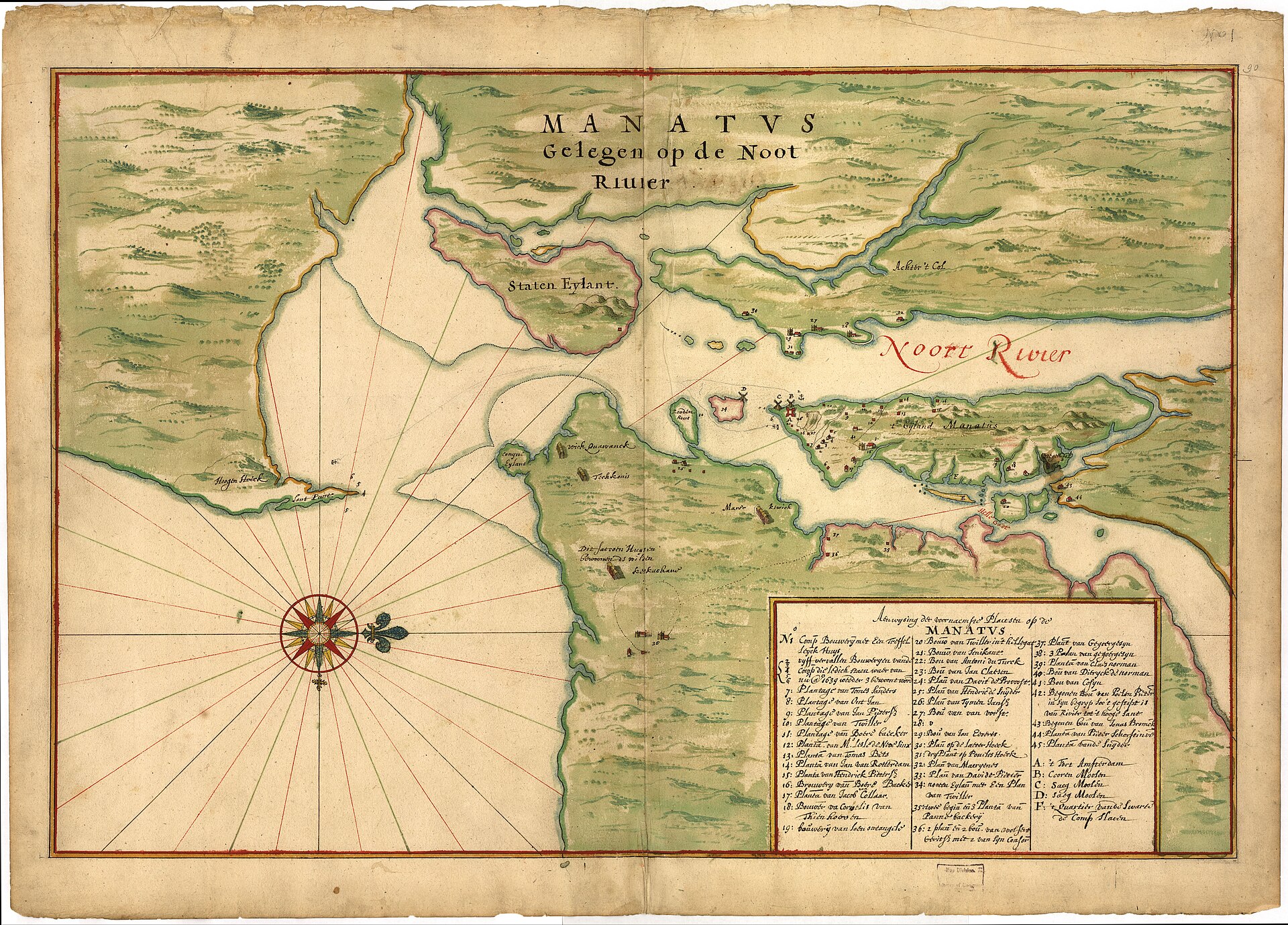
The facts
- The war
- Kieft’s War, 1643 to 1645, named for Director Willem Kieft, who ordered the attack that started it without his council’s approval and against the colonists’ wishes
- The night
- February 25, 1643: Dutch soldiers attacked sleeping camps at Pavonia and Corlears Hook, killing roughly 120 people, women and children among them
- The victims
- Refugees. Mahican and Mohawk raiders armed with French and English guns had driven them south the year before; they camped beside the Dutch as the safer ground
- The reprisal
- The region’s Algonquian peoples united, and in late 1643 a force of about 1,500 warriors invaded New Netherland
- The toll
- About 1,600 Native people killed by the war’s end, including 500 to 700 in the 1644 massacre near Pound Ridge; fewer than 100 Dutch died
- The reckoning
- None. Recalled to answer for his conduct, Kieft drowned in a 1647 shipwreck off Wales before any inquiry could reach him
New York’s founding atrocity was ordered from a desk. Willem Kieft, the Dutch West India Company’s director at New Amsterdam, had demanded tribute of furs, corn, and wampum from the peoples around the harbor, and been refused. In February 1643, Wecquaesgeek refugees, driven from their homes the year before by Mahican and Mohawk raiders, camped at Pavonia and Corlears Hook in the shadow of the Dutch. Kieft saw not people to protect but a chance to punish, and over the objections of his own advisers sent soldiers into the camps at midnight. Roughly 120 people were killed. David de Vries, the colonist who had spent the evening trying to talk Kieft out of it, stood on the fort’s rampart and recorded what he heard across the river. The region’s tribes united in reprisal, burned two decades of settlement, and nearly ended the colony. Peace came in August 1645. Kieft never answered for any of it.
In their words
The event in the voices and documents of the people who were there. Every source links out so you can check it.
-
Diary
De Vries had argued against the attack to Kieft’s face and stayed the night at the fort. The massacre began around midnight, across the river at Pavonia.
I heard a great shrieking, and I ran to the ramparts of the fort, and looked over to Pavonia. Saw nothing but firing, and heard the shrieks of the Indians murdered in their sleep.
David Pietersz de Vries, journal entry for the night of February 25, 1643, published in his "Korte Historiael" (1655)
He was the colony’s most experienced hand with the Lenape and chairman of the Twelve Men, the settlers’ advisory board. His journal is the reason the night cannot be denied.
Source: The Public History Project, "Remembering Pavonia" -
Diary
The fullest description of the night, from the man who opposed it.
Infants were torn from their mother’s breasts and hacked to pieces in the presence of their parents, and pieces thrown into the fire and in the water, and other sucklings, being bound to small boards, were cut, stuck, and pierced, and miserably massacred in a manner to move a heart of stone.
David Pietersz de Vries, journal (1655), on what the soldiers did at Pavonia
A shorter form of this passage anchors this era’s timeline. That a Dutch official recorded it, in print, under his own name, is why it is believed.
Source: Kieft’s War (de Vries’s published journal) -
Document
The counts, as the surviving records give them. Munsee warriors retaliated within weeks, killing settlers and burning farms across the region.
On the night of February 25, 1643, Dutch soldiers attacked the refugee camps at Pavonia and Corlears Hook, killing between 80 and 120 people; about 1,600 Munsee people died in the war that followed.
Mark Meuwese, "Mass Murder on Manhattan," drawing on the resolutions and council minutes of New Netherland
Every surviving account of the night is Dutch. No Munsee record of Pavonia exists, which is its own fact about the war.
Source: The Gotham Center for New York City History -
Document
The Company recalled Kieft in 1647 to explain his conduct. The ship never arrived.
The Princess Amelia was wrecked by mistakenly entering Bristol channel on the coast of Wales. Governor Kieft, Pastor Bogardus and 81 others were drowned.
Account of the September 1647 wreck of the ship carrying Kieft home to answer for the war
Peter Stuyvesant had already taken his place in New Amsterdam and would run the colony until the English took it in 1664.
Source: Military History Online, "Governor Kieft’s Personal War"
What people get wrong
-
The myth The wall that named Wall Street was built to keep these tribes out.
What’s true The wall went up in 1653, eight years after the peace, when New Amsterdam feared an English invasion during the First Anglo-Dutch War. The city’s own records name the English threat. It has its own page in this era.
-
The myth The massacre answered a Native attack.
What’s true The people at Pavonia and Corlears Hook were refugees who had camped near the Dutch for safety. Kieft’s advisory council and the colonists opposed attacking them; Kieft ordered it anyway. The war that followed was the consequence of the massacre, not its cause.
-
The myth Kieft was punished for the war.
What’s true He was recalled in 1647 to face questions in the Netherlands and drowned on the way when his ship wrecked off Wales. The nearest thing to justice the record holds is that his loudest critic published what he saw.
What it changed
- The united tribes’ counterattack, about 1,500 warriors strong, destroyed villages and farms that represented two decades of settlement and drove many colonists back to Europe.
- Roughly 1,600 Native people were dead by the peace of August 1645, against fewer than 100 Dutch. The ratio tells you what kind of war it was.
- The Company recalled Kieft and named Peter Stuyvesant his successor; Stuyvesant governed New Netherland until it became New York in 1664.
- De Vries’s own plantation, Vriessendael, was destroyed in the reprisals, though the Lenape who respected him let its residents escape. He quit the colony for good before the year was out, and his published journal remains the closest thing the massacred have to a memorial.
The New York Shelf
Read the whole story
Paid links. If you buy a book through these links, Bookshop.org pays us a small commission and sends a share of the sale to independent bookstores.
-
The history
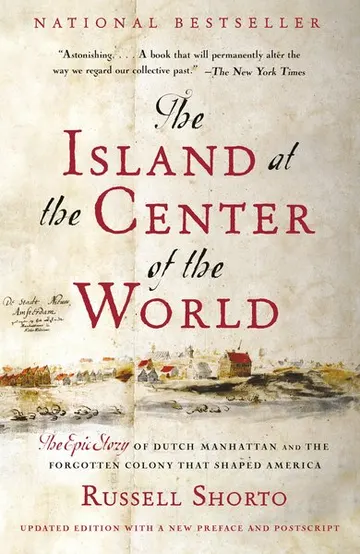
The Island at the Center of the World (opens Bookshop.org)
Russell Shorto · 2004
Shorto draws on the translated Dutch colonial records to reconstruct New Amsterdam under Peter Stuyvesant, and argues that its tolerant, commercial culture shaped the country.
-
The history
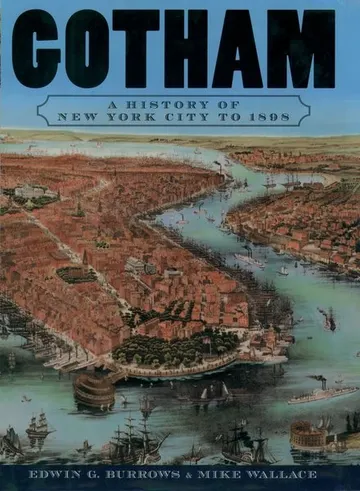
Gotham (opens Bookshop.org)
Edwin G. Burrows and Mike Wallace · 1999
Burrows and Wallace cover New York from its earliest settlement to consolidation in 1898, in a single volume of more than a thousand pages. It won the Pulitzer Prize for History.
The city is still writing this.
Four centuries end at this morning’s news. The daily brief picks up where the history leaves off: what changed in New York today and what it means, explained by breakfast.
Free. One email each morning. One-click unsubscribe. Never sold.