
Lenapehoking & New Amsterdam · 1653
The Wall of Wall Street
The most famous street in world finance is named for a wooden fence a nervous Dutch town built in a war panic. The city’s own records say who it was meant to stop, and it is not who the legend says.
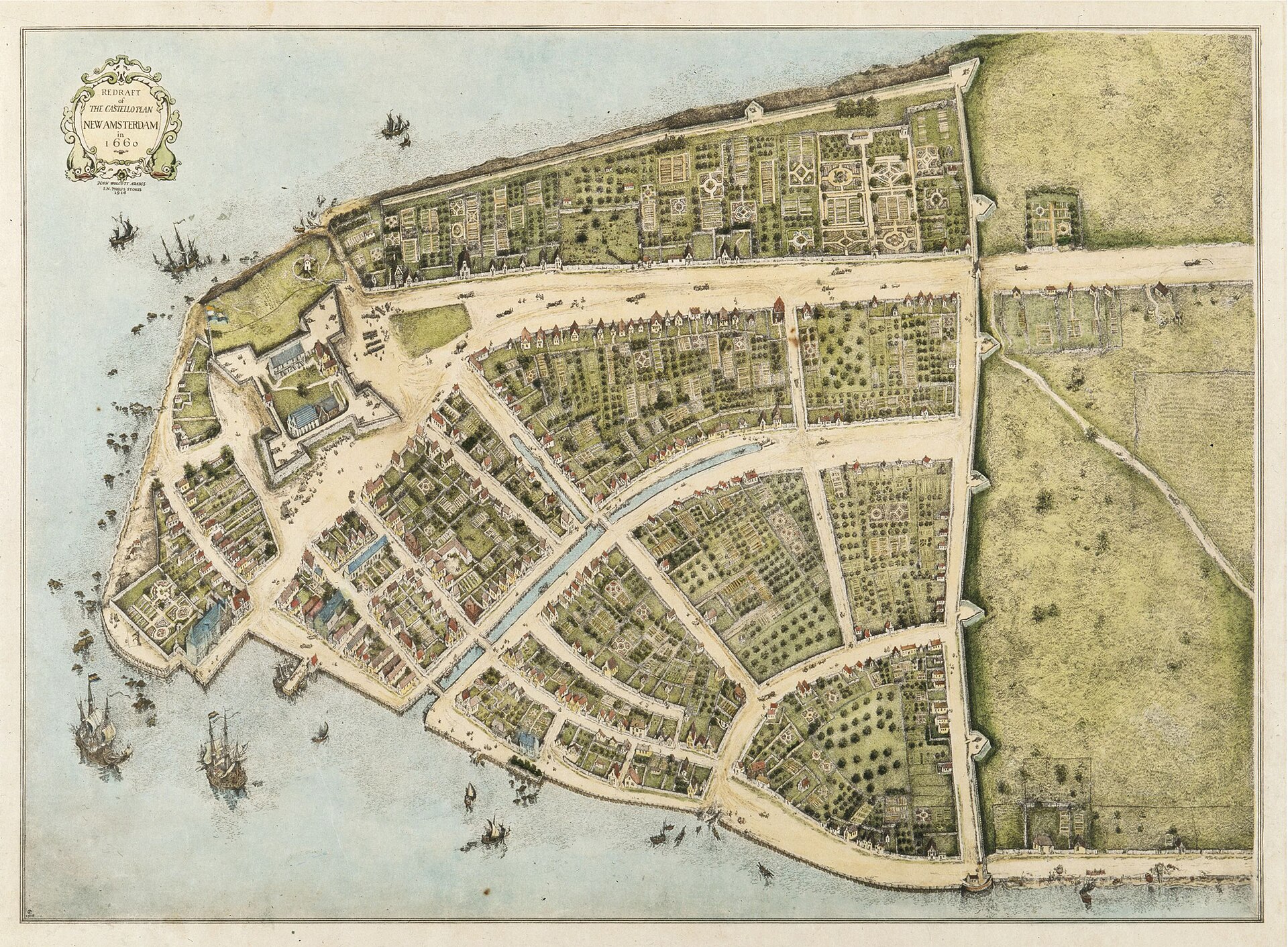
The facts
- Ordered
- March 13, 1653, at an emergency meeting of Director-General Stuyvesant, his Council, and the new city’s court
- The threat
- England. The First Anglo-Dutch War was on, and New Amsterdam feared an overland invasion from New England
- The wall
- A wooden palisade with a sod breastwork and a ditch: sharpened 12-foot posts, about 9 feet above ground, running some 2,340 feet across the island
- The builders
- The labor of enslaved Africans and white colonists
- Standing by
- July 1653. On July 28 Stuyvesant reported the city surrounded with palisades, "done now three weeks"
- Torn down
- 1699. The city had grown well beyond it; the street kept the name
The street that means American money is named for a defensive fence a small Dutch town threw up in about four months of war nerves. In March 1653, with England and the Dutch Republic at war and New Amsterdam reading "the last received current news from New England concerning the preparations there for either defense or attack," the city’s leaders resolved to wall its landward side. What went up that spring was not stone but wood: sharpened 12-foot palisades, a sod breastwork, a ditch, roughly 2,340 feet across the island, raised with the labor of enslaved Africans and white colonists. The English invasion never came by land. When England finally took the city in 1664, it came by sea, and the town surrendered without a shot. The wall rotted, was repaired, was re-planked, and came down for good in 1699. The lane along its inside face had a name by then. It still does.
In their words
The event in the voices and documents of the people who were there. Every source links out so you can check it.
-
Document
The order that created Wall Street, from the city’s own digitized Dutch records: the fort could not shelter everyone, so the town would get a wall.
Considering said Fort Amsterdam cannot hold all the inhabitants nor defend all the houses and dwellings in the City, it is deemed necessary to surround the greater part of the City with a high stockade and a small breastwork.
Resolution of the Director-General, Council, and city court of New Amsterdam, March 13, 1653
The same resolution ordered the burghers to "stand guard in full squads over night." The emergency in the room was English, not Lenape.
Source: NYC Municipal Archives ("For the Record") -
Document
The build sheet: a 17th-century construction contract for the most famous street in finance.
The palisades must be 12 feet long, 18 inches in circumference, sharpened at the upper end and be set in line. At each rod a post 21 inches in circumference is to be set, to which rails, split for this use shall be nailed one foot below the top. The breastwork against it shall be 4 feet high, 4 feet at the bottom and 3 feet at top, covered with sods, with a ditch 3 feet wide and 2 feet deep, 2 ½ feet within the breastwork.
Specifications drawn by the committee for making New Amsterdam defensible, March 1653
In the margin of the court record someone sketched the works in cross-section, labeled "9 feet above ground, 3 feet in ground."
Source: NYC Municipal Archives ("For the Record") -
Report
From resolution to standing wall in about four months.
the City has... been surrounded with palisades on the land side and along the Strand on the Eastriver... done now three weeks.
Director-General Peter Stuyvesant, reporting the wall standing, July 28, 1653
It began decaying almost immediately. By spring 1654 Stuyvesant was asking the Long Island towns of Breuckelen, Midwout, and Amsfoort for help repairing the river palisades, and in 1655 he ordered the works re-planked.
Source: NYC Municipal Archives ("For the Record") -
Document
Who built it, and when it stopped mattering.
The wall was built using the labor of both enslaved Africans and white colonists. It ran some 2,340 feet at about 9 feet tall, and it was removed in 1699, the city having grown well beyond it.
The wall’s construction and demolition (sources collected)
Enslaved Africans had been held in New Amsterdam since the 1620s. The wall is one of the first city works their labor built; it would not be the last.
Source: Wall Street (sources collected)
What people get wrong
-
The myth The wall was built to keep out Native Americans.
What’s true The March 1653 emergency meeting that ordered it was called over news of English war preparations in New England, mid Anglo-Dutch war. Defense against Native attack and pirates figured in the wall’s later years, but the record of its birth names the English.
-
The myth Wall Street is named for a Dutch street called de Waal Straat.
What’s true The Dutch called the street along the wall "Het Cingel," the Belt. The "de Waal Straat" etymology is a mistake that stuck; that name belonged to what is now Pearl Street.
-
The myth It was a mighty stone rampart.
What’s true Wood and dirt: sharpened posts, split rails, a four-foot sod breastwork, and a ditch. It decayed so fast that within a year Stuyvesant was asking the Long Island towns for repair help, and by 1655 the works had to be re-planked.
What it changed
- The lane along the wall became Wall Street. The wall lasted 46 years; the name is in its fourth century.
- In 1792, traders on Wall Street formalized the Buttonwood Agreement, the origin of the New York Stock Exchange, which still stands on the street the palisade drew.
- The invasion the wall was built against eventually came by water instead: four English frigates took the city without a shot in 1664.
- It fixed the first hard edge of the city. Everything New York has built since has been on the far side of a boundary it outgrew and demolished, a pattern the wall set first.
The New York Shelf
Read the whole story
Paid links. If you buy a book through these links, Bookshop.org pays us a small commission and sends a share of the sale to independent bookstores.
-
The history
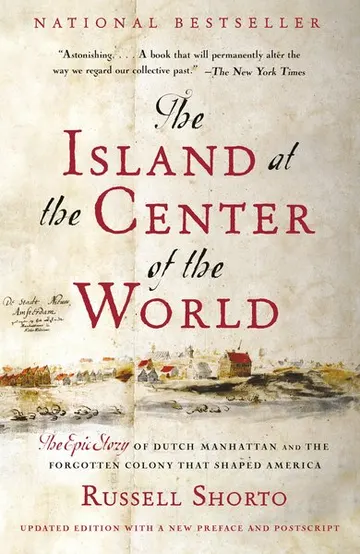
The Island at the Center of the World (opens Bookshop.org)
Russell Shorto · 2004
Shorto draws on the translated Dutch colonial records to reconstruct New Amsterdam under Peter Stuyvesant, and argues that its tolerant, commercial culture shaped the country.
-
The history
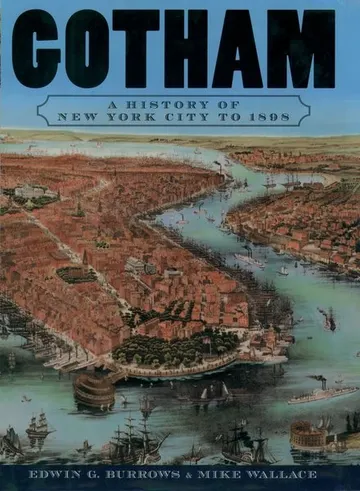
Gotham (opens Bookshop.org)
Edwin G. Burrows and Mike Wallace · 1999
Burrows and Wallace cover New York from its earliest settlement to consolidation in 1898, in a single volume of more than a thousand pages. It won the Pulitzer Prize for History.
The city is still writing this.
Four centuries end at this morning’s news. The daily brief picks up where the history leaves off: what changed in New York today and what it means, explained by breakfast.
Free. One email each morning. One-click unsubscribe. Never sold.